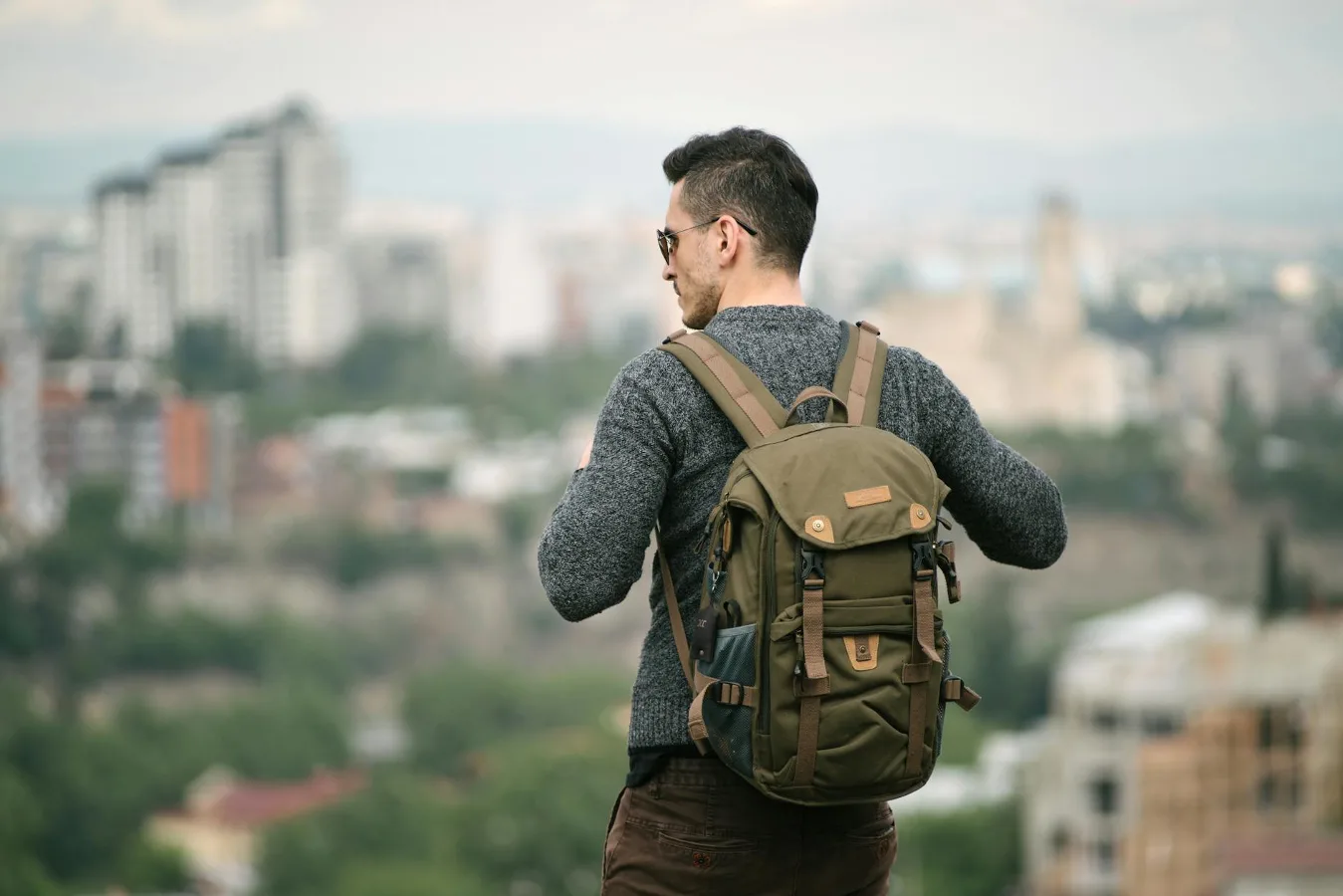
When a 20L travel backpack makes sense
A 20L travel backpack is best for travelers who want a compact bag that can handle essentials without turning into checked-bag overload. It fits naturally into short trips, day outings, city breaks, commuting, and minimalist travel styles where you pack deliberately instead of carrying extras “just in case.” best travel backpacks for different trip lengths offers more detail on this point.
That smaller size is the point. A 20L bag can be easier to carry through airports, on trains, and across neighborhoods than a larger travel pack. It also tends to feel less bulky under a seat or in overhead storage. The trade-off is obvious: you get less room for flexibility, so the bag has to work harder through organization, access, and comfort.
If you are comparing a 20L travel backpack with larger travel packs, the real question is not only capacity. It is whether the layout matches what you carry, how long you travel, and how much extra space you normally end up filling. how to choose the right backpack size offers more detail on this point.
Step 1: Start with your travel style, not the number on the tag
Capacity matters, but the same 20L bag can feel completely different depending on how you travel. A structured pack with multiple compartments can feel more usable than a soft sack with the same volume. Likewise, a bag that opens wide may be easier to pack than one with a narrow top opening, even if both are labeled 20L.
Best for travelers who pack light
A 20L travel backpack usually suits people who can keep clothing to the essentials, combine layers, and rely on laundry access during longer trips. It is also a good match for travelers who like to keep valuables, electronics, and a few personal items close at hand.
Less suitable for bulkier packing habits
If you tend to bring multiple shoes, heavy toiletries, or a lot of outfit options, 20L can feel tight quickly. That does not make the size wrong, but it does mean you should be realistic about whether the bag is for true travel or only for short carry-on use.
What to evaluate before buying
The best 20L travel backpack is not the one with the most features. It is the one that balances comfort, access, and organization for your routine. These are the details worth weighing carefully.
1. Fit and carry comfort
Because a 20L backpack is smaller, people sometimes assume comfort is less important. That is a mistake. A poorly shaped bag can still dig into shoulders or sit awkwardly on the back, especially when loaded with a laptop, charger, water bottle, and travel documents. Luka 17-Inch Laptop Backpack Reviews offers more detail on this point.
Look for shoulder straps that feel supportive without being stiff, plus a back panel that does not create pressure points. If you often walk long distances with your bag, small comfort details matter more than brand styling.
2. Internal layout and access
Organization is one of the biggest reasons to choose a travel backpack over a basic daypack. In a 20L design, every pocket has to earn its place. A well-planned interior can separate clothes from electronics, keep toiletries contained, and reduce the usual dig-through-the-bottom problem.
Useful layout features may include a clamshell or wide-opening main compartment, a padded laptop sleeve, quick-access pockets, and internal dividers for cables or small accessories. If you travel with a passport, charger, headphones, and snacks, easy access is often more valuable than a large number of compartments.
3. Shape and usable volume
Two 20L backpacks can be very different in practice. One may be tall and slim, while another is boxier and easier to pack. Some bags look larger than they carry because of padding and exterior structure. Others are deceptively efficient because they use space well.
Pay attention to how the main compartment opens and whether the bag compresses well when not full. A travel backpack that bulges awkwardly may be annoying on trains, planes, and crowded sidewalks.
4. Laptop and tech compatibility
For many travelers, the real purpose of a 20L bag is to hold a laptop and daily essentials in one place. If that is your use case, check how the sleeve is placed and whether it crowds the rest of the compartment. A laptop pocket that steals too much room from clothing can make the bag feel smaller than expected.
Also consider cable organization, tablet space, and whether your charger or power bank has a dedicated pocket. Tech storage should feel integrated, not improvised.
5. Material choice and weather protection
Materials affect more than appearance. They influence weight, structure, water resistance, and long-term wear. A fabric with a tighter weave or a more weather-resistant finish can help in unpredictable conditions, though no backpack should be treated as fully waterproof unless clearly designed that way.
If you travel in rainy cities or move between outdoor and indoor settings all day, a bit of weather protection matters. If you care more about a soft, lightweight feel, a simpler material may be the better trade-off.
6. Security and daily convenience
Security features are especially relevant in urban travel. Zipper placement, pocket visibility, and how easily someone can reach into the bag all affect practicality. That does not mean every bag needs complicated anti-theft features. It does mean you should think about where you carry it and how exposed it will be in transit.
Convenience matters too. A luggage pass-through can help during airport travel. A quick-access pocket for earbuds or boarding passes can save time. Small touches often matter more than flashy extras.
A simple way to compare options
If you are narrowing down several 20L travel backpacks, compare them in the same order every time. That keeps the decision grounded in your actual use rather than feature overload.
- Define the trip type. Decide whether the bag is for flights, commuting, city breaks, or one-bag packing.
- List your essentials. Write down what you always carry, including laptop size, water bottle, and toiletries.
- Check the opening style. Wide access is usually easier for travel than a narrow top-load design.
- Review pocket logic. Look for pockets that match your habits instead of buying the most compartment-heavy bag.
- Assess carry comfort. Consider strap shape, back support, and how the bag will feel when full.
- Think about weather and security. Match the bag to where you will actually use it.
Examples of who a 20L travel backpack suits
The weekend city traveler: This user usually needs room for a light wardrobe, toiletries, chargers, and a few extras. A 20L bag can work if the packing list stays disciplined and the bag opens well.
The commuter who travels occasionally: If your backpack needs to move between office use and short trips, a 20L design with a laptop sleeve and clean organization can do both jobs without feeling oversized.
The minimalist flyer: Someone who uses a personal-item strategy or prefers to keep essentials within reach may appreciate a compact bag that avoids the sprawl of larger luggage.
The day-trip explorer: For walking-heavy travel days, museum visits, or transit-based city movement, a 20L backpack can be a better fit than a larger bag that encourages overpacking.
Common mistakes shoppers make
One common misconception is that all 20L backpacks are interchangeable. They are not. The internal design, external pockets, and overall shape can make one bag feel much more usable than another.
Another mistake is choosing a bag based on the number of compartments instead of how those compartments are arranged. Too many pockets can actually make packing slower and reduce usable volume.
People also underestimate how much space shoes, jackets, and toiletry kits take up. A 20L backpack can be highly efficient, but only if your packing habits support it. If you regularly travel with bulky items, you may need a larger bag or a separate packing strategy.
Finally, many buyers focus on style first and then discover that the strap comfort or opening style does not suit real travel. A good-looking backpack that is awkward to pack will not feel good after a long day of moving around.
When a larger or different bag is the better choice
A 20L travel backpack is not the right answer for every traveler. If you need space for several days of clothing, bulkier shoes, camera gear, or work materials in addition to travel essentials, moving up in capacity may be more practical. If you want a single bag that replaces both your travel bag and your gym bag, you may also need more room than 20L provides.
In some cases, a small wheeled bag, a larger personal-item backpack, or a more structured travel pack may be the smarter option. The best choice depends on whether your priority is portability, packing flexibility, or all-day comfort.
Quick checklist before you buy
- Does the backpack fit the kind of trips you actually take?
- Can it hold your essentials without forcing awkward compromises?
- Is the main compartment easy to pack and unpack?
- Does the laptop sleeve leave enough usable space?
- Are the straps and back panel comfortable enough for walking?
- Does the bag offer the right balance of access and security?
- Will the shape work under a seat, in overhead storage, or during daily carry?
- Does the material match the weather and wear you expect?
Final take
A 20L travel backpack is most useful when you value mobility, clean organization, and a controlled packing list. It is less about maximum space and more about making a compact bag work efficiently for real travel.
The strongest choice will usually be the one that matches your packing habits, carries comfortably, and opens in a way that suits your routine. Size gets attention, but layout and usability decide whether a 20L backpack feels limiting or genuinely convenient.