Silver bracelets for men work best when they match three things: the wearer’s style, the bracelet’s construction, and how often it will be worn. Some men want a clean accent that disappears under a shirt cuff; others want a visible piece with texture and presence. The right choice depends less on trend and more on fit, finish, and how the bracelet sits with the rest of a wardrobe. necklace with name sterling silver offers more detail on this point. gold plated necklace offers more detail on this point.
If you are shopping for one, start with the setting it will live in. A bracelet for office wear has different needs than one for weekends, travel, or layering with a watch. That is where many buyers get tripped up: they focus on how the bracelet looks in isolation, not how it will feel and perform in everyday use.
When silver bracelets for men matter most
Silver bracelets become especially useful when you want jewelry that reads as refined rather than flashy. Silver has a cooler tone than yellow gold, which makes it easy to pair with black, navy, gray, white, denim, and most watch metals. It also tends to suit a wide range of personal styles, from minimalist to rugged to tailored. rose gold engagement rings tips offers more detail on this point.
They matter most in a few practical situations:
- Daily wear: A simple chain or slim cuff can add polish without requiring much styling effort.
- Work settings: Low-profile designs often feel more appropriate than heavy, noisy pieces.
- Layered looks: Silver plays well with leather, beads, or a wristwatch when the proportions are balanced.
- Gifting: Silver is a flexible choice when you know the recipient’s taste but not their exact preferences.
A common misconception is that all silver bracelets are interchangeable. In practice, the look changes dramatically with the type of construction. A flat curb chain looks stronger and more classic than a fine cable chain. A hinged cuff feels architectural. An oxidized finish feels more casual and masculine to some buyers, while a bright polished surface reads cleaner and more formal.
Step-by-step criteria for choosing the right one
1. Start with the silhouette
The silhouette determines how the bracelet feels on the wrist and how loudly it speaks. Men’s silver bracelets usually fall into a few broad categories:
- Chain bracelets: Versatile and usually the easiest place to start.
- Cuff bracelets: Open at the wrist, often more structured and intentional.
- Bangles: Simple and solid, though less common in everyday men’s styling.
- ID bracelets: Often flatter, with a personalized plate or central panel.
- Link and mixed-metal styles: Useful if you want a heavier visual presence.
For most men, a chain bracelet is the least risky choice because it works across casual and smart-casual outfits. Cuffs are better if you want a clean statement piece. Bangles can be stylish, but they are less forgiving on fit and motion, so they work best when proportioned carefully.
2. Pay attention to width and scale
Bracelet scale should match the wrist and the overall wardrobe. A narrow bracelet can disappear on a larger wrist, while a very wide bracelet can dominate a smaller wrist or compete with a watch. The goal is visual balance.
As a practical rule, slimmer designs feel understated and easier to wear often. Medium-width pieces usually offer the best balance between visibility and versatility. Heavier styles can look strong, but they are more likely to feel too bold in conservative settings.
One overlooked consideration is proportion with sleeves. If you wear fitted cuffs, a bulky bracelet may catch or sit awkwardly. If you usually wear rolled sleeves or short sleeves, you have more flexibility with size and texture.
3. Choose a finish that matches your routine
The finish changes both the look and the maintenance level. Polished silver reflects more light and looks crisp, but it can show scratches and fingerprints more readily. Brushed or matte finishes soften the shine and often hide minor wear better. Oxidized silver has a darker, more distressed appearance that can bring out detail in chains or engraved pieces.
If you want a bracelet for frequent wear, a less mirror-like finish may age more gracefully. If the goal is a dressier accent, polished silver can be a strong option, especially when paired with a watch or other metal accessories.
4. Look closely at fit and fastening
Fit is one of the most important details and one of the easiest to underestimate. A bracelet that is too tight can feel restrictive and can wear poorly over time. A bracelet that is too loose may rotate constantly, snag on clothing, or feel distracting.
Different closures behave differently. Lobster clasps are common and secure. Toggle closures can add style, but they are not always the most discreet. Cuffs avoid clasps altogether, which some men prefer for ease of use, though open-ended designs need enough tension to stay put comfortably.
For bracelet sizing, think beyond wrist circumference alone. The width of the bracelet, the shape of the links, and whether you plan to wear it alongside a watch all affect the final feel.
5. Decide how much maintenance you are willing to do
Silver needs care. It can tarnish over time, especially with exposure to air, sweat, lotions, and household chemicals. That does not make silver a bad choice; it simply means buyers should think realistically about upkeep.
If you want the easiest routine, look for pieces that are simple to wipe down and store. Heavily textured links, engraved surfaces, and oxidized finishes can need more careful cleaning, depending on how the bracelet is made. Some men prefer the lived-in look that comes with age, while others want a consistently bright finish. The best choice depends on whether you see maintenance as part of the appeal or a chore.
Examples of styles and who they suit
| Style | Best for | Why it works | Watch-outs |
|---|---|---|---|
| Fine chain bracelet | Minimal everyday wear | Light, versatile, easy to pair | Can feel too subtle on larger wrists |
| Curb or figaro chain | Classic casual style | Balanced visibility and structure | Heavier versions may feel bold |
| Silver cuff | Clean, modern looks | Easy to slip on and visually sharp | Fit must be precise enough to stay comfortable |
| ID bracelet | Gifts or personal style | Offers engraving or a focal point | Can look too formal or too sentimental depending on design |
| Oxidized bracelet | Casual or textured outfits | Adds depth and a more rugged feel | Less suited to those who want a bright, polished finish |
These categories are not rigid, and many designs blend elements from more than one. That is useful if you want a bracelet that feels unique without becoming hard to wear.
How to match silver bracelets with clothes and a watch
Styling is where many silver bracelets either come together or feel slightly off. The simplest approach is to let one item lead. If the watch is substantial, the bracelet should usually be slimmer or cleaner. If the bracelet is the main feature, keep the watch understated.
With casual clothing, silver often pairs well with denim, knitwear, leather jackets, henleys, and plain tees. In smarter settings, a slim chain or cuff can complement a blazer or button-down shirt without looking overworked. The cleaner the outfit, the more the bracelet’s finish matters.
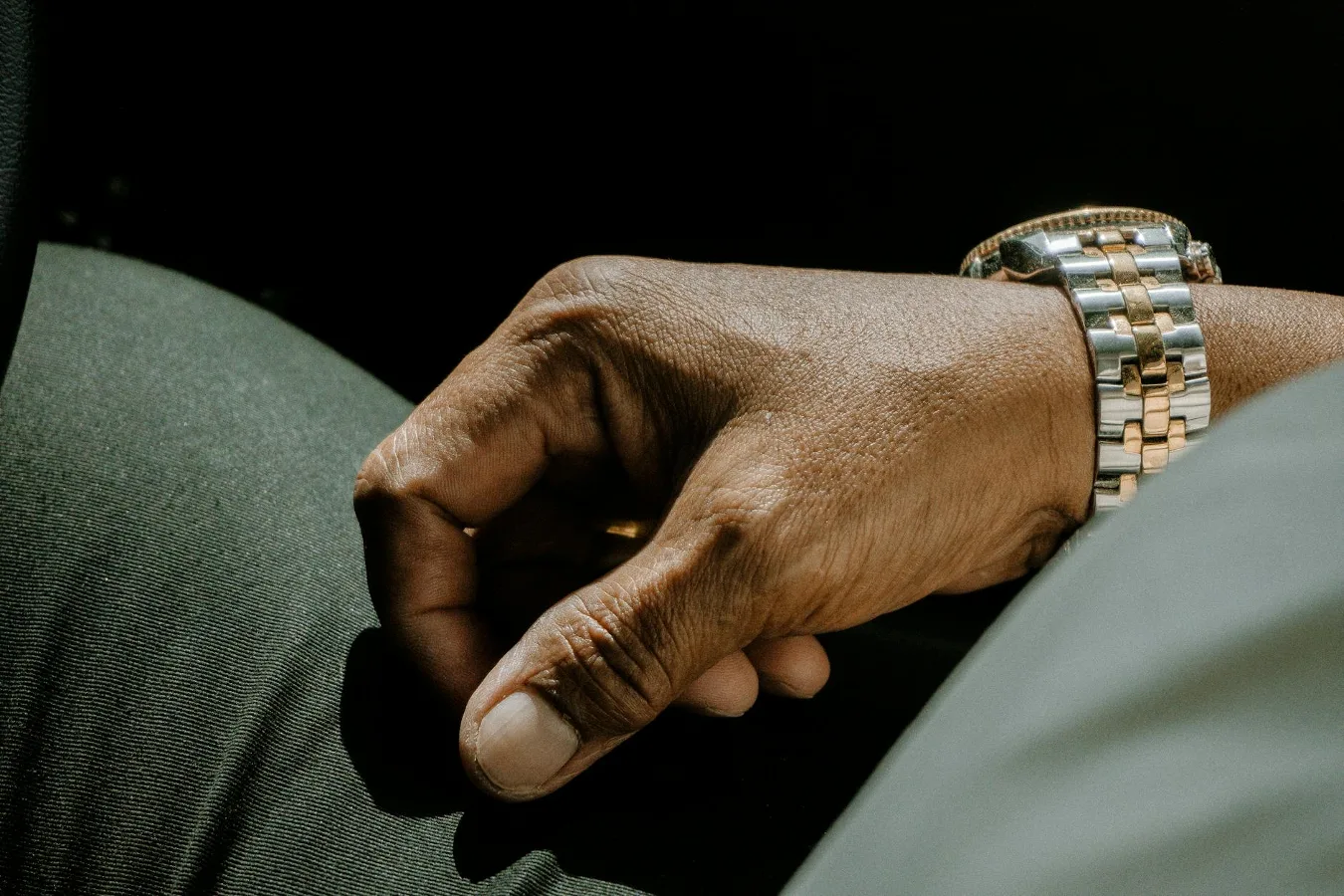
Mixing metals is no longer a hard rule problem, but it should still look intentional. A silver bracelet next to a stainless steel watch is usually easy. Gold accents can work too if they appear as part of a deliberate combination rather than a mismatch. If you are unsure, repeating one metal tone across accessories is the safest route.
A practical nuance: bracelets that sit too close to a watch case may scratch, rub, or visually crowd the wrist. If you plan to stack them, check whether the bracelet’s edges are smooth and whether the clasp or decorative elements will stay comfortable next to the watch.
What to watch for before you buy
- Material description: Clarify whether the piece is sterling silver, silver-plated, or another silver-tone material.
- Construction quality: Check the clasp, link uniformity, hinge movement, and finish consistency.
- Wear context: Decide whether it is for everyday use, occasional wear, or special outfits.
- Skin comfort: Smooth edges and secure closures matter more than many buyers expect.
- Maintenance level: Consider whether you are comfortable with periodic polishing and storage care.
- Return policy and sizing support: Important because bracelet fit can be harder to judge online than ring size or shirt size.
One common mistake is buying a bracelet that looks good in product photos but ignores wrist proportion. Another is choosing a piece that is visually strong but mechanically awkward. A bracelet that catches on cuffs or shifts too much may end up unworn, even if the design is attractive.
Another overlooked factor is lifestyle. If you are active, travel often, or work with your hands, simpler constructions usually make more sense. Delicate chains can be beautiful, but they are not always the most practical option for active wear. Similarly, highly detailed bracelets may gather more visible wear over time than plain ones.
Choosing by use case
For everyday wear
Look for a bracelet that is low-profile, comfortable, and easy to pair with most outfits. A medium-weight chain or a slim cuff is often the most versatile route. Everyday pieces should feel almost effortless; if you find yourself adjusting them all day, they are probably not the right fit.
For a dressier wardrobe
Choose a cleaner finish and a more restrained profile. A polished chain or narrow cuff can add structure without competing with tailored clothing. Avoid designs that are overly bulky or heavily distressed if your wardrobe leans formal or minimalist.
For someone who likes stronger statement pieces
Go for more weight, texture, or contrast. Wider links, oxidized details, or sculptural cuffs can create a bolder effect. Just keep the rest of the wrist stack simple so the bracelet remains the focal point.
For gifting
Silver is a sensible gift material because it is versatile, but style matters more than metal alone. If you are unsure, choose a classic chain or cuff rather than a highly personalized or trend-driven design. That gives the recipient more room to wear it in different settings.
Practical checklist before you commit
- Does the bracelet suit the wearer’s usual clothing?
- Will it feel comfortable next to a watch or other accessories?
- Is the finish appropriate for the amount of maintenance you want?
- Does the design look balanced on the wrist size it is intended for?
- Is the closure secure and simple enough for regular use?
- Would you still like it if it were worn every week, not just seen in photos?
If the answer to most of those questions is yes, you are probably close to the right choice. That final test matters because the best men’s silver bracelet is not the one with the most detail; it is the one that fits the wearer’s routine without asking for constant compromise.
The strongest choices are usually the most wearable
Silver bracelets for men succeed when they feel intentional rather than decorative for decoration’s sake. The best options usually combine clean proportions, a finish that suits the wearer’s pace of life, and enough comfort to disappear into the routine. Style matters, but usability is what determines whether the bracelet gets worn.
If you are narrowing the field, start with the bracelet type, then move to fit, finish, and maintenance. That order makes it much easier to separate a piece you admire from one you will actually enjoy wearing.