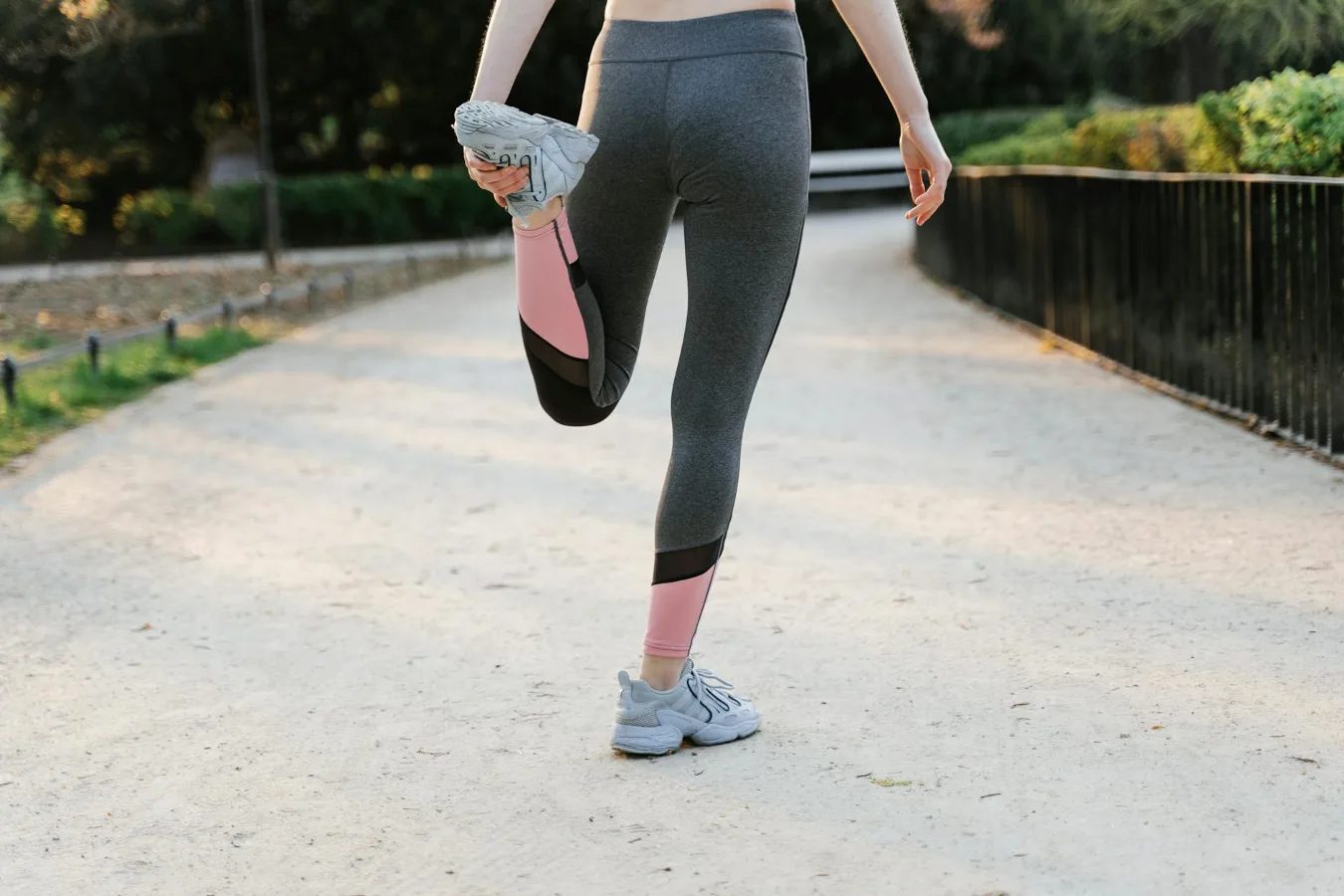
Why high-waisted workout leggings are such a popular choice
High-waisted workout leggings appeal to a lot of people for a simple reason: they tend to feel more secure than lower-rise styles. A higher waistband can help with coverage during stretching, squatting, bending, and floor work, which makes these leggings useful for yoga, strength training, walking, and everyday wear.
That said, “high-waisted” does not automatically mean supportive, flattering, or comfortable. The quality of the fit depends on the waistband construction, fabric stretch, seam placement, and how the leggings behave during movement. Some pairs stay put through a whole workout; others slide, roll, pinch, or feel overly restrictive. guide to workout fabric and stretch offers more detail on this point. how to choose leggings that stay put offers more detail on this point.
If you are shopping for high waisted workout leggings, the main question is not whether the rise is high enough. It is whether the leggings suit your body, your movement style, and the conditions you actually wear them in.
The key factors that matter most
Waistband design and rise
The waistband is usually the make-or-break detail. A wide, well-constructed waistband often feels more stable than a thin one, especially for training that involves repeated bending or jumping. Some high-rise leggings sit close to the natural waist, while others extend above it for a more held-in feel.
A common misconception is that a taller waistband is always better. In practice, a waistband that is too tall for your torso can fold, dig in, or slide down as you move. If you have a shorter torso, a slightly lower high-rise cut may feel more natural. If you have a longer torso, a true high rise or extra-high rise may provide better coverage.
Fabric feel and stretch
Fabric affects everything from comfort to performance. Soft, brushed fabrics often feel cozy and flexible, which can work well for studio classes and casual wear. More structured fabrics may offer a smoother, more secure fit for higher-impact movement. Stretch matters too: four-way stretch can improve mobility, but too much stretch without enough recovery may lead to sagging at the knees or waistband.
For buyers, the practical question is whether the fabric balances softness with support. Some leggings are meant to feel nearly second-skin and lightweight. Others are built with more compression and a firmer hand feel. Neither is universally better; the right choice depends on your workout and your comfort preferences.
Opacity and squat-readiness
Coverage is a major reason many people choose high-waisted styles, but rise alone does not guarantee opacity. Lighter colors, very thin fabrics, and over-stretched sizing can all reduce coverage. For exercise leggings, it helps to look at how the fabric behaves under tension and whether the material is described as opaque or squat-friendly.
If you plan to wear leggings for squats, lunges, or deep stretches, consider both thickness and stretch recovery. A fabric that becomes sheer when pulled is a poor fit for training, even if it feels soft in the hand.
Compression versus softness
Some high-waisted workout leggings are designed with compression to create a more secure, held-in feel. Others prioritize softness and comfort. Compression can be useful for running, lifting, or long sessions where you want less movement from the garment itself. Softer leggings may be better for yoga, recovery days, or all-day wear. high compression leggings offers more detail on this point.
The trade-off is simple: more compression can feel more stable, but it can also feel less relaxed. If you prefer a barely-there feel, a gentle-support style may be a better match than a performance compression legging.
Seams, gussets, and construction
Construction details are easy to overlook, but they affect fit and durability. Flat seams can reduce chafing. A gusseted crotch can improve comfort and mobility, especially in leggings meant for movement-heavy workouts. Seam placement can also shape the look of the legging, which matters if you prefer a smoother silhouette or want fewer pressure points.
One practical insight: a legging can look great on a hanger and still fail in motion if the seam layout is awkward. If you are buying online, pay attention to how the brand describes the construction rather than focusing only on color or style.
Length and leg opening
Full-length, 7/8-length, and cropped leggings all have their place. Full-length styles often give the most coverage and may work better in cooler weather. 7/8 lengths can suit many body types because they avoid bunching at the ankle. Cropped options are useful for warmer climates or high-heat training.
Leg opening matters too. A snug cuff can stay in place, but an overly tight ankle may feel restrictive. A straight or slightly tapered leg opening can offer a cleaner fit without squeezing.
How to match leggings to your workout
For yoga, Pilates, and stretching
For low-impact studio work, prioritize comfort, mobility, and a waistband that does not dig in during folded positions. Soft fabrics and smooth seams can make a big difference here. A pair that is too compressive may feel distracting in poses that involve long holds or deep hip opening.
Many buyers prefer high-waisted leggings for yoga because the added coverage can reduce constant adjusting. Still, a waistband that rolls down in forward folds is a signal that the rise or size is not right for you.
For lifting and strength training
For lifting, look for leggings that stay in place during squats, deadlifts, and lunges. A stable waistband and a fabric with good recovery are especially useful. Some people also prefer a slightly firmer compression level for support during training.
If you train regularly with equipment, think about abrasion as well. Repeated contact with benches, barbells, or textured flooring can wear down thinner fabrics faster.
For running and cardio
Running and high-intensity cardio call for secure fit, sweat management, and reduced bounce. Breathable, moisture-wicking fabrics are often a better choice than very heavy or highly brushed materials. Pockets can be useful for keys, cards, or a phone, but only if they sit securely and do not swing or pull the waistband down.
For runners, a legging that feels great in the mirror but shifts during movement usually becomes frustrating quickly. Prioritize performance details over fashion details if your workouts are high-impact.
For everyday wear and travel
Many people choose high-waisted workout leggings because they double as casual clothing. If that is your use case, comfort, opacity, and a polished finish may matter more than maximum compression. A smoother fabric with minimal shine often works well in both gym and street settings.
Travel is another scenario where high-rise leggings make sense. They can be easy to layer, simple to pack, and comfortable for long periods of sitting. Just make sure the waistband does not feel tight after meals or while seated for hours.
Practical buying solutions that help you avoid disappointment
Check sizing against your real measurements
Leggings fit differently from brand to brand, so relying on your usual size alone can be misleading. Compare your waist and hip measurements to the size chart, and pay attention to notes about compression, stretch, and intended fit. If you are between sizes, your ideal choice depends on the fabric: structured performance fabrics may work better in the larger size, while stretchy lounge-like fabrics may fit fine in the smaller one.
A common mistake is sizing down for a “snatched” look. That can create waistband roll, fabric stress, and unwanted transparency. In workout leggings, too small is often worse than slightly relaxed.
Decide which fit problem matters most
Every pair of leggings involves trade-offs. A more compressive style may control movement better but feel less soft. A buttery-soft style may be comfortable but less secure during sprints or squats. A very high waistband can increase coverage but may fold on shorter torsos.
The best purchase is the one that solves your main problem. If your issue is waistband slipping, focus on rise and construction. If your issue is overheating, focus on breathability and fabric weight. If your issue is opacity, focus on material thickness and stretch recovery.
Look for details that match your storage needs
Pockets can be useful, but they are not automatically a plus. Side pockets may stretch the silhouette if you carry larger items. A waistband pocket can be handy for a key or card, but it is usually not enough for a phone. If you rarely carry anything while training, a cleaner pocket-free design may look better and feel lighter.
Storage is a practical consideration, not just a style feature. Many buyers overlook it until they are juggling a phone, gym card, and headphones at the same time.
Think about climate and season
Heavier, brushed fabrics may feel great in cooler weather but can trap heat during summer workouts. Lightweight, breathable leggings are usually a safer choice for warm climates or indoor classes without much ventilation. If you live in a region with changing seasons, it may make sense to keep more than one type of legging on hand rather than trying to make one pair do everything.
Common limitations to keep in mind
High-waisted workout leggings are not automatically flattering for everyone, and that is worth saying plainly. Some people find the waistband too restrictive, especially after meals or during long seated periods. Others dislike the way a high rise changes their proportions or prefer a lower-cut silhouette for ease of movement.
Another limitation is that many high-rise leggings depend heavily on the right size and the right torso length. If the rise sits too high, it may fold at the waist. If it sits too low, it may not provide the coverage you want. Fit is personal, and small construction differences matter more than most shoppers expect.
Fabric quality is also inconsistent across brands. A legging may feel soft at first but lose shape after wear if the fabric does not recover well. That is why long-term value is often about construction, not just first impression.
Alternatives worth considering if high-waisted leggings are not ideal
If you like the idea of coverage but dislike a very tall waistband, mid-rise workout leggings can be a better compromise. They offer some support without sitting as high on the torso.
If you want extra security for running or training, compression tights may outperform softer lifestyle leggings. For yoga or low-impact movement, flared leggings or relaxed training pants can be more comfortable if you dislike compression around the waist.
Shorts, capris, and joggers are also reasonable alternatives depending on climate and activity. The best activewear is the one that supports your routine consistently, not the one that looks best in a product photo.
How to narrow your choice before buying
- Choose your main use case. Yoga, lifting, running, and casual wear each favor different fabric and fit characteristics.
- Check the waistband shape. Wide and stable is usually safer than narrow and flimsy.
- Read fabric details carefully. Look for stretch recovery, opacity, and moisture management rather than just softness.
- Confirm the length. Full-length, 7/8, and cropped options fit differently on different bodies.
- Decide whether pockets matter. Useful for some buyers, unnecessary for others.
- Avoid over-sizing down. Comfort and opacity usually suffer when leggings are too small.
What makes a pair worth keeping long term
A good pair of high waisted workout leggings should do more than look flattering in the mirror. It should stay comfortable through movement, hold its shape over repeated wear, and fit your actual routine rather than an idealized one. The strongest options are usually the ones that feel reliable, not dramatic.
If you are choosing between several pairs, favor the one that balances coverage, support, and movement without constant adjustment. That is usually the real sign of a well-designed legging. Style matters, but fit and function decide whether it becomes a favorite or just another item in the drawer.