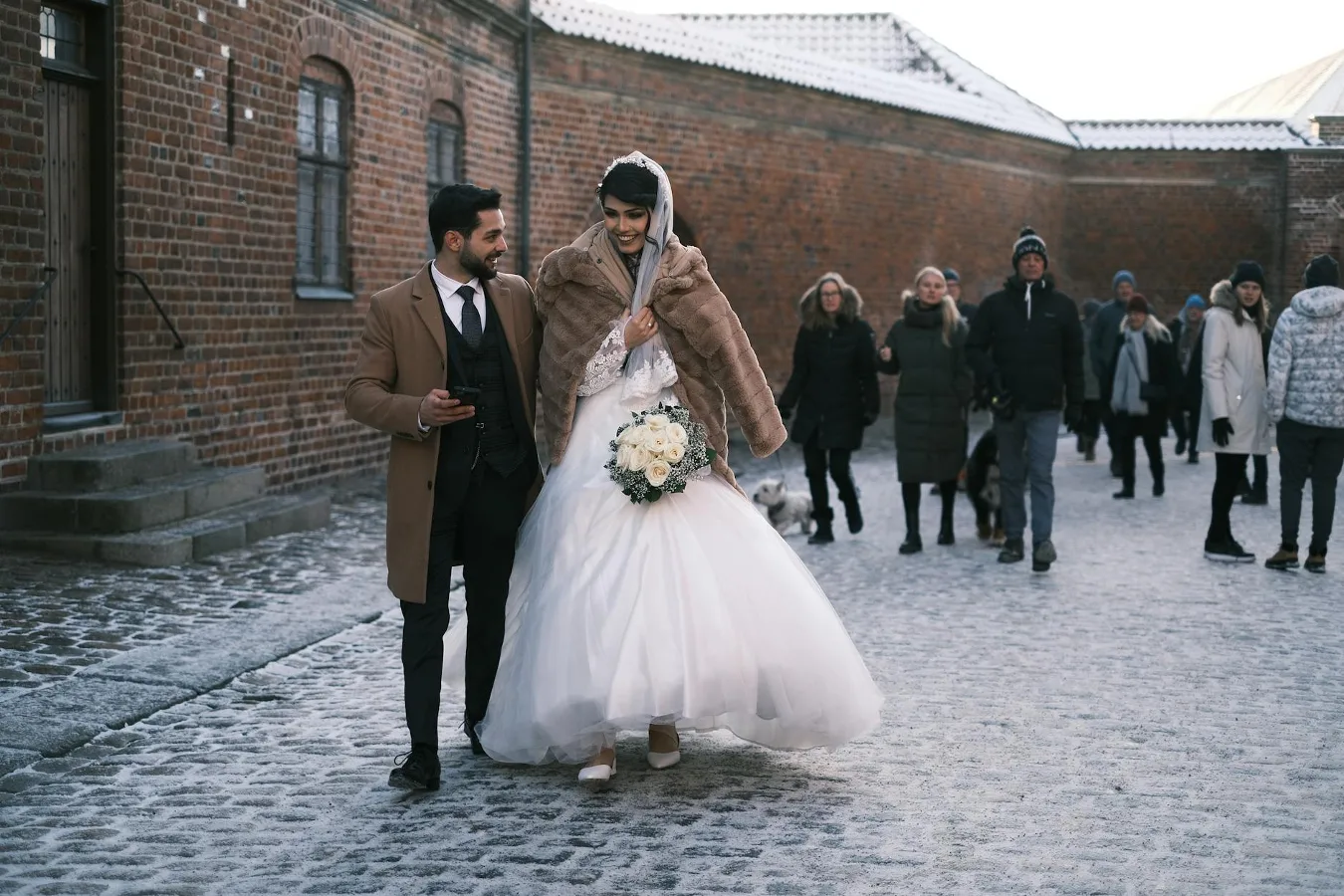
A bridal winter coat is outerwear designed to keep a bride warm while preserving the look of the wedding dress. The right choice depends less on trend and more on how the coat works with the gown, the ceremony setting, and how much coverage you need between arrivals, portraits, and any time spent outdoors. vintage winter coat offers more detail on this point. winter wedding outfit ideas offers more detail on this point.
For most brides, the best option is one that looks elegant in photos, slips on easily over the dress, and does not fight the gown’s silhouette. That may be a tailored wool coat, a faux-fur jacket, a bridal cape, or a wrap-style layer, depending on the dress and the weather.
The real challenge: warmth without overpowering the dress
Winter wedding outerwear has a specific job. It must provide enough insulation for cold air, wind, and travel between locations, but it also needs to work as part of the bridal look. That balance is what makes buying a bridal winter coat different from choosing an everyday coat.
The biggest mistake is focusing only on color or price. A coat can be beautiful on a hanger and still fail on the wedding day if the sleeves are too tight, the closure sits awkwardly over the bodice, or the length cuts off the dress in an unflattering place. Planning around the gown first usually leads to a better result.
Start with the dress silhouette
The wedding dress should guide the coat choice. A fitted sheath, a voluminous ball gown, a clean A-line, and a sleek slip dress all pair best with different kinds of outerwear. wedding dress neckline guide offers more detail on this point.
For fitted or streamlined dresses
Tailored coats, cropped faux-fur jackets, and structured capes usually work well because they echo the clean lines of the dress. A long coat can also work if it opens gracefully and does not create bulk through the hips or hem.
For full skirts and ball gowns
Longer coats, dramatic wraps, and cape styles often look more natural because they respect the scale of the gown. Short jackets can sometimes make a full skirt look visually disconnected, especially in photos.
For minimalist dresses
Minimal dresses leave room for outerwear to add texture. Soft wool, plush faux fur, or a streamlined bridal cape can create contrast without making the look feel busy. The key is to avoid a coat that is so ornate it competes with the dress.
What matters most in a bridal winter coat
Several practical factors matter more than seasonal trend. A good bridal winter coat should be evaluated the same way you would evaluate a formal garment and a weather layer at the same time.
Warmth level
Think about where the coat will actually be worn. A few minutes outdoors for photos calls for different insulation than an outdoor ceremony, a long transfer between venues, or a winter reception with frequent outdoor exits. Wool and wool-blend coats usually offer reliable warmth for formal settings, while faux fur and lined wraps can add comfort for shorter exposures to the cold.
Fit over the dress
The coat should fit over the bodice, sleeves, and any volume at the waist without pulling. Brides often underestimate how much room a dress needs once layers, boning, beading, or sleeves are involved. Trying the coat over the actual gown, or at least over something with a similar shape, helps prevent surprises.
Closure and ease of movement
Buttons, hooks, ties, and open-front styles all create different effects. A closed coat may feel warmer, but it can also flatten the dress or hide embellishment. An open-front coat is easier to style in photos, though it may offer less protection against wind. Consider how often the coat will need to be removed and put back on throughout the day.
Length
Length affects both warmth and proportion. A hip-length jacket reads more casual unless it is carefully tailored. A knee-length or full-length coat usually feels more formal and can better complement a gown. If the dress has a detailed hem, be sure the coat length does not interfere with it visually.
Fabric and finish
Outerwear fabrics should suit the tone of the wedding. Wool, cashmere blends, faux fur, satin-finish wraps, and plush sherpa-style textures each create a different impression. The finish should also work with the dress fabric: matte layers usually pair better with lace and crepe, while soft sheen can suit satin or mikado if handled carefully.
Color
White is not the only option. Ivory, cream, soft blush, winter white, and even pale neutral shades can look more harmonious than a stark bright white, especially if the gown is not optic white. The goal is coordination, not exact matching. Slight variation can be fine if the contrast looks intentional.
Popular bridal winter coat styles and where they work best
Different outerwear styles solve different problems. The best choice depends on whether your priority is warmth, elegance, coverage, or ease of movement.
- Tailored wool coat: Best for a polished, classic look and strong all-around versatility.
- Faux-fur coat or jacket: Best for added texture, warmth, and a more romantic winter feel.
- Bridal cape: Best for dramatic movement and easy layering over many dress shapes.
- Wrap or stole: Best for lighter coverage and a softer silhouette.
- Longline coat: Best for formal ceremonies and tall or full-skirted silhouettes.
- Cropped jacket: Best for fitted gowns and indoor-heavy celebrations with limited outdoor exposure.
Each option has trade-offs. Capes photograph beautifully but may shift in wind. Wraps are elegant but less protective. Tailored coats offer structure, but they can feel less bridal if the styling is too severe. Faux fur can create a luxurious look, though the texture has to feel intentional rather than costume-like.
How to make the coat feel bridal, not just warm
A bridal winter coat becomes part of the outfit when it echoes the dress rather than sitting on top of it as an afterthought. Small styling choices matter more than people expect.
Match the formality level
A very casual puffer-style coat may be practical in extreme conditions, but it usually does not suit most bridal looks. Likewise, an overly ornate coat can overwhelm a simple dress. Aim for a level of formality that feels as considered as the gown itself.
Coordinate textures carefully
Textural contrast can be beautiful, but too many competing finishes create visual noise. If the dress is heavily embellished, a simpler coat often works better. If the dress is plain, a richer texture can add dimension.
Think about photos from every angle
Bridal outerwear is seen from the front, back, and side in a way most everyday coats are not. Check whether the collar frames the face well, whether the back sits smoothly, and whether the sleeves allow the bouquet, gloves, or clutch to sit naturally.
Leave room for accessories
Veils, earrings, gloves, and hairpieces can change how the coat reads. A high collar may fight a dramatic veil placement, while a cape may work beautifully with a simple hairstyle. The coat should support the rest of the ensemble, not compete with it.
Common mistakes brides make with winter outerwear
Several issues come up again and again when choosing a bridal winter coat. Knowing them early can save time and avoid last-minute frustration.
- Buying too late: Outerwear is often chosen after the dress, but it still needs time for alterations and styling decisions.
- Ignoring sleeve volume: Lace sleeves, puff sleeves, and layered bodices may make standard coat sizes feel tight.
- Choosing style over function: A beautiful layer that does not keep you comfortable is a poor wedding-day tool.
- Overmatching white shades: Trying to match every tone exactly can be harder than choosing a coordinated neutral.
- Forgetting the venue: City sidewalks, church steps, mountain air, and outdoor photo spots all create different needs.
- Skipping the dress try-on: Outerwear should be checked against the actual wedding look whenever possible.
A practical nuance that is easy to overlook: the coat may need to come on and off many times, not just once. If the closures are complicated or the sleeves catch on beading, the inconvenience can add up quickly.
Alternatives if a full coat is too much
Not every bride needs a full winter coat. In some weddings, a lighter layer is the more elegant answer.
A bridal cape can offer coverage while preserving the shape of the dress. A faux-fur stole adds a classic winter look without covering the arms completely. A shawl can be enough for indoor venues with brief outdoor transitions. For some brides, gloves, a lined wrap, and a warm indoor-to-outdoor plan are more effective than a heavy coat that dominates the outfit.
If the ceremony is largely indoors, an outer layer may be needed only for transport and portrait time. In that case, think about how the coat will look in a few key photos rather than how it functions all evening.
Decision guide: which bridal winter coat is right for you?
If your priority is maximum warmth, start with a structured wool coat or a fully lined longer style that gives room over the gown. If you want the most romantic look, faux fur or a soft cape often fits the brief. If you care most about showing the dress shape, an open-front wrap, cropped jacket, or elegant cape may be a better match.
Ask three questions before deciding:
- Will I wear this only for travel and photos, or for a real portion of the ceremony?
- Does it complement the dress silhouette, or does it hide the best features of the gown?
- Can I move, sit, hug, and walk comfortably while wearing it?
If the answer to any of those is no, the coat probably needs to be reconsidered.
A simple way to narrow the choice
For a classic winter wedding, the safest route is usually a coat or cape that is formal, easy to layer, and visually quiet enough to let the dress stay central. Brides who want a more fashion-forward look can use texture, shape, and length to make the outerwear a statement piece, but it should still function in real weather.
The strongest bridal winter coat is not necessarily the warmest or the most ornate. It is the one that supports the wedding day without demanding attention from the dress, the setting, or the people wearing it. That balance is what makes the look feel polished rather than improvised.