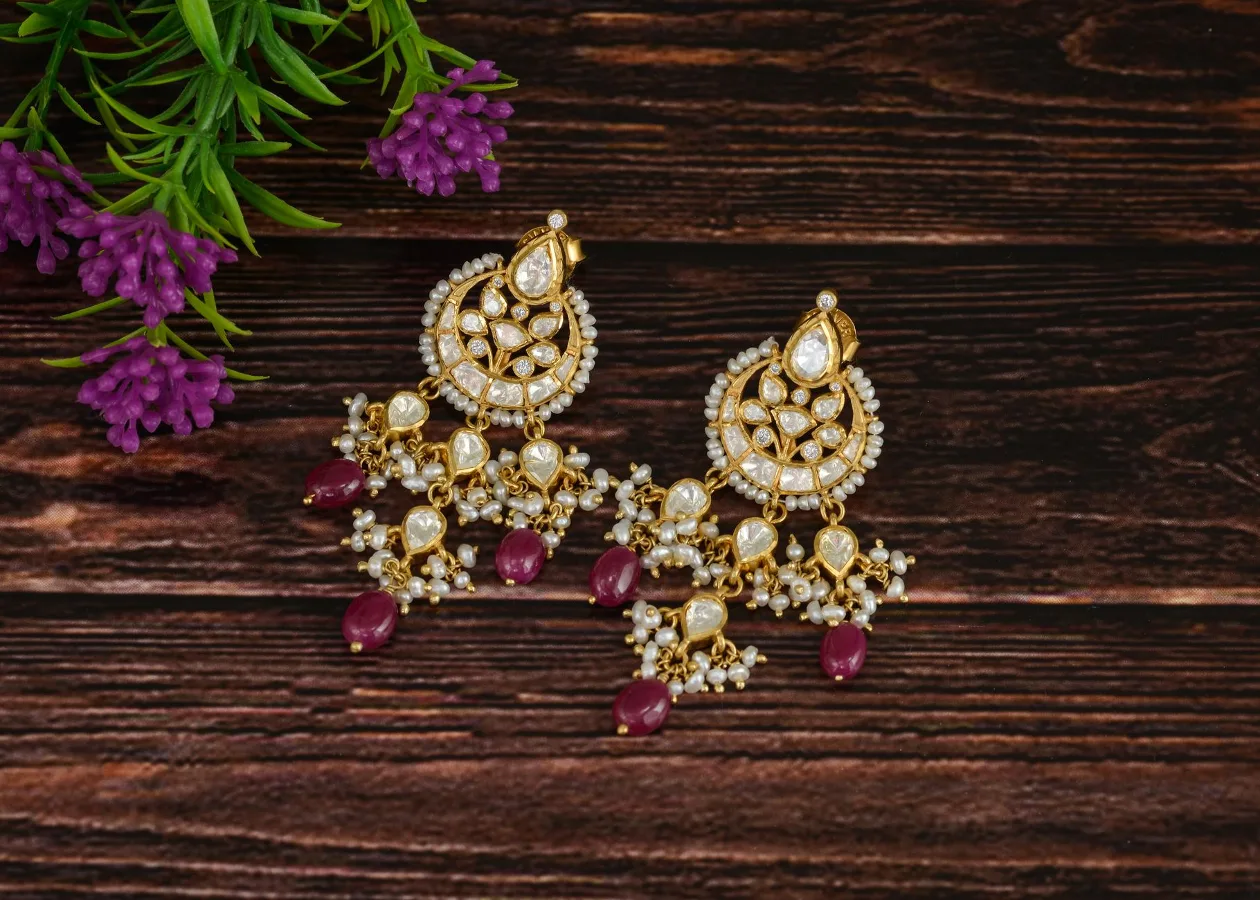
Indian earrings for women are a broad category, but the buying decision usually comes down to one practical question: what will you actually wear them with, and for how long? Some styles are designed to be seen from across a room, while others work best as everyday accents that add texture and color without feeling heavy. If you are shopping for a gift, building a festive jewelry wardrobe, or looking for a pair that can move between ethnic and western outfits, the details matter more than the label. gold-tone earrings for warm outfits offers more detail on this point. gold earrings for women dangle offers more detail on this point. Diamond Gold Earrings for Women: Buyer Guide offers more detail on this point.
That is why the smartest way to shop is to look beyond the style name. A jhumka, chandelier earring, kundan drop, or fusion hoop can all fit under the Indian earrings umbrella, but they differ in weight, comfort, finish, and how formal they feel. The best pair is not always the most ornate one; it is the one that suits your outfit, occasion, and comfort level.
What usually defines Indian earrings for women
Indian earrings for women often draw from traditional design elements such as dome shapes, dangling tiers, filigree work, mirror accents, enamel detailing, stones, pearls, and metallic finishes. The category also includes modern interpretations that borrow Indian motifs without looking strictly traditional.
In practice, shoppers usually see these styles grouped into a few familiar directions:
- Jhumkas: bell-shaped earrings that can range from simple and lightweight to elaborate and heavily decorated.
- Kundan and polki-inspired earrings: ornate styles that suit festive dressing and formal occasions.
- Drops and danglers: longer silhouettes that add movement and work with both ethnic and fusion outfits.
- Studs with Indian detailing: easier to wear daily and often better for office or casual use.
- Chandbali and crescent designs: more decorative styles associated with celebratory dressing.
The misconception is that all Indian earrings are automatically bold or bridal. Many are understated enough for regular use, especially if they are made with lighter materials and simpler finishes.
The most important factors before you buy
1. Comfort and weight
This is the factor many buyers underestimate. An earring can look beautiful online and still be impractical if it pulls on the earlobe or feels tiring after an hour. Weight matters especially for long danglers, large jhumkas, and heavily embellished pieces.
If you plan to wear the earrings for a wedding, a long event, or a full workday, prioritize balance and secure closures. Lighter pieces are usually better for daily wear, travel, or people who prefer not to notice their earrings once they are on.
2. Occasion fit
Different occasions call for different levels of detail. A pair meant for a family function may look too quiet for a festive look, while a bridal-inspired style may feel excessive for a casual dinner. Think in terms of use-case suitability rather than trend.
- Daily wear: studs, small drops, minimal jhumkas, lightweight hoops with Indian motifs.
- Work or hybrid wear: refined danglers, smaller chandbali shapes, subtle stonework.
- Festive wear: kundan-inspired, polki-style, layered, or more ornate jhumkas.
- Wedding guest looks: statement pieces that coordinate with heavier outfits but do not compete with them.
- Bridal or ceremony wear: larger decorative designs that can anchor the whole look.
3. Material and finish
Material affects not just appearance but longevity, maintenance, and skin comfort. Some shoppers want the look of gold without the cost or care requirements, while others prefer sterling silver, brass, or plated fashion jewelry for styling flexibility. The right choice depends on how often the earrings will be worn and how much care you are willing to give them.
Common finish considerations include:
- Gold-tone finishes: versatile and traditional-looking, but the surface can show wear over time.
- Silver-tone finishes: clean and contemporary, often easier to pair with cooler color palettes.
- Stone and pearl accents: add formality and visual interest, but can make cleaning and storage more important.
- Enamel and colorful detailing: useful for playful or regional-inspired styling, especially with plain outfits.
4. Closure and security
Closures rarely get enough attention until a pair feels unstable. Hook backs, push backs, lever backs, and screw-style closures each have trade-offs. For lighter earrings, a simple closure may be enough. For larger pieces, a more secure back can improve confidence and comfort.
If you often wear scarves, dupattas, or high-neck clothing, think about how the earrings will interact with fabric. Longer styles can snag more easily, and elaborate backs may feel awkward under layered clothing.
5. Face shape and proportions
Face shape is not a strict rulebook, but it can help narrow the field. The goal is balance, not correction.
- Round faces: longer drops and vertical lines can create a lengthening effect.
- Oval faces: most styles tend to work well, including studs, jhumkas, and chandbalis.
- Square faces: softer curves, domes, and rounder silhouettes can balance angular features.
- Heart-shaped faces: medium-length drops and wider lower shapes can feel proportionate.
That said, outfit styling matters just as much as face shape. A bold earring may look completely different next to a sari border, neckline, or embroidered blouse than it does in isolation.
How to choose the right style for your wardrobe
If your closet is mostly modern, a pair of Indian earrings with clean lines and restrained ornamentation can be the most versatile starting point. If you wear sarees, salwar suits, or lehengas often, you may want one piece that feels traditional and one that bridges ethnic and contemporary looks.
A practical way to build a small collection is to think in three lanes:
- One everyday pair: lightweight, comfortable, easy to repeat.
- One festive pair: visibly decorative, suited to celebrations and photographs.
- One flexible pair: can move between ethnic and western outfits.
This approach avoids the common mistake of buying only dramatic pieces that rarely leave the jewelry box. The overlooked consideration here is storage and wear frequency: ornate earrings often need more care, so a smaller number of well-chosen pairs can be more useful than a crowded collection.
Styling Indian earrings without overcomplicating the outfit
Indian earrings can do a lot of work for an outfit, especially when the clothing itself is simple. If your dress or kurta is heavily embroidered, the earrings should usually support the outfit rather than compete with it. If the clothing is plain, the earrings can carry more of the visual interest.
A few practical styling principles help:
- Match scale to neckline: higher necklines often pair well with more visible earrings, while open necklines can work with both subtle and bold styles.
- Balance other jewelry: if the earrings are statement pieces, keep necklaces, bangles, or headpieces lighter.
- Coordinate, don’t clone: matching all metals and stones exactly can look rigid; shared warmth or color family is often enough.
- Let the outfit lead: a festive sari can handle more ornament, while a tailored kurta may look better with a cleaner silhouette.
A common misconception is that Indian earrings must always be paired with full traditional dress. In reality, many women wear them with blazers, denim, plain dresses, and monochrome outfits because the contrast makes the earrings feel intentional rather than costume-like.
When traditional styles may not be the best choice
There are times when ornate Indian earrings are simply not the most practical option. If you need all-day comfort, if your workplace is conservative, or if you dislike maintenance, a more restrained style may serve you better. Heavier pieces can also feel awkward during travel, long ceremonies, or hot-weather events.
That does not mean you need to avoid the category entirely. It means selecting a version of the style that fits real life. A smaller jhumka, a short drop with Indian motifs, or a slim chandbali can capture the aesthetic without the inconvenience of a large statement piece.
Alternatives worth considering
If you like the look of Indian earrings but want more versatility, a few alternatives can be useful:
- Temple-inspired studs: less dramatic, easier for daily wear.
- Small hoops with Indian detailing: a good bridge between modern and traditional wardrobes.
- Lightweight danglers: useful if you want movement without heavy ornamentation.
- Ear cuffs or single statement earrings: more fashion-forward, though less traditional.
These options are especially helpful for shoppers who want cultural motifs without committing to a fully festive look every time.
Common mistakes to avoid
- Buying for the photo instead of the wear: an earring that looks dramatic online may be too heavy or long in real life.
- Ignoring maintenance: plated and embellished pieces often need gentler storage and cleaning.
- Choosing only one occasion: a bridal-style piece is beautiful, but it may sit unused after the event.
- Forgetting your wardrobe: the best earrings are the ones that work with what you already own.
- Overmatching everything: too much coordination can make an outfit feel stiff.
Another practical nuance is ear sensitivity. If you know certain metals irritate your skin, that should narrow your options before style does. Even a beautiful pair is a poor purchase if it cannot be worn comfortably.
A simple way to decide before you buy
If you are stuck between several pairs of Indian earrings for women, use this sequence:
- Start with the occasion: daily, festive, wedding guest, or bridal.
- Check the weight and length: consider how long you will wear them.
- Look at your wardrobe: decide whether the pair works with at least three outfits.
- Review the finish: make sure the metal tone and stones suit your style.
- Think about care: choose a piece you can realistically store and maintain.
This decision path keeps the purchase grounded. It also reduces the chance of buying an ornate pair that feels special in theory but impractical in daily life.
Final buying perspective
The best Indian earrings for women are the ones that fit both the occasion and the way you dress. For some shoppers, that means a lightweight jhumka that can be worn often. For others, it means one elevated pair for festivals and weddings. The style name matters less than the balance of comfort, proportion, finish, and versatility.
If you shop with those factors in mind, Indian earrings become easier to choose and more rewarding to wear. You are not just buying decoration; you are choosing a piece that can shape the tone of an outfit, add cultural texture, and stay useful long after the first occasion.