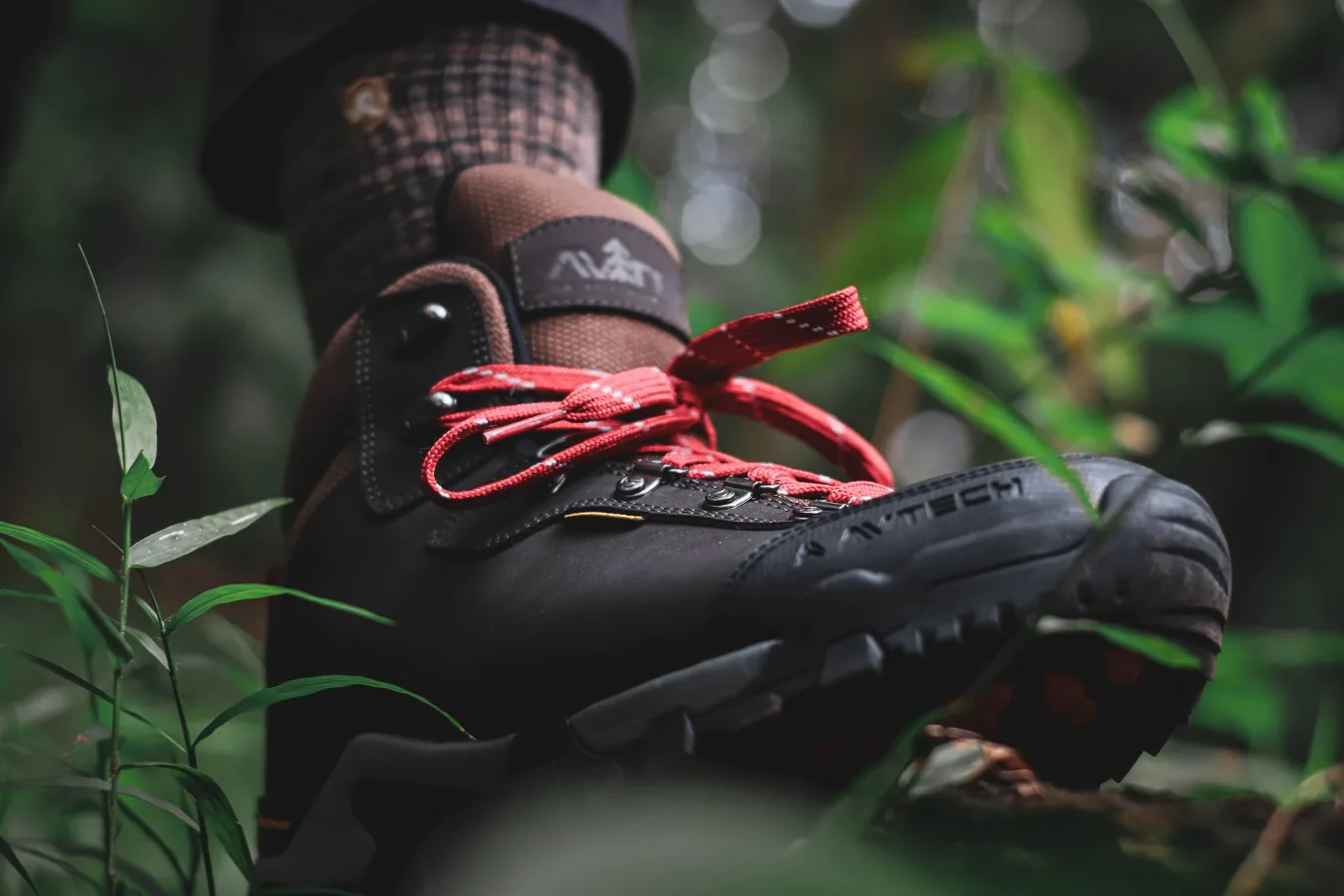
When steel cap hiking boots make sense
Steel cap hiking boots are worth considering when your day moves between rough outdoor ground and environments where toe protection matters. They can be a practical choice for job sites, utility work, property maintenance, hunting camps, or any setting where you may kick rocks, brush against equipment, or carry gear across uneven terrain. best hiking boots for rough terrain offers more detail on this point.
They are less appealing for casual hikers who want the lightest, most flexible boot possible. The added protection comes with trade-offs: more weight, a stiffer feel, and often less natural forefoot flex than a standard hiking boot. That does not make them a bad product category. It just means they solve a specific problem rather than every outdoor footwear problem.
If your priority is protection first and trail comfort second, steel cap hiking boots can be a sensible middle ground. If your priority is long-distance comfort on maintained trails, a conventional hiking boot or trail shoe may be a better fit.
What steel cap hiking boots are designed to do
The defining feature is the reinforced toe cap, usually steel, which is meant to reduce the risk of impact injuries to the toes. In a hiking-oriented boot, that protection is paired with an outsole designed for traction, a higher upper for ankle coverage, and a build that can handle mud, rocks, and uneven ground better than a basic casual boot.
The key point is that these boots are not just hiking boots with a metal toe. They are usually closer to work footwear adapted for outdoor movement. That distinction matters because it helps explain the fit, the stiffness, and the overall feel. Many shoppers expect hiking-boot comfort with extra protection, but the reality is more nuanced.
For the right user, that trade-off is acceptable. For others, it can become tiring over a full day because the boot may feel less responsive than lighter trail footwear.
Start with the use case, not the label
The most useful way to shop is to think about where the boots will be worn most often. Steel cap hiking boots tend to work best in mixed-use scenarios rather than pure recreation.
- Work and trail overlap: Good for people who need one pair for fieldwork, property tasks, and short hikes.
- Rugged property use: Useful on farms, wooded land, and uneven ground where dropped tools or logs are a concern.
- Camp and outdoor chores: Helpful when protection matters more than ultralight comfort.
- Short to moderate hikes: Reasonable if the route is rough, wet, or rocky and the weight penalty is acceptable.
They are usually a weaker choice for fast day hikes, long backpacking miles, or warm-weather trail use where breathability and low weight matter more than toe protection.
Step-by-step criteria for choosing a pair
1. Check how much protection you actually need
Toe protection is valuable, but not every outdoor activity requires a steel cap. If your biggest concern is brush, mud, and occasional impact, a reinforced toe may be enough. If you are around heavy equipment or objects that can fall onto the foot, steel cap protection becomes more relevant.
One overlooked point: toe protection does not replace good fit. A protective boot that fits poorly can still cause toe pain, rubbing, or blistering, especially on descents.
2. Look closely at weight and stiffness
Weight changes how a boot feels more than many shoppers expect. Heavier boots can feel stable, but they also demand more effort on climbs, sidehills, and long walks. Stiffness can help support the boot under load, yet it may also reduce the natural rolling motion of the foot.
If you are choosing steel cap hiking boots, decide whether you are willing to accept a boot that feels more planted than agile. That is often the right trade if durability and protection are the goal.
3. Evaluate traction for your actual terrain
Not all outsoles handle the same conditions well. A boot can have a protective toe and still perform poorly on wet rock, loose gravel, leaf litter, or muddy ground. Look for lug depth, rubber quality, and tread pattern that match your environment.
For example, deep lugs can help in mud and soft ground, while a more balanced tread may be better for mixed surfaces and paved transitions. If your route includes both trail and hard surfaces, the boot needs a compromise outsole rather than an aggressive sole that feels awkward on flatter ground.
4. Pay attention to upper materials
Upper materials affect durability, break-in, maintenance, and comfort. Leather often offers strong abrasion resistance and can hold up well in rough use, but it may need more care. Synthetic uppers can reduce weight and dry faster, though they may not feel as substantial in hard-use settings. how boot materials affect comfort offers more detail on this point.
Water-resistant or waterproof construction can be useful in wet climates, but it also adds another trade-off: less breathability. In warm regions or during active movement, that can make the boots feel hotter than expected.
5. Make fit the deciding factor
With steel cap boots, fit matters even more than style. Toe protection can make a boot feel narrower or more structured in the front, so try to leave enough room for toe movement without allowing the foot to slide forward on descents.
Check heel hold, arch feel, forefoot width, and whether the boot allows your toes to splay naturally. If the boot feels fine standing still but becomes painful after a few minutes of walking downhill, it is probably not the right shape for your foot.
Benefits that make steel cap hiking boots appealing
- Impact protection: The steel cap adds a layer of defense in environments with dropped objects or frequent foot contact with hard surfaces.
- Durability focus: These boots are often built with heavier-duty materials than casual hiking footwear.
- Mixed-use flexibility: They can serve both outdoor work and rough walking better than many pure work boots or lightweight hikers.
- Rough-ground confidence: The extra structure can feel reassuring on rocky or debris-filled terrain.
That said, these benefits only matter if the boot’s overall build supports them. A protective toe alone does not guarantee comfort, traction, or longevity.
Common trade-offs and limitations
The biggest misconception is that steel cap hiking boots are simply “better” hiking boots. They are not. They are specialized boots that solve one problem at the expense of others.
- More weight: This can make long walks and climbs feel more fatiguing.
- Less flexibility: The front of the boot may not bend as naturally as a lighter hiking boot.
- Potential temperature issues: Heavier construction and protective components can feel warmer.
- Possible toe discomfort: If the cap shape does not match your foot, the front of the boot may feel intrusive.
- Break-in time: Some pairs need time before they feel comfortable on longer outings.
Another practical limitation: protective boots can encourage people to carry too much confidence into unstable terrain. Toe protection is helpful, but it does not reduce ankle sprain risk, prevent slips, or substitute for careful foot placement.
Examples of good fit scenarios
These examples can help narrow the choice:
- Utility worker who hikes access trails: Steel cap hiking boots can be a strong fit because protection and traction both matter.
- Landowner doing brush clearing and fence checks: A rugged boot with toe protection may be more useful than a lightweight trail boot.
- Weekend hiker on rocky paths who also does yard and property work: A mixed-use protective boot can reduce the need for two separate pairs.
- Long-distance backpacker: A steel cap boot is often the wrong direction unless foot protection is a very specific requirement.
A practical checklist before you buy
- Decide whether toe protection is a real need or just a nice-to-have.
- Match the boot to your most common terrain, not your occasional terrain.
- Compare weight and stiffness against how far you usually walk.
- Check whether the toe box shape suits your foot width.
- Think about heat and moisture management if you hike in warm weather.
- Inspect outsole tread for mud, rock, gravel, or mixed-surface traction.
- Consider whether you need waterproofing or prefer more breathability.
- Look for a break-in period you are willing to manage.
- Make sure the boot works with your usual socks and insoles.
- Choose the pair you are most likely to wear consistently, not only the one that looks toughest.
Steel cap hiking boots vs. other options
If you are still undecided, compare them against three common alternatives.
Traditional hiking boots are usually lighter and more comfortable for trail use, with better walking efficiency and often better breathability. They make more sense if impact protection is not a concern.
Composite toe boots can be an alternative when you want toe protection without the same metal feel or weight profile associated with steel. The best choice depends on your safety needs and fit preferences.
Lightweight trail shoes are ideal for speed, comfort, and reduced fatigue on maintained paths, but they offer far less protection from impact and rough work conditions.
The right option depends less on brand category and more on the balance between protection, comfort, and mileage.
Maintenance and care basics
Protective boots tend to last longer when the uppers and outsole are cared for regularly. Dirt and grit can wear materials faster, and wet conditions can shorten the life of leather or adhesives if the boots are left dirty after use.
- Brush off mud and grit after hikes or workdays.
- Let boots dry naturally away from direct heat.
- Use care products appropriate for the upper material.
- Check eyelets, stitching, and outsole wear periodically.
- Replace insoles if cushioning compresses unevenly.
Good care also helps preserve comfort. A boot that is structurally intact but internally compressed can still become unpleasant on longer outings.
Who should probably skip them
Steel cap hiking boots are not the best fit for everyone. You may want to look elsewhere if you prioritize lightweight movement, hot-weather breathability, long-distance hiking comfort, or frequent running-style agility on trails. They are also less attractive if you only need a boot for occasional casual use and are unlikely to face impact hazards.
That is not a criticism of the category. It is simply the wrong tool for some jobs.
Final buying takeaway
Steel cap hiking boots make the most sense when your footwear needs sit between work protection and outdoor mobility. The best pairs balance toe safety, stable traction, and a fit that lets you move without irritation. If you choose them for the right reasons, they can be a practical one-boot solution. If you choose them because they seem tougher by default, you may end up with more weight and stiffness than you need.
Start with your terrain, your safety concerns, and how far you actually walk. That will tell you whether steel cap hiking boots are the right answer or whether a lighter hiking boot, composite toe option, or dedicated work boot would serve you better. composite toe hiking boots offers more detail on this point.