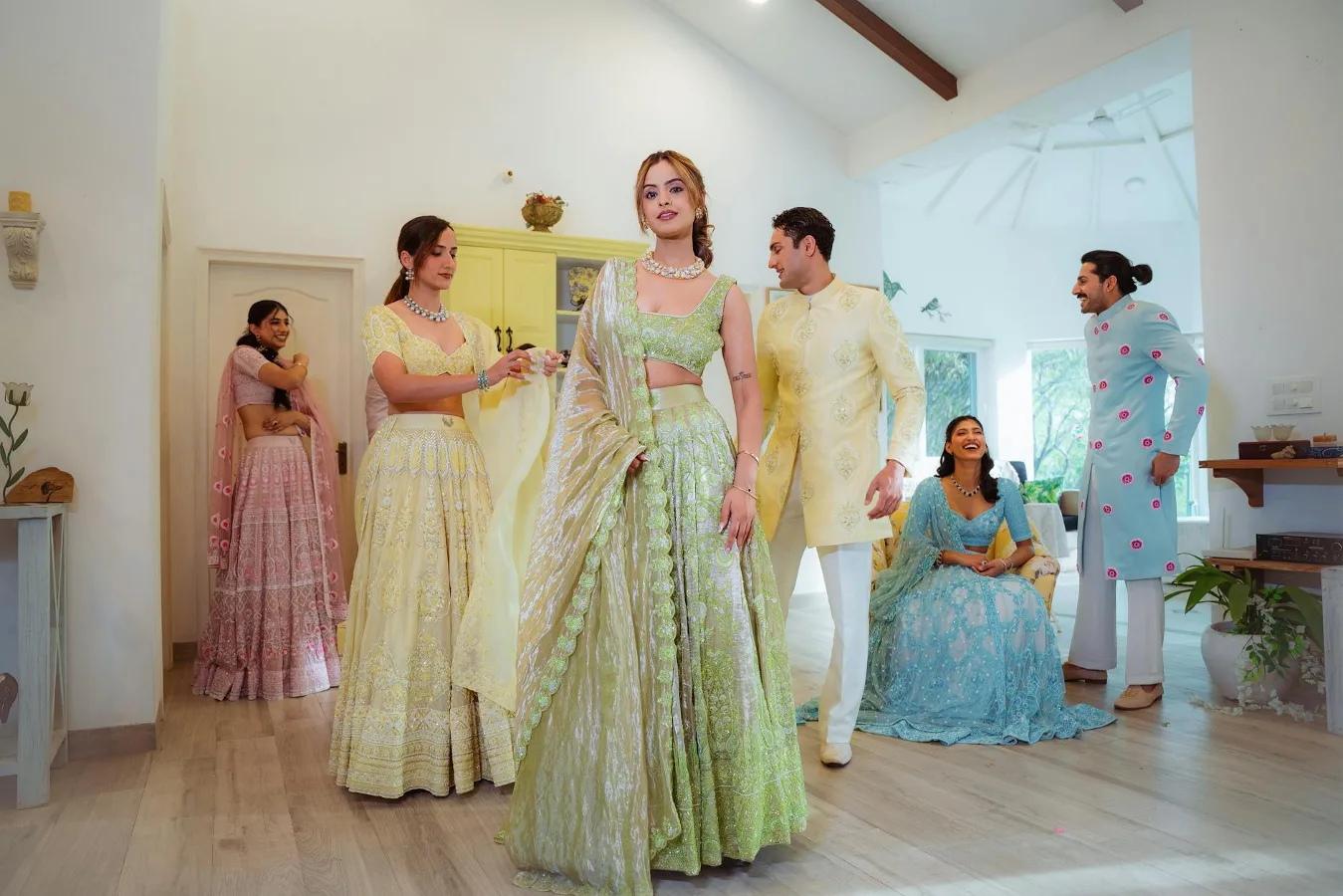
Indo western dresses for women are fusion outfits that combine Indian design details with Western silhouettes. They work well when you want something festive, polished, and modern without dressing in a full traditional look.
The category is broad, which is part of the appeal. It can include dress-length kurtas, gown-style outfits with Indian embroidery, jacket dresses, asymmetric hems, draped silhouettes, sharara-inspired sets, and saree-influenced evening wear. Because the style range is so wide, the best choice depends less on the label and more on the occasion, fabric, fit, and how much movement you need. best fabrics for occasion wear offers more detail on this point.
What makes an Indo western dress work
The strongest Indo western pieces usually balance two things: a familiar Western shape and one or more Indian elements. That might be zari embroidery, mirror work, brocade, gota trim, an anarkali-like flare, a cape layer, or a draped skirt with a structured top. If either side feels too dominant, the outfit can lose its fusion appeal.
A common misconception is that Indo western always means heavily embellished. That is not true. Some of the most versatile options are understated, using clean tailoring with one accent detail such as a printed dupatta, a handcrafted border, or an asymmetric cut. These pieces often wear better across multiple events because they are easier to accessorize and less tied to a single look.
Key factors to consider before buying
1. Occasion
Start with where you plan to wear it. A cocktail reception, sangeet, office festive event, family dinner, and destination wedding all call for different levels of formality. A sleek draped gown may suit an evening event, while a layered kurta dress can feel more practical for daytime celebrations.
If the dress is meant for a wedding guest outfit, think about movement, photography, and how long you will wear it. Outfits with very long hems, heavy dupattas, or elaborate sleeves can look elegant but may be harder to manage through a full event.
2. Silhouette and fit
Indo western fashion looks best when the silhouette flatters the body without fighting it. A-line cuts, empire waists, straight cuts, flared hems, and wrap-style shapes are popular because they suit a range of body types and event settings. More dramatic styles can be striking, but they usually need more careful fitting.
Focus on how the garment sits at the shoulders, bust, waist, and hem. Fusion outfits often rely on drape and structure at the same time. If one part is too loose, the design can look unfinished. If it is too tight, the ethnic details may crease or pull in awkward places.
3. Fabric and drape
Fabric has a bigger effect than many shoppers expect. Lightweight georgette, chiffon, crepe, satin blends, silk blends, and brocade each create a different result. Flowy fabrics give movement and softness. Structured fabrics hold shape better and can make embroidery or tailoring stand out.
For warmer weather or long events, breathable and lighter fabrics are usually easier to wear. For formal evening looks, richer fabrics can feel more elevated, but they may also be heavier and less forgiving. The right choice depends on whether you value comfort, shape, or visual impact most.
4. Embellishment level
Embellishment changes both the mood and the practicality of the dress. Sequins, beads, mirror work, thread embroidery, and metallic trims can add depth, but they also affect comfort and maintenance. Heavily decorated pieces may need more careful storage and gentler handling.
If you want a dress that works across more than one event, look for balanced decoration rather than full coverage. A well-placed border, embroidered yoke, or statement sleeve may be enough. This is a useful overlooked consideration because many buyers focus on how impressive a dress looks online, then find that it is difficult to repeat or rewear.
5. Comfort and mobility
Comfort matters as much as appearance, especially for weddings and parties that last several hours. Check whether the outfit allows you to sit, walk, climb stairs, dance, and wear the shoes you already own. A dress can be visually beautiful and still be impractical if the sleeves are restrictive or the skirt is hard to manage.
Pay attention to closures, lining, and weight. A breathable lining can make a dress more wearable, while stiff inner construction may help the shape but reduce ease of movement. If you are likely to be on your feet for long stretches, comfort should be treated as a buying criterion, not an afterthought.
Popular types of Indo western dresses for women
Kurta-style dresses
These are among the easiest fusion styles to wear. They often look like streamlined dresses but carry Indian details through embroidery, prints, or traditional necklines. They are a strong choice for festive lunches, casual celebrations, and semi-formal gatherings. fusion wear styling tips offers more detail on this point.
Drape dresses
Drape dresses borrow from sari-inspired styling and are popular for evening events. They can be elegant and contemporary, but the fit must be precise because the draping itself becomes part of the structure. Poor drape placement can make the outfit look bulky rather than fluid.
Jacket dresses
A jacket layer can instantly make a simple dress feel more intentional and dressed up. This style also offers flexibility because the inner dress can be more minimal while the jacket provides the visual interest.
Gown-style fusion wear
These pieces work for formal occasions when you want drama without committing to a traditional lehenga. Look for clean tailoring and good proportion, especially around the bodice and hemline, so the dress reads as refined rather than overloaded.
Sharara and palazzo sets
Although not dresses in the strictest sense, they are often searched alongside indo western dresses because they solve the same styling need. They are useful when you want movement, comfort, and a festive feel with a more separated silhouette.
How to choose the right one for your body and style
The most flattering Indo western dress is usually the one that aligns with how you like to dress already. If you prefer clean lines, choose tailored shapes with subtle Indian accents. If you like drama, you may prefer volume, layered hems, or statement sleeves. A style that feels like a compromise often ends up sitting unused.
For shorter frames, proportion matters more than ornamentation. Too much fabric, an overly long jacket, or a low visual waistline can overwhelm the body. For taller frames, long drapes and structured flares often work well because they preserve line and balance.
Color also changes the effect. Deep jewel tones, metallics, soft neutrals, and rich pastels each create a different mood. If you plan to wear the dress for more than one event, choose a color that coordinates with jewelry and shoes you already own. ethnic wear color guide offers more detail on this point.
Styling decisions that make a big difference
Accessories can either sharpen or clutter an Indo western look. Because the outfits already mix influences, keep the styling intentional. A statement earring may be enough for a heavily detailed dress, while a simpler outfit can handle a bold necklace or embellished clutch.
Shoes matter more than many shoppers expect. Some Indo western dresses look best with heels that keep the hem line clean, while others work with block heels or refined flats. The wrong shoe can make a fusion outfit feel unfinished, especially if the silhouette depends on length and balance.
Hair and makeup should match the mood of the outfit rather than follow a fixed formula. A sleek bun, soft waves, or a clean half-up style can all work depending on neckline, sleeve shape, and embellishment level. The goal is coherence, not excess.
Practical trade-offs to weigh
There is usually a trade-off between versatility and impact. A highly ornate dress may look memorable for one event but be harder to restyle. A simpler fusion dress may be less dramatic but easier to repeat with different accessories and occasions.
There is also a trade-off between comfort and structure. Lightweight fabrics are easier to wear, but they may not hold sculpted shapes as well. Heavier fabrics can feel more formal, yet they may be less suitable for warm weather or long functions.
Maintenance is another real-world constraint. Embellished garments often require more careful hanging, storage, and cleaning. If you want something low-maintenance, prioritize fewer embellishments, durable lining, and fabrics that are less delicate to manage.
Common mistakes to avoid
- Choosing a dress for the photograph alone and ignoring how it feels after several hours.
- Picking a silhouette that needs constant adjustment.
- Over-accessorizing a dress that already has strong embroidery or detailing.
- Ignoring hem length and shoe height together.
- Buying a heavily embellished piece without thinking about storage and cleaning.
- Assuming all Indo western dresses are equally suitable for every event.
When a different outfit may be a better choice
Indo western dresses are versatile, but they are not always the best answer. If the event is very traditional, a classic lehenga, saree, or salwar suit may feel more appropriate. If the setting is highly formal and minimal, a clean evening dress could be a better fit than a fusion piece with ethnic accents.
For some shoppers, the ideal middle ground is a separate top-and-skirt combination or a coordinated set. These options can offer more flexibility for fit and styling while still delivering a polished fusion look.
How to shop smarter online
Online shopping is convenient for fusion wear, but it requires a more careful read of the product page. Look closely at the silhouette, lining description, sleeve shape, closure type, and whether the garment is intended as a dress, set, or layered piece. Product photos can be helpful, but they do not always show weight, movement, or transparency clearly.
Check the size guide against your measurements rather than relying on your usual size alone. Indo western cuts vary widely, especially around the bust, waist, hips, and shoulders. If the style has structured tailoring or built-in drape, the correct fit becomes even more important.
Return policy, alterations, and care instructions also matter. A good-looking dress is less useful if the sizing is unforgiving or the care requirements are higher than you want to manage.
Simple decision guide
If you want a dress for frequent wear, choose a lighter silhouette with moderate embellishment and a forgiving fit. If you need a standout piece for a wedding or formal event, focus on fabric quality, drape, and proportion. If comfort is the priority, look for breathable material, easy closures, and a shape that lets you move naturally.
The best Indo western dresses for women are not the most decorated ones. They are the ones that suit the occasion, flatter the body, and feel believable in real life, not just on a hanger.
FAQ
What is an Indo western dress?
An Indo western dress combines Indian design details with Western silhouettes. It may include embroidery, traditional textiles, draping, or ethnic trims paired with a modern dress shape.
Can Indo western dresses be worn to weddings?
Yes, many are suitable for wedding guest attire, especially for receptions, sangeets, and other festive functions. The right level of embellishment depends on the event dress code.
Which fabrics are easiest to wear?
Lighter fabrics such as georgette, chiffon, crepe, and some silk blends are often easier for long events because they usually feel less restrictive than heavier structured materials.
How do I style an Indo western dress without overdoing it?
Choose one focal point, such as earrings, a clutch, or a pair of heels, and let the dress do most of the work. If the outfit is highly embellished, keep the rest of the styling restrained.
Are Indo western dresses practical for repeat wear?
They can be, especially if the design is balanced and not overly occasion-specific. Simpler silhouettes and moderate embellishment are usually easier to restyle for different events.