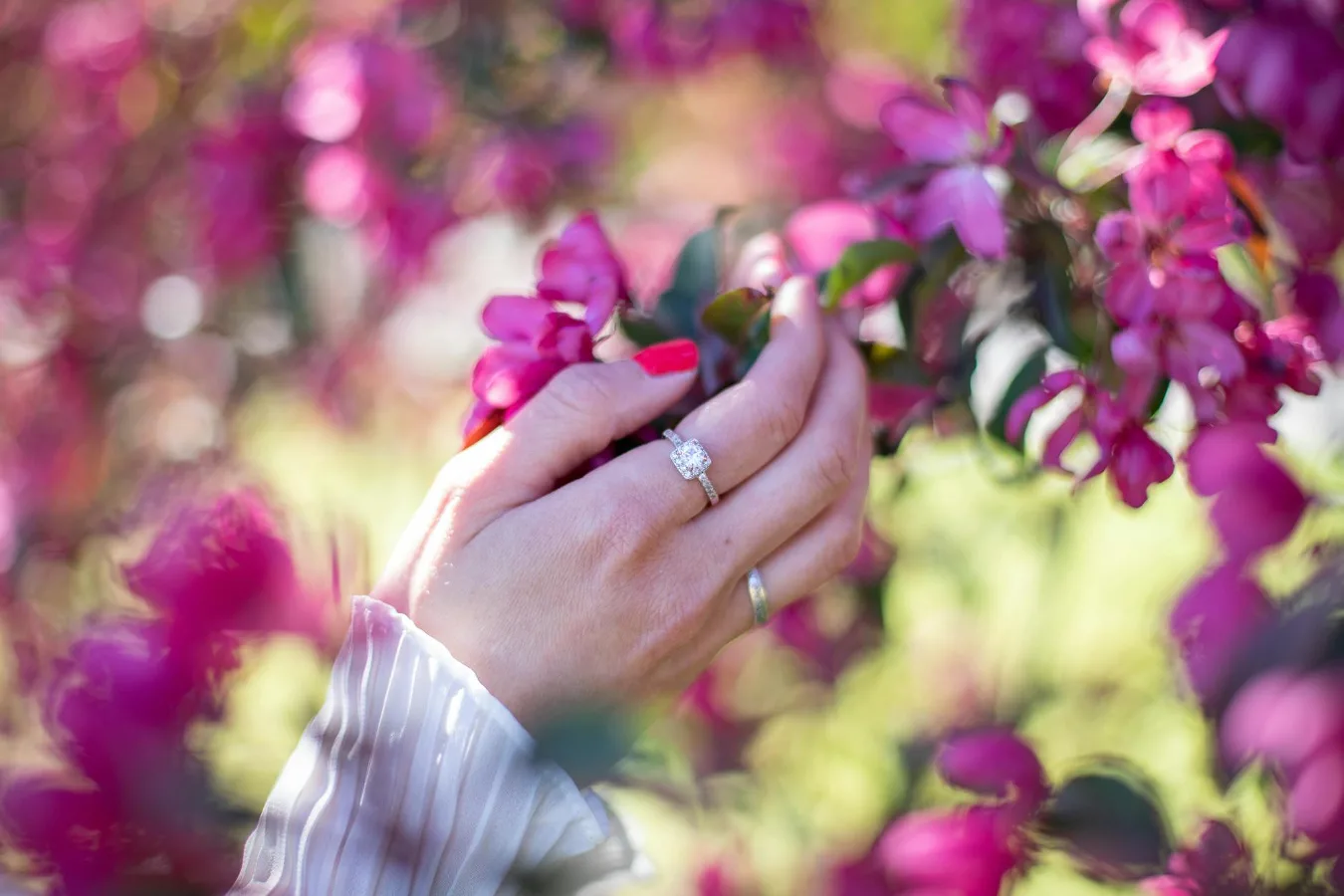
Why pink engagement rings appeal to so many buyers
Pink engagement rings are popular because they offer a softer, more personal look than a classic colorless diamond ring. They can feel romantic, modern, vintage-inspired, or quietly distinctive depending on the stone and setting. colored gemstone engagement rings offers more detail on this point.
For many shoppers, the appeal is not just color. Pink also gives you room to choose between different materials, price points, and durability levels. A pink engagement ring can feature a natural pink diamond, a pink sapphire, morganite, a pink tourmaline, or even a color-enhanced stone. Each option has its own trade-offs, which matters if the ring will be worn every day.
If you are shopping for one, the key question is not simply which pink ring looks best. It is which type of pink ring fits the wearer’s style, daily habits, and expectations for maintenance.
Start with the stone, not just the color
The biggest mistake buyers make is treating all pink engagement rings as the same. The stone is usually the main factor that determines appearance, durability, and long-term satisfaction. Engagement Rings Under $500: Smart Buyer Guide offers more detail on this point.
Pink diamond
Pink diamonds are the most famous option, and they usually have the strongest prestige appeal. They can range from subtle blush tones to vivid pink. Because natural pink diamonds are rare, they are often chosen by buyers who want something truly distinctive.
That said, rarity also means you should be careful about expectations. Natural pink diamonds are not the same as color-treated diamonds or lab-grown pink diamonds, and the visual effect can differ. If you are comparing options, ask whether the color is natural, enhanced, or lab-grown so you understand what you are paying for.
Pink sapphire
Pink sapphire is a practical choice for many engagement rings. Sapphire is generally valued for durability and daily wear suitability, which makes it appealing for someone who wants color without feeling overly delicate. Pink sapphires also come in a wide range of tones, from pale blush to deeper pink.
This is often a strong middle ground for buyers who want a ring that looks elegant but is less fragile than softer gemstones. The trade-off is that pink sapphire does not have the same rarity profile as a natural pink diamond, so the look is more accessible and often less investment-focused.
Morganite
Morganite is a common choice in pink engagement rings because it offers a romantic peach-pink to blush tone at a more approachable price point than many pink diamonds or sapphires. It can look especially attractive in rose gold and halo settings.
The main limitation is durability and care. Morganite is generally better suited to buyers who are comfortable being more mindful about knocks, scratches, and cleaning. If the ring will be worn constantly by someone very active, that’s worth weighing carefully.
Pink tourmaline and other alternatives
Pink tourmaline can create a beautiful, more saturated pink look, but it is usually better suited to someone who understands the trade-off between color and everyday durability. Other stones, including pink spinel and certain treated gems, may also appear in pink engagement rings.
These alternatives can be excellent if the priority is color and character. They are less ideal if the wearer wants the most carefree everyday ring possible.
Match the ring to the wearer’s lifestyle
Engagement rings are worn often, so style should be balanced with practicality. A pink ring that looks perfect in photos may not be the best ring for someone who works with their hands, travels constantly, or prefers minimal maintenance.
- For active daily wear: prioritize a sturdier gemstone, a secure setting, and a lower-profile design.
- For occasional wear or light use: you can place more weight on color, uniqueness, and decorative detail.
- For someone who loves sparkle: halo and pavé designs can amplify the pink center stone.
- For someone who prefers simplicity: a solitaire or three-stone style may feel cleaner and easier to maintain.
A useful way to think about pink engagement rings is to separate emotional preference from practical use. The most romantic-looking option is not always the best long-term choice, especially if the ring needs to handle daily life without constant caution.
Setting style changes the whole look
The setting is just as important as the stone. It affects the ring’s overall style, how large the center stone appears, and how much protection the stone receives.
Solitaire
A solitaire setting keeps attention on the pink stone itself. This can be a smart choice if the color is the main attraction. It usually creates a cleaner, less cluttered look and can make the ring feel timeless rather than trendy.
Halo
A halo setting surrounds the center stone with smaller stones, often increasing brightness and visual impact. This can make a pink center stone look larger or more vivid. It is a popular option for buyers who want a more dramatic appearance without moving to a much larger center stone.
The trade-off is maintenance. More small stones mean more places for dirt to collect and more visual complexity to keep clean.
Three-stone
Three-stone rings can frame the pink center stone with side stones that balance the color and add symbolic meaning. This style often works well for someone who wants a substantial look without relying on a very large center stone.
Vintage-inspired designs
Vintage-inspired settings can be especially flattering for pink engagement rings because they reinforce the romantic feel. Milgrain edges, filigree, and geometric details can make the ring feel heirloom-like. The downside is that more intricate settings can require more care and may not suit every lifestyle.
Metal color matters more than many buyers expect
The metal you choose can shift the pink tone dramatically. This is one of the most overlooked parts of buying a pink engagement ring.
- Rose gold: Often enhances the warmth in blush and peach-pink stones. It can create a cohesive, romantic look.
- Yellow gold: Adds warmth and can make some pink stones feel richer and more vintage-inspired.
- White gold or platinum: Creates stronger contrast, which can make the pink center stone stand out more sharply.
There is no single best choice. Rose gold is often assumed to be the obvious match for pink stones, but that is not always true. A cooler pink sapphire may look more striking in white metal, while a soft morganite can feel especially harmonious in rose gold. The best metal is the one that supports the specific shade of pink you are buying. pink sapphire buying guide offers more detail on this point.
Color intensity, clarity, and cut affect how pink the ring looks
With pink engagement rings, two stones can be the same type and still look very different. Color intensity, cut, and transparency all change the final appearance.
Color intensity determines whether the pink reads as pale blush, medium pink, or vivid pink. Some buyers want a subtle tone that changes gently in different lighting. Others want a stronger color that is obvious at a glance.
Cut affects brightness and face-up color. A well-cut stone can improve sparkle and help the pink appear more even. For some gemstones, certain cuts may show color more strongly than others.
Clarity and transparency matter because cloudy or overly included stones can look less lively. This is particularly relevant for stones like morganite, where a pale or sleepy appearance may be less desirable than a bright, clean look.
If the ring is being chosen online, look closely at how the stone is described and photographed. Ask whether the images are color-corrected and whether the stone’s tone may look different in natural light, indoor light, and on-screen images.
Consider durability honestly, not emotionally
One of the most practical realities of pink engagement rings is that beautiful stones vary a lot in hardness and toughness. That matters because an engagement ring is usually expected to handle daily wear for years.
Hardness is only part of the story. A stone can resist scratching reasonably well and still be vulnerable to chipping or abrasion in a setting. That is why the safest ring for a busy lifestyle is usually a balance of gemstone choice, setting design, and profile height.
If you know the wearer is hard on jewelry, a sturdy stone in a secure setting will usually be a better decision than a delicate gem in an open, high setting. If the ring is more symbolic or reserved for special occasions, you have more flexibility.
Budget choices are about value, not just price
Pink engagement rings span a wide range of budgets because the stone choices are so different. But value is not the same as the lowest price.
A more affordable ring can be the better buy if it gives the wearer the look they love without forcing compromises they will regret. On the other hand, a ring that looks beautiful but requires constant caution may not feel like good value over time.
Ask yourself what matters most:
- the prestige of the center stone
- the strength and practicality of the ring
- the intensity of the pink color
- the size and visual impact
- the ease of upkeep
There is no universal answer. A morganite ring in a thoughtful setting may be the best value for one buyer, while a pink sapphire or pink diamond may be the better long-term choice for another.
Common mistakes to avoid
Pink engagement rings are easy to love and easy to overbuy. The most common mistakes happen when the visual appeal outweighs the practical details.
- Choosing a stone without checking durability: A ring that looks stunning in a showroom can be inconvenient in daily life.
- Ignoring the effect of metal color: The wrong metal can flatten the pink tone or make it look less intentional.
- Picking a setting that is too high or delicate: This can increase the risk of snags and damage.
- Assuming all pink stones are equally rare: Different materials sit in very different categories.
- Overlooking maintenance needs: Intricate settings and porous or softer stones may need more regular attention.
Another quiet mistake is choosing a ring that photographs beautifully but feels less satisfying in everyday light. Pink can read differently depending on the environment, so real-world versatility matters.
How to narrow down the right pink engagement ring
If you are trying to make a decision, start with a simple order of priorities.
- Choose the stone category. Decide whether the priority is rarity, durability, affordability, or color saturation.
- Choose the setting style. Pick a solitaire, halo, three-stone, or vintage look that suits the wearer’s taste and lifestyle.
- Choose the metal. Match the metal to the pink shade and the wearer’s preference for warmth or contrast.
- Check practical details. Think about profile height, security, cleaning needs, and everyday comfort.
- Compare the overall impression. A great ring should feel balanced, not just bright or trendy.
If the choice still feels uncertain, a simpler design is usually the safer path. Clean lines and a secure setting are easier to live with than highly ornate details, especially for a ring intended for constant wear.
When a pink ring is the better choice than a classic diamond
Pink engagement rings work especially well for buyers who want the ring to feel personal rather than traditional. They are a strong fit for someone who likes softer colors, vintage romance, or a more individual look.
They can also be a smart choice when the goal is to prioritize style and symbolism over convention. A pink ring can feel special without being flashy, and it can stand out while still remaining wearable.
That said, a pink ring is not automatically better than a classic diamond ring. If the wearer wants maximum durability with minimal upkeep, a traditional diamond or a sturdy colored stone in a low-profile setting may be more sensible. The best choice is the one that matches the person who will wear it, not the one that is most popular in search results.
A practical short list for shoppers
Before you buy, ask these questions:
- Will the ring be worn every day or only sometimes?
- Is the priority color, rarity, durability, or price?
- Does the wearer prefer a subtle blush tone or a stronger pink?
- Is the setting protective enough for real-life use?
- Will the metal complement the stone or compete with it?
- Does the design still feel appealing without relying on trendiness?
Pink engagement rings offer a lot of flexibility, which is why they remain such a compelling category. The best version is not simply the prettiest one in a photo. It is the one that balances beauty, wearability, and long-term comfort in a way that feels right for the person who will wear it most.