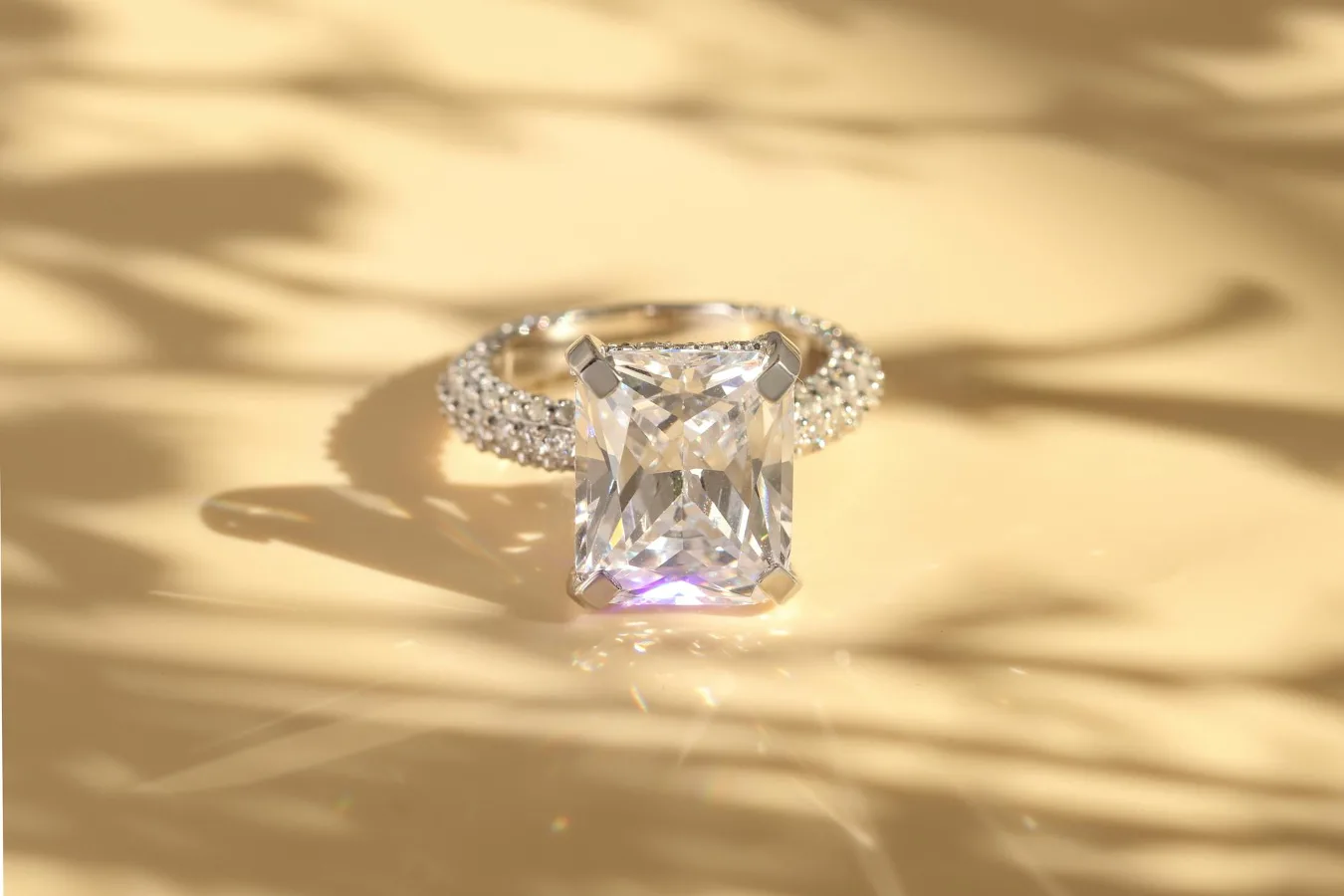
Radiant cut diamond engagement rings are a strong choice for shoppers who want a stone that feels both bright and structured. The cut blends the rectangular or square outline many buyers like with the lively sparkle associated with brilliant-style faceting, which is why it often sits between more geometric cuts and softer, rounded shapes in the decision process. three-stone ring style guide offers more detail on this point. cushion cut vs radiant cut offers more detail on this point.
If you are comparing radiant cut diamond engagement rings, the real question is usually not whether they look beautiful, but which proportions, setting, and metal best suit the wearer’s hand, lifestyle, and style preferences. The shape can read modern, classic, or slightly vintage depending on the details around it.
When a radiant cut makes sense
Radiant cuts tend to appeal to shoppers who want a diamond with noticeable brilliance but do not want a round stone. The trimmed corners give the outline a polished look, while the faceting helps the stone catch light in a lively way. That combination makes radiant cuts especially appealing in engagement rings where visual presence matters.
This shape is worth serious consideration if the goal is to balance sparkle with a more defined silhouette. It can also work well for people who like the elongated look of rectangular stones but prefer a livelier face-up appearance than they might get from an emerald cut.
Common reasons buyers choose radiant cuts
- They want strong sparkle in a non-round shape.
- They prefer a more angular outline than a cushion cut.
- They like the look of a larger face-up appearance in certain proportions.
- They want flexibility across solitaire, halo, and three-stone settings.
- They are comparing it with emerald cut, cushion cut, or princess cut designs.
What to look at before comparing rings
Radiant cut diamond engagement rings can look very different from one another even when the carat weight is similar. Shape ratio, facet pattern, color, and setting style all affect the final impression. That means the best ring is not simply the one with the largest center stone or the brightest photo online.
Shape and ratio
One of the most overlooked details is the stone’s overall outline. Some radiant cuts look nearly square, while others appear elongated. Neither is inherently better, but the shape changes the mood of the ring. A square-leaning radiant can feel compact and bold, while an elongated version often creates a slimmer, more lengthening effect on the finger.
This is where personal taste matters more than trend language. A buyer who wants a neat, architectural look may prefer a squarer profile, while someone drawn to a sleeker silhouette may lean elongated.
Faceting and sparkle
Radiant cuts are valued for brilliance, but not every stone returns light in exactly the same way. Faceting style affects whether the sparkle reads more fiery, more mirrored, or more balanced. Photos can help, but they do not tell the entire story, especially if the stone is shown under flattering lighting.
For practical shopping, the better approach is to compare stones side by side when possible and pay attention to how evenly the light seems to move across the face of the diamond. A radiant cut that appears lively without obvious dull zones is usually easier to appreciate over time.
Color and clarity sensitivity
Fancy shapes can show body color and inclusions differently than round brilliants. Radiant cuts often offer some flexibility because their sparkle can help mask minor inclusions, but that does not mean every clarity grade looks the same in real life. Likewise, the more open or elongated the shape, the more visible certain details may become. what to know about fancy cut diamonds offers more detail on this point.
Instead of assuming a single “best” grade, think about the setting, the size of the stone, and how close you expect to inspect it in daily wear. A ring meant for casual everyday use may justify different priorities than a ring chosen mainly for formal occasions.
Settings that work especially well with radiant cuts
The setting can either reinforce the stone’s crisp shape or soften it. With radiant cut diamond engagement rings, the surrounding design matters because the shape already carries a lot of personality. The wrong setting can make the ring feel busy, while the right one can sharpen the stone’s strengths.
Solitaire
A solitaire puts the focus on the diamond’s outline and sparkle. This is a strong choice for buyers who want the shape to read clearly and do most of the visual work. It also tends to be easier to maintain than more complex settings because there are fewer decorative elements around the stone.
The trade-off is that the ring may feel more minimal than some shoppers expect. If the center stone is not especially large, a solitaire can appear understated next to halo or side-stone designs.
Halo
A halo can make a radiant cut look more dramatic and can create a more finished presence on the hand. It may also suit buyers who want the center stone to feel framed and emphasized. Because the radiant cut already has a lively profile, a halo often works best when the surrounding stones support the center rather than compete with it.
The downside is added visual complexity. Some people love the extra brightness, while others feel it takes attention away from the clean geometry of the center diamond. Halo styles also add more small surfaces that may require attentive cleaning.
Three-stone settings
Three-stone designs can be a strong fit if the goal is a more substantial and balanced look. Side stones can echo the angular shape of the radiant cut or introduce contrast through tapered baguettes or other shapes. The style can feel elegant and intentional without needing a very large center stone.
Still, side stones make proportions more important. If the side stones are too large or too small, the ring can look uneven. Matching the width and visual weight of all three stones deserves careful attention.
Bezel and semi-bezel designs
For someone who values protection and a cleaner outline, a bezel can be a practical option. The metal frame helps shield the edges, which may be appealing for daily wear. Radiant cuts can look especially sleek in this type of setting because the geometry is emphasized rather than softened.
The trade-off is reduced light exposure from the sides, which can slightly change the appearance of sparkle compared with a more open prong setting. That does not make bezels inferior; it simply shifts the visual character of the ring.
Choosing the right metal
Metal choice affects both style and maintenance. It also changes how the diamond looks against the setting. The same radiant cut can appear more modern, warmer, or more traditional depending on the metal.
- Platinum often suits buyers who want a bright white look with a substantial feel.
- White gold offers a similar appearance with a different care profile.
- Yellow gold creates warmth and contrast, especially with near-colorless or warmer diamonds.
- Rose gold can add softness and a more romantic tone.
The best choice usually depends on the overall design rather than the diamond alone. A bold, geometric radiant cut can look striking in white metals, while yellow or rose gold may make the ring feel more distinctive and less icy.
Style directions that suit radiant cuts
Radiant cut diamond engagement rings are versatile, but they do not suit every style direction equally. Some designs enhance the cut’s architectural feel, while others push it toward glamour or softness.
Modern and minimal
A clean solitaire, a slim band, and a well-proportioned radiant cut can feel very current. This approach works best when the buyer wants the diamond itself to be the hero and prefers an uncluttered profile.
Classic with extra presence
For a more traditional mood, a radiant cut in a refined setting can bridge the gap between timeless and distinctive. It gives a familiar engagement ring silhouette without looking identical to a round or princess cut.
Vintage-inspired
Radiant cuts can also work in vintage-inspired rings, especially when paired with milgrain, halo details, or decorative side stones. The shape’s trimmed corners and brilliant sparkle can harmonize with antique cues without feeling overly ornate.
Common misconceptions
One common misconception is that radiant cuts are simply a compromise between other shapes. In practice, that sells the cut short. Its appeal comes from its own combination of outline and sparkle, not from borrowing traits without identity.
Another misconception is that all radiant cuts look the same. Small differences in ratio, corner treatment, and faceting can dramatically change the ring’s personality. Two stones with similar basic measurements may still feel very different on the hand.
A third mistake is focusing only on size. Because radiant cuts can vary in shape and light performance, a slightly smaller stone with stronger visual balance may look more refined than a larger one with a less pleasing outline.
Practical checklist before you buy
Use the following checklist to narrow the options and avoid the most common shopping regrets.
- Decide whether you prefer a square or elongated outline.
- Compare the stone in different lighting, not just in one photo.
- Look at how the facets distribute brightness across the face of the diamond.
- Choose a setting that matches how much maintenance you are comfortable with.
- Consider whether a solitaire, halo, or three-stone look best matches the wearer’s style.
- Think about metal color in relation to the diamond and the wearer’s existing jewelry.
- Make sure the ring profile suits everyday wear, especially if the wearer is active with their hands.
Alternatives worth comparing
If radiant cut diamond engagement rings are close to what you want but not quite right, a few nearby shapes are worth comparing before you decide.
- Cushion cut if you want a softer outline with a romantic feel.
- Emerald cut if you prefer a calmer, step-cut look with less sparkle and more clarity emphasis.
- Princess cut if you want a square shape with a sharper, more angular presence.
- Oval cut if you like an elongated silhouette but want a different kind of brilliance.
These comparisons matter because the differences are not only visual. They affect how the ring feels in daily wear, how often it needs cleaning, and how much attention the center stone draws relative to the setting.
A simple way to narrow your choice
Start with the look you want on the hand, then work backward to the details. If the goal is maximum brilliance in a shaped stone, radiant cut diamond engagement rings are often a natural fit. If the goal is a softer or more subdued look, another cut may suit you better. If the goal is a clean, elegant middle ground, radiant cuts are especially persuasive because they offer structure without sacrificing liveliness.
That balance is also what makes the cut so adaptable. A radiant can look understated in a simple setting, dramatic in a halo, refined in a three-stone design, or sleek in a bezel. The best version is the one that aligns the stone’s proportions with the wearer’s taste and lifestyle, not the one that follows a trend most closely.
Before you finalize a ring
Radiant cuts reward careful comparison. Focus on proportion, sparkle, and setting compatibility rather than chasing a single label or measurement. If you keep those priorities in view, you are more likely to end up with a ring that feels balanced, wearable, and visually compelling over the long term.
For many shoppers, that is exactly where radiant cut diamond engagement rings shine: they offer enough brilliance to feel special, enough structure to feel polished, and enough flexibility to suit more than one style direction.