What children’s travel accessories are actually for
Children’s travel accessories are the small, practical items that make trips easier to manage for both kids and adults. They are not just about keeping children entertained. The best ones support comfort, organization, cleanliness, and age-appropriate independence. practical accessories for traveling with kids offers more detail on this point.
For many families, the real value is less about having more gear and more about reducing friction. A well-chosen item can make boarding smoother, limit spills in the car, keep a child’s essentials in one place, or help a young traveler feel more settled in an unfamiliar environment. That is why the category is broader than it first appears: it can include travel bags, neck pillows, organizers, snack containers, blankets, activity kits, car seat accessories, and storage solutions. kids travel gear essentials offers more detail on this point.
The right accessories depend on the trip type, the child’s age, and how much packing space you realistically have. A long flight has different needs from a weekend road trip. A toddler and a school-age child also need different levels of support.
Start with the buyer scenario, not the product list
The easiest way to choose children’s travel accessories is to begin with the situation you are solving. Families often buy based on a cute design or a single feature, then discover the item does not fit how they actually travel.
For flights
Air travel usually calls for compact, quiet, and easy-to-carry accessories. Useful options often include a small backpack, a neck pillow if the child can use one comfortably, refillable snack containers, a water bottle that closes securely, and simple entertainment that does not require constant cleanup. A lightweight blanket or familiar comfort item can also help, especially on long flights.
For plane travel, the main challenge is keeping essentials accessible without overpacking. Anything bulky can become inconvenient very quickly. Items that open and close easily, fit under a seat, and do not create extra mess are usually more practical than elaborate travel systems.
For road trips
Car travel shifts the priorities. Organization matters more, because children may need snacks, drinks, wipes, toys, and comfort items within reach for hours. Seat-back organizers, spill-resistant containers, sun shades, and travel trays can be helpful, though each adds some bulk and cleaning responsibility.
Road trip accessories should work with the car’s layout and the child’s seating arrangement. A good accessory is one that makes it easier to hand off items safely, not one that creates more clutter around the seat.
For hotel stays and multi-stop trips
When a trip involves several nights away from home, storage becomes more important. Packing cubes, small toiletry cases, laundry bags, and a designated child bag for bedtime essentials can keep routines more stable. Children often respond well to predictable cues, so an organized setup can make transitions easier.
This is where many families overlook a practical nuance: a travel accessory does not need to do everything. In fact, single-purpose items are often easier to manage than multi-feature products that are heavier, harder to clean, or less intuitive for children to use.
What to prioritize before buying
Not every feature deserves equal weight. The most useful evaluation factors for children’s travel accessories usually come down to durability, safety, ease of use, cleanability, size, and age fit.
Age suitability
A toddler’s needs differ from those of a child who can pack and carry their own bag. Younger children usually benefit from simpler accessories with fewer loose parts and less complicated closures. Older children may appreciate items that let them take more responsibility, such as their own carry bag or an organizer for entertainment and snacks.
A common misconception is that a child should use the same type of travel accessory simply because it looks kid-friendly. In practice, the best accessory matches developmental ability. If a child cannot open, carry, or clean the item with minimal help, it may create more work than it saves.
Size and portability
Travel accessories should fit the way you move. If you are navigating airports, trains, or crowded attractions, compact design matters. If you are driving directly to a destination, slightly larger organizers may be worthwhile because they can stay in the car.
Portability also affects whether children will actually use the item. A child-sized backpack or pouch that they can carry comfortably is often more practical than a larger bag that quickly becomes the parent’s responsibility.
Durability
Children’s travel gear tends to face rough handling: being dropped, dragged, overfilled, or packed with snacks and toys. Sturdy zippers, reinforced seams, and materials that hold their shape usually matter more than decorative extras. Cheap construction can be a false economy if the item fails halfway through a trip.
Durability should be judged alongside weight. Heavier materials may last longer, but they can also be awkward for small children. The better choice is often a balanced one: strong enough for regular use, but not so heavy that the child cannot carry it comfortably.
Cleanability
Spills are part of family travel. Accessory choices that wipe clean easily or can be laundered without much hassle are usually better than items with delicate textures or hard-to-reach corners. This matters especially for snack containers, blankets, plush comfort items, and anything used in a car or on a plane. comfort items for family travel offers more detail on this point.
Some accessories look appealing until they need regular washing. If a product has many seams, pockets, or fabric layers, ask whether it adds convenience or just adds maintenance.
Safety and practical design
For children, safety is not only about formal standards. It also includes practical design choices: items that do not create choking risks for younger children, straps that do not tangle easily, and containers that close securely. For travel in cars, accessories should never interfere with seat belts, car seat harnesses, or vehicle safety features.
One overlooked consideration is how the accessory behaves during a real trip, not just in a product photo. A travel tray that seems convenient may slide around. A snack container may leak if tossed into a bag. A pillow may look comfortable but not support a child’s head in an actual sleeping position.
Useful categories and what each one does well
Instead of shopping for a random collection of items, it helps to think in categories. That makes it easier to decide what is truly useful for your family.
Travel bags and small backpacks
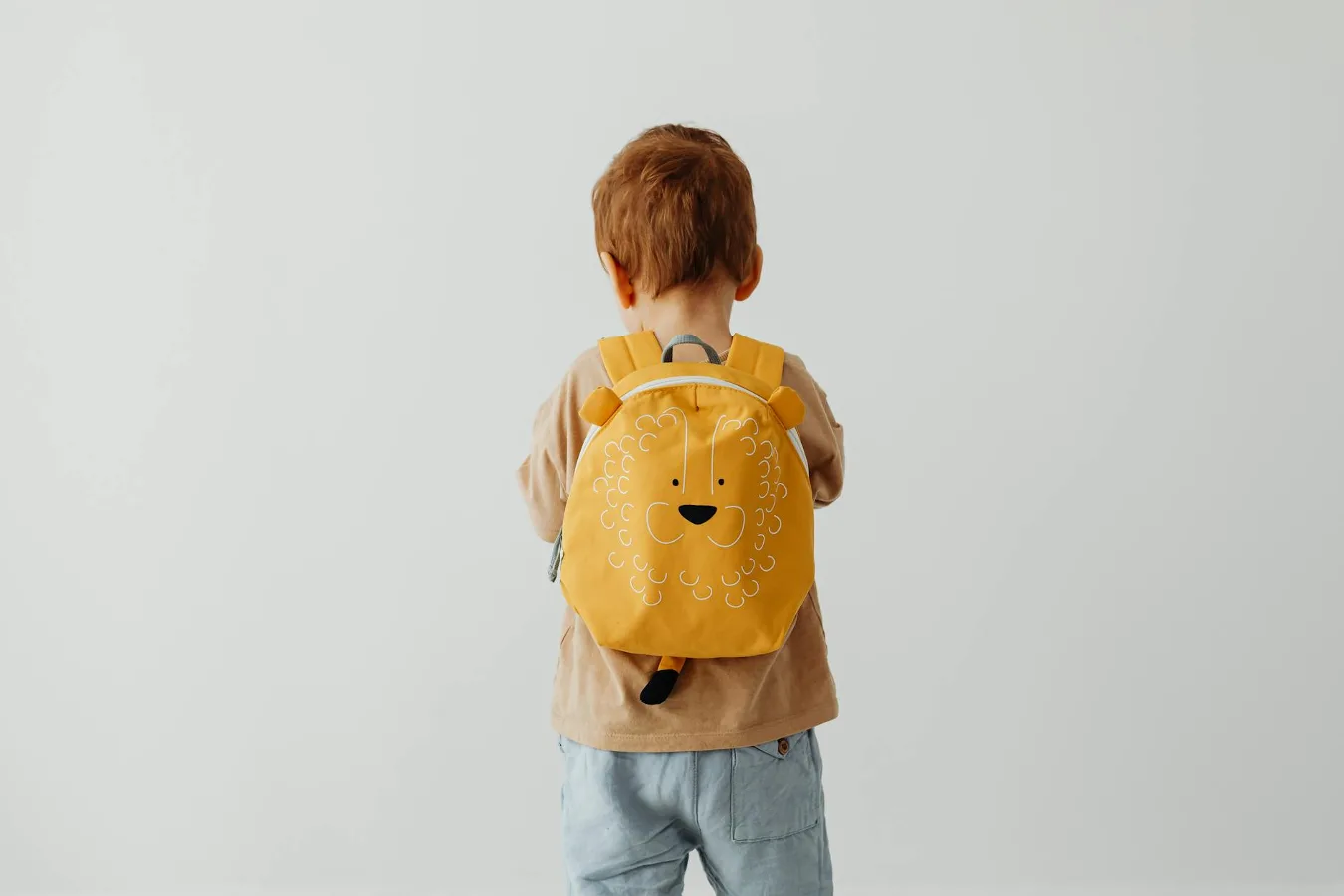
A child-sized backpack can give children a place for their own essentials: headphones, a book, a toy, a snack, or a light layer. The best versions are lightweight, easy to open, and sized for the child rather than scaled down from an adult pack.
The trade-off is capacity. Small bags are easier for children to carry, but they fill up fast. That can be helpful, since it prevents overpacking, but it also means parents may need a separate bag for shared supplies.
Organizers and packing cubes
Organizers are most useful on longer trips or when multiple people are sharing luggage. They can separate clean clothes from worn items, keep accessories together, and reduce the time spent searching through a bag. For children, simple labeled pouches often work better than complicated packing systems.
The limitation is that organizers only help if the family actually uses them consistently. If you prefer to grab items quickly without sorting, too many compartments can become a burden.
Comfort items
Neck pillows, small blankets, sleep masks, and familiar stuffed items can make travel less disruptive. Their value depends on the child’s temperament and the length of the trip. Some children use them naturally; others find them awkward or ignore them entirely.
Comfort items are especially helpful for children who struggle with sleeping in new places. The main trade-off is bulk. A bulky comfort item may be soothing but inconvenient to carry, especially when moving through airports or changing transportation.
Snack and drink accessories
Spill-resistant cups, reusable snack containers, and easy-open lunch boxes are among the most practical travel accessories for children. They help with hunger, reduce cleanup, and make it easier to portion food during long travel days.
The downside is that many food-related accessories require careful cleaning. Parents often benefit from choosing designs with fewer parts and lids that are easy to inspect.
Entertainment and activity kits
Simple activity folders, crayons, sticker books, magnetic games, and small toy kits can help with waiting time. The best options are quiet, contained, and not likely to create a pile of loose pieces in the car or airplane seat.
A useful rule is to choose activities that can be used independently. If an item requires a lot of setup, it may not help much during boarding, delays, or long stretches of sitting.
Car-specific accessories
Seat-back organizers, sun shades, travel trays, and window covers are common choices for road travel. They are most useful on long drives, frequent family road trips, or outings where the child spends substantial time in the car.
These items can improve convenience, but they can also add clutter if every seat gets multiple attachments. Before buying, consider whether the accessory solves a repeated problem or just creates a new thing to store.
Trade-offs that matter more than brand names
Many shopping decisions for children’s travel accessories come down to trade-offs rather than simple good-or-bad judgments.
- Lightweight versus durable: lighter items are easier for children to carry, while sturdier materials may hold up better over time.
- Simple versus feature-rich: simple accessories are often easier to use and clean, but feature-rich products may serve more situations.
- Compact versus comfortable: some items pack down neatly but do less to support sleep or reduce stress.
- Child-controlled versus parent-controlled: giving a child their own gear can build independence, but parents may need to manage cleanup and packing.
For many families, the best choice is not the most specialized item. It is the one that solves a repeated problem without adding much maintenance. That may mean choosing fewer accessories overall and using them more intentionally.
Common mistakes families make
One common mistake is buying accessories before deciding how the child will actually use them. A nice-looking travel tray or organizer may be unnecessary if the child prefers simple items or if the trip is short.
Another is overpacking for comfort. Extra gear can make the travel day harder, especially when parents are carrying luggage, managing documents, and supervising children at the same time. The goal is not to bring every possible helper; it is to bring the few items that solve the biggest pain points.
Families also sometimes forget about compatibility. A car seat accessory should work with the child’s restraint system. A backpack should fit under a seat if that matters for the trip. A snack container should fit in a bag without leaking or crushing nearby items.
Finally, there is the maintenance issue. The most convenient accessory in the store may become annoying if it takes too long to wash, dry, or repack. In travel, convenience has to be judged across the whole cycle of use.
How to choose a sensible starter set
If you are building a travel setup from scratch, start with the basics and add only where needed. A good starter set often includes one child-sized bag, one or two organization helpers, one comfort item if your child benefits from it, and one or two food or drink solutions that reduce mess.
The right mix depends on age and trip style:
- Toddlers: focus on spill control, easy-clean materials, and simple comfort items.
- Preschool and early elementary children: add child-managed bags, activity kits, and a few organizational tools.
- Older children: prioritize independence, compact organization, and items they can pack and carry themselves.
For families who travel occasionally, a minimal setup may be enough. For frequent travelers, investing in a few reliable pieces often makes more sense than repeatedly replacing cheaper accessories.
Next steps before you buy
Before purchasing any children’s travel accessory, ask three practical questions: What problem does this solve, who will manage it, and how will it fit into the rest of the trip? If the answer is unclear, the item may be optional rather than essential.
It also helps to compare accessories against real travel routines. If your child usually snacks in the car, prioritize easy-clean food containers. If sleep is the main issue, focus on comfort. If you keep losing small items, choose organization first. The best travel accessories are the ones that reduce stress in the moments that actually matter.
For a broader shopping strategy, it can also help to review related family travel essentials, child-friendly packing approaches, and practical storage solutions before building a full setup. That way, each purchase supports the same goal: simpler, calmer travel with fewer surprises along the way.