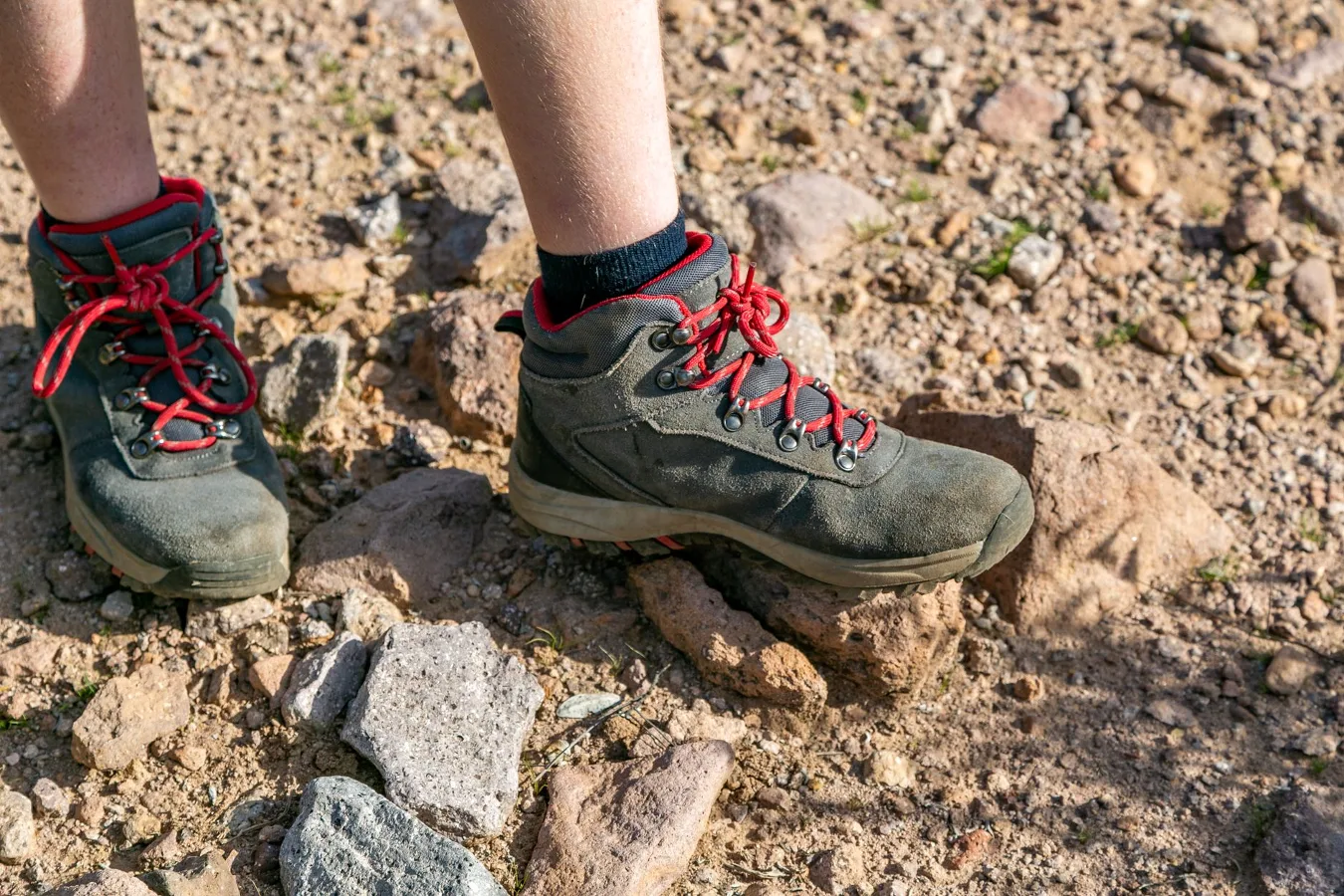
If you are choosing between mid cut vs low cut hiking boots, the simplest answer is this: mid cut boots offer more coverage and a bit more stability around the ankle, while low cut boots usually feel lighter, more flexible, and easier to move in. The better option depends less on the label and more on how, where, and how long you hike.
For many hikers, the decision comes down to trail conditions, pack weight, comfort preferences, and how much foot security they want. Mid cut boots can feel reassuring on rougher ground or when carrying more gear. Low cut boots often make more sense for day hikes, well-maintained trails, and hikers who value speed and freedom of movement. complete guide to down sleeping bag offers more detail on this point.
Mid cut vs low cut hiking boots: the real difference
The main difference is height. Mid cut boots rise higher on the ankle than low cut boots, which usually sit below the ankle bone. That extra coverage can change how the boot feels, how it flexes, and how much protection it provides from trail debris.
But boot height is only part of the story. The actual experience also depends on the outsole, midsole, upper materials, fit, lacing system, and whether the boot is designed more like a hiking shoe or a traditional boot. Two pairs with the same height can feel very different.
A common misconception is that mid cut boots automatically prevent ankle injuries. They may offer a more structured feel and can help some hikers feel more secure, but they do not replace careful foot placement, conditioning, or proper fit. Likewise, low cut boots are not inherently less capable. On many trails, they are the more practical choice.
Support and stability: what you may notice on the trail
If support is your main concern, mid cut boots usually provide the more wrapped-in feel. That can be useful if you hike on uneven surfaces, carry a heavier pack, or simply prefer more structure around the ankle.
That said, support is not just about height. A well-built low cut hiking boot with a stable sole and secure heel fit may feel more controlled than a poorly fitted mid cut boot. Fit matters more than category.
Consider support in context:
- Mid cut boots may feel more reassuring on rocky or rooty trails.
- Low cut boots may feel more natural for fast-paced walking and lighter loads.
- Stability also depends on sole stiffness and how well the boot holds your heel and midfoot.
If you have a history of rolling your ankle or you often hike on uneven ground, the extra coverage of a mid cut boot may be worth it. If you move efficiently and prefer a more flexible stride, low cut may feel better over time.
Weight and mobility: where low cut boots usually win
Low cut hiking boots generally feel less restrictive because there is less material around the ankle and lower leg. That can make them a better match for hikers who want a lighter, faster-feeling shoe without giving up the ruggedness of a trail-ready outsole.
For warm-weather hikes and well-maintained trails, this mobility can be a major advantage. Less bulk usually means easier foot turnover, a less “boot-like” feel, and sometimes better all-day comfort for hikers who do not want extra structure.
Mid cut boots can still be comfortable, but they tend to feel more substantial. That is helpful if you value protection and a planted feel more than speed or agility.
Protection from trail debris and weather
Mid cut boots usually provide more coverage against brush, loose gravel, dirt, and splash. They can also give you a little more buffer when stepping through uneven terrain, especially if the trail is wet or cluttered.
Low cut boots leave more of the ankle exposed, which can be less ideal in brushy areas or when water, mud, and debris are part of the route. For many hikers, this is a trade-off they are happy to make in exchange for lighter weight and better airflow.
Weather resistance deserves its own look. A higher cut does not automatically mean better waterproofing, and a low cut boot is not automatically unsuitable for damp conditions. Water resistance depends on materials, construction, and whether the boot uses a waterproof membrane. If keeping your feet dry is a major concern, focus on that feature rather than boot height alone.
Terrain and trip length: how to match the boot to the hike
The right choice often becomes obvious once you look at the kind of hiking you actually do.
Low cut hiking boots are often a strong fit for:
- day hikes on maintained trails
- light to moderate terrain
- hot or humid conditions
- hikers who prefer a natural stride
- shorter trips with lighter packs
Mid cut hiking boots are often a stronger fit for:
- rocky, uneven, or root-heavy trails
- longer hikes where foot fatigue builds over time
- heavier daypacks or backpacking loads
- hikers who want more ankle coverage
- cooler or wetter conditions where extra protection helps
Trip length matters because small discomforts become more noticeable over time. A low cut boot that feels great for an hour may not be ideal if you are covering serious miles on rough ground. A mid cut boot may feel slightly heavier at the start, but more comfortable if the trail keeps demanding steady support.
Fit, lacing, and the overlooked part of the decision
One of the most overlooked considerations in the mid cut vs low cut debate is how the boot interacts with your foot shape. Some hikers focus on height and ignore fit details like heel hold, toe room, arch shape, and forefoot width. That can lead to hot spots, slipping, or fatigue regardless of boot style.
Lacing is another practical nuance. Mid cut boots often give you more lace zones, which can help fine-tune the fit around the ankle and instep. Low cut boots may feel simpler and faster to adjust, but they may offer fewer ways to tune support.
If you often struggle with heel lift, pressure on the top of the foot, or toe bang on descents, the boot height alone will not solve the problem. Start with fit first, then choose height based on the terrain and support you want.
Breathability and comfort on warm hikes
Low cut hiking boots often breathe better simply because they expose more of the foot and lower ankle area. For summer hiking, that can translate into less heat buildup and a more comfortable feel over long miles.
Mid cut boots can be warmer, which may be a drawback in hot climates but useful in cooler conditions. Some hikers like the extra coverage because it helps keep trail grit out and can make the boot feel more secure. Others find that the added material becomes tiring when temperatures rise.
If you hike mostly in the United States during shoulder seasons or summer, think carefully about heat management. A boot that feels supportive may still be a poor choice if it leaves your feet sweaty and uncomfortable on exposed trails.
Which one is better for backpacking?
For backpacking, the answer depends on pack weight, terrain, and personal preference. Mid cut boots are often preferred when the load is heavier or the route is rougher, because the added structure can feel more stable over long distances.
Low cut boots can still work well for many backpackers, especially those who keep their gear light and hike on established trails. They may reduce fatigue from excess weight on the feet, which matters a lot when every step counts.
A practical rule is to match footwear to the demands of the trip rather than defaulting to the tallest option. More coverage is not automatically better if it slows you down or creates friction. Likewise, a lighter boot is not ideal if the trail is steep, uneven, or consistently wet.
Durability and long-term value
Durability depends on build quality more than boot height, but the use case matters. Mid cut boots are often chosen for more demanding conditions, so they may see heavier use and more abrasion. Low cut boots may wear differently because they are often used in lighter conditions, though they can still be durable if the materials and construction are solid.
For long-term value, think about how often you will use the boots and what kind of trail wear they will face. A pair that matches your actual hiking habits is usually better value than a more rugged boot that feels unnecessary on your local trails.
Also consider maintenance. Leather uppers, waterproof membranes, and protective overlays can change care requirements. If you want easier upkeep, a simpler low cut trail boot may fit your routine better. If you want more protection and are willing to maintain it, a mid cut boot can be worth the extra effort.
Common mistakes hikers make when choosing between them
- Choosing height instead of fit: A boot that does not match your foot shape will cause problems no matter how tall it is.
- Assuming more support is always better: Extra structure can help some hikers, but it can also feel stiff or tiring if you do not need it.
- Ignoring hiking style: Fast day hikers and heavy-load backpackers usually need different footwear.
- Overlooking climate: Hot-weather hiking can make high-coverage boots feel too warm.
- Expecting waterproofing from boot height: Water resistance is a construction issue, not just a height issue.
Practical ways to decide
If you are still torn between mid cut and low cut hiking boots, use your most common hike as the deciding factor. That is usually more useful than choosing based on the hardest trail you might ever attempt.
Choose mid cut hiking boots if:
- you want more ankle coverage and a more structured feel
- you often hike on uneven, rocky, or brushy trails
- you carry a heavier pack or hike for longer periods
- you prefer a boot that feels secure over one that feels fast
Choose low cut hiking boots if:
- you prioritize lightness and freedom of movement
- you mostly hike day trails and maintained paths
- you hike in warmer weather
- you want a more flexible, less bulky feel
If both sound appealing, start by trying the style that best matches your most frequent conditions. Many hikers eventually own both because different trips call for different footwear. That is not overkill; it is a realistic response to how varied trail conditions can be.
A simple way to think about the trade-off
Mid cut boots are about coverage, structure, and a more protective feel. Low cut boots are about lightness, flexibility, and easier movement. Neither is universally better.
The best choice is the one that keeps you comfortable, stable, and confident on the trails you actually hike. If you want protection and support for uneven ground or heavier loads, mid cut is often the smarter buy. If you want a lighter, more agile shoe for everyday trail use, low cut is usually the better fit.
For many hikers, the decision becomes clear once they stop asking which is “best” and start asking which is best for their terrain, climate, pace, and pack weight. That is the comparison that matters.