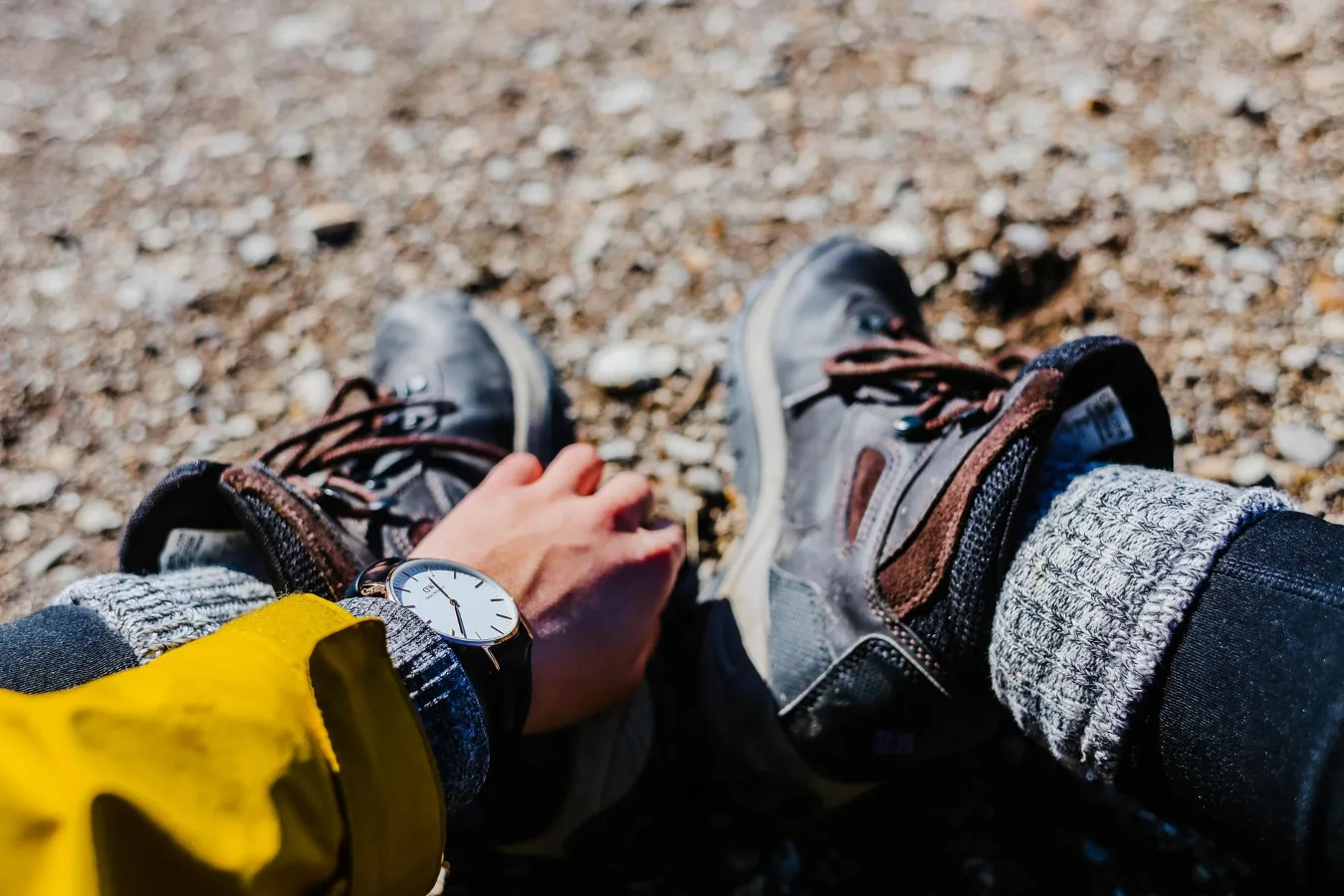
Leather hiking boots for men are a strong choice if you want a boot that can handle rough ground, carry a heavy pack, and hold up over repeated seasons. They are not automatically the best option for every hiker, though. The right pair depends on how much support you need, how wet your trails tend to be, how much break-in time you can tolerate, and whether you value durability more than light weight.
If you are shopping for leather hiking boots, the main question is not simply whether the boots are leather. It is whether the construction, fit, outsole, and weather protection match the kind of hiking you actually do. That is where many buyers go wrong: they focus on material alone and overlook the details that affect comfort on the trail. how boot fit affects hiking comfort offers more detail on this point.
Why choose leather hiking boots at all?
Leather remains popular in hiking footwear because it offers a useful mix of structure, abrasion resistance, and long-term wear. For many men, that translates to a boot that feels more stable under load and better suited to rugged trails than a lightweight sneaker-style hiker.
Leather hiking boots are often worth considering if you hike on rocky paths, carry a backpack, or want a boot that can handle repeated exposure to brush, stones, and uneven footing. They can also make sense for colder conditions, where a more substantial upper may feel more protective than a thin mesh-based design.
The trade-off is clear: leather boots usually weigh more, breathe less freely, and may take longer to soften around your foot. If you hike mostly on maintained, dry trails in warm weather, a lighter synthetic hiker may be more comfortable. choosing between leather and synthetic boots offers more detail on this point.
The most important factors to compare
Fit and volume
Fit matters more than leather type. A well-made boot that fits poorly will still cause hot spots, heel slip, or toe pressure. Look closely at heel hold, toe room, arch placement, and overall volume through the midfoot.
Leather can adapt somewhat as it breaks in, but that should not be used as an excuse to buy a boot that is obviously too tight. A proper hiking fit usually leaves enough room to prevent toe jamming on descents while still keeping the heel secure.
One common mistake is assuming a boot should feel snug everywhere from the start. Some structure is normal, but painful pressure is not something to “wear through.”
Leather type and construction
Not all leather hiking boots feel or perform the same way. Full-grain leather is generally favored for toughness and abrasion resistance, while nubuck has a softer, brushed finish that many hikers find more flexible. Both can work well, but they tend to differ in feel, maintenance, and break-in behavior.
Construction also matters. Look at how the upper is joined to the sole, how much stitching is exposed, and whether the boot seems built for heavy use or casual trail walking. A sturdy leather upper is only part of the equation; the midsole and outsole determine much of the comfort and grip.
Support and stability
Men’s leather hiking boots are often chosen for support, especially on uneven ground or when carrying weight. A higher collar can help some hikers feel more secure around the ankle, but collar height alone does not guarantee stability. The platform under the foot matters just as much.
Pay attention to the shank, midsole firmness, and torsional rigidity. A boot that resists twisting can feel reassuring on uneven trails, while a softer boot may be more comfortable on easy paths but less steady on rocky terrain.
Overstiff boots are a problem too. If the boot is too rigid for your usual hikes, it may fatigue your feet rather than protect them. The right level of support depends on your load, terrain, and stride.
Traction and outsole design
The outsole should match the trail surface. Deep lugs help with loose dirt, mud, and mixed terrain, while flatter patterns may work better on hard-packed paths. The rubber compound also influences grip, though brand descriptions can be vague, so it helps to think in practical terms: do you need better bite on slick surfaces, or more all-around versatility?
A boot with a durable leather upper but a weak outsole is a poor long-term choice. For outdoor use, traction is not a cosmetic detail; it is one of the main safety and confidence factors.
Weather resistance and moisture management
Leather can help block wind and light trail spray, and many hiking boots include waterproof membranes or treated uppers. That said, waterproof and breathable are not the same thing. A more weather-ready boot may keep water out better, but it may also feel warmer and less airy in hot weather.
If you hike in wet climates, slushy shoulder seasons, or dewy grass, weather resistance becomes more important. If your hikes are mostly dry and warm, a highly sealed boot may trap too much heat and sweat.
This is one of the most overlooked trade-offs in hiking footwear: more protection often means less ventilation. Buying for your real climate is better than buying for a worst-case scenario you rarely face.
Weight and walking efficiency
Leather boots tend to feel more substantial on foot. Some hikers appreciate that planted feeling, while others notice the extra effort on long ascents or all-day walks. Weight is especially relevant if you hike frequently, cover a lot of mileage, or prefer a faster pace.
If you are torn between two boots, imagine the end of a long day rather than the first mile. A boot that feels excellent in the store can still feel tiring after hours of climbing, descending, and stabilizing on uneven ground.
Break-in time
Break-in is a real part of buying leather hiking boots, although the amount varies by model and construction. A stiffer boot usually needs time to soften and adapt, especially around the flex point and collar.
This is not just about comfort; it is also about blister prevention. If you need boots for an upcoming trip, do not assume a new leather pair will be ready immediately. Give yourself enough time to wear them on shorter outings first.
How to decide which type of leather boot fits your use case
The best leather hiking boot for one hiker may be wrong for another. Start with your normal conditions instead of shopping by category alone.
- For rocky or uneven terrain: prioritize support, stable underfoot structure, and strong traction.
- For backpacking or heavier loads: choose a boot with more rigidity, secure heel hold, and durable construction.
- For mixed-weather hiking: look for weather resistance, but balance it against breathability.
- For shorter day hikes: a less bulky leather boot may be enough if you do not need maximum stiffness.
- For warm climates: pay close attention to ventilation and avoid unnecessary insulation.
That last point is often missed. Some buyers assume leather automatically means “better all around,” but in hot regions the better all-around choice may actually be the lighter, less insulated boot.
Full-grain, nubuck, and hybrid builds
Full-grain leather is usually chosen for toughness and long-term wear. It often appeals to hikers who want a boot that can take abuse and age gradually. Nubuck, which is sanded for a softer finish, can feel a bit less stiff while still offering a sturdy outdoor profile.
Hybrid designs combine leather with textiles or mesh panels to reduce weight and improve breathability. These can be a smart compromise if you like the support of a leather boot but do not want the heaviest build available.
There is no universal winner here. The best choice depends on whether your priority is abrasion resistance, comfort out of the box, lower weight, or better airflow.
Practical alternatives if leather is not the right answer
Leather hiking boots are not mandatory for serious hiking. Depending on your needs, other options may be more practical.
- Synthetic hiking boots: often lighter, more breathable, and quicker to dry.
- Trail shoes: good for fast-paced hiking, warm weather, and lighter loads.
- Mid-height hikers: a middle ground for those who want some ankle coverage without a full boot.
- Insulated winter boots: better if your concern is cold rather than trail performance alone.
A useful rule of thumb is this: choose leather when durability and support matter more than weight and ventilation. Choose synthetic when speed, flexibility, and drying time matter more.
Common mistakes buyers make
- Choosing by appearance alone: a rugged look does not guarantee good fit or traction.
- Ignoring sock thickness: the socks you plan to hike in can change the feel of the boot significantly.
- Underestimating break-in: new leather boots may need time before they feel trail-ready.
- Buying too stiff for casual use: a heavy-duty boot can feel excessive for easy paths.
- Overlooking climate: waterproof construction can be a disadvantage in hot, dry conditions.
- Assuming ankle height solves stability issues: platform design and fit are equally important.
Care and maintenance considerations
Leather hiking boots need regular care if you want them to last. Mud, grit, and repeated moisture exposure can shorten the life of any boot if they are ignored. After hikes, let the boots dry naturally, remove dirt from the seams and outsole, and store them in a dry place away from direct heat.
Conditioning and waterproofing treatment may be helpful depending on the leather type and manufacturer guidance. The exact care routine varies, so it is wise to follow the boot maker’s instructions rather than using a one-size-fits-all approach. men’s waterproof boot buying guide offers more detail on this point.
Maintenance is part of the value proposition. A leather boot may cost more effort to care for than a synthetic alternative, but that upkeep can help preserve support, comfort, and appearance over time.
How to make a confident buying decision
If you want a simple way to narrow the field, start with your hiking environment, then work outward from there:
- Identify the terrain you hike most often.
- Decide whether support or light weight matters more.
- Check whether you need weather resistance or breathability first.
- Choose a leather type that matches your comfort and care preferences.
- Make fit the final filter, not the first assumption.
That order helps prevent a common shopping trap: buying a boot because it sounds durable, then discovering it is too warm, too stiff, or too heavy for the way you actually hike.
For many men, leather hiking boots are the right choice when the trail is rough, the pack is heavier, or long-term durability matters more than a featherweight feel. For others, a lighter hiking shoe or synthetic boot will be the better everyday solution. The best purchase is the one that matches your terrain, climate, and comfort expectations—not the one with the strongest material label.