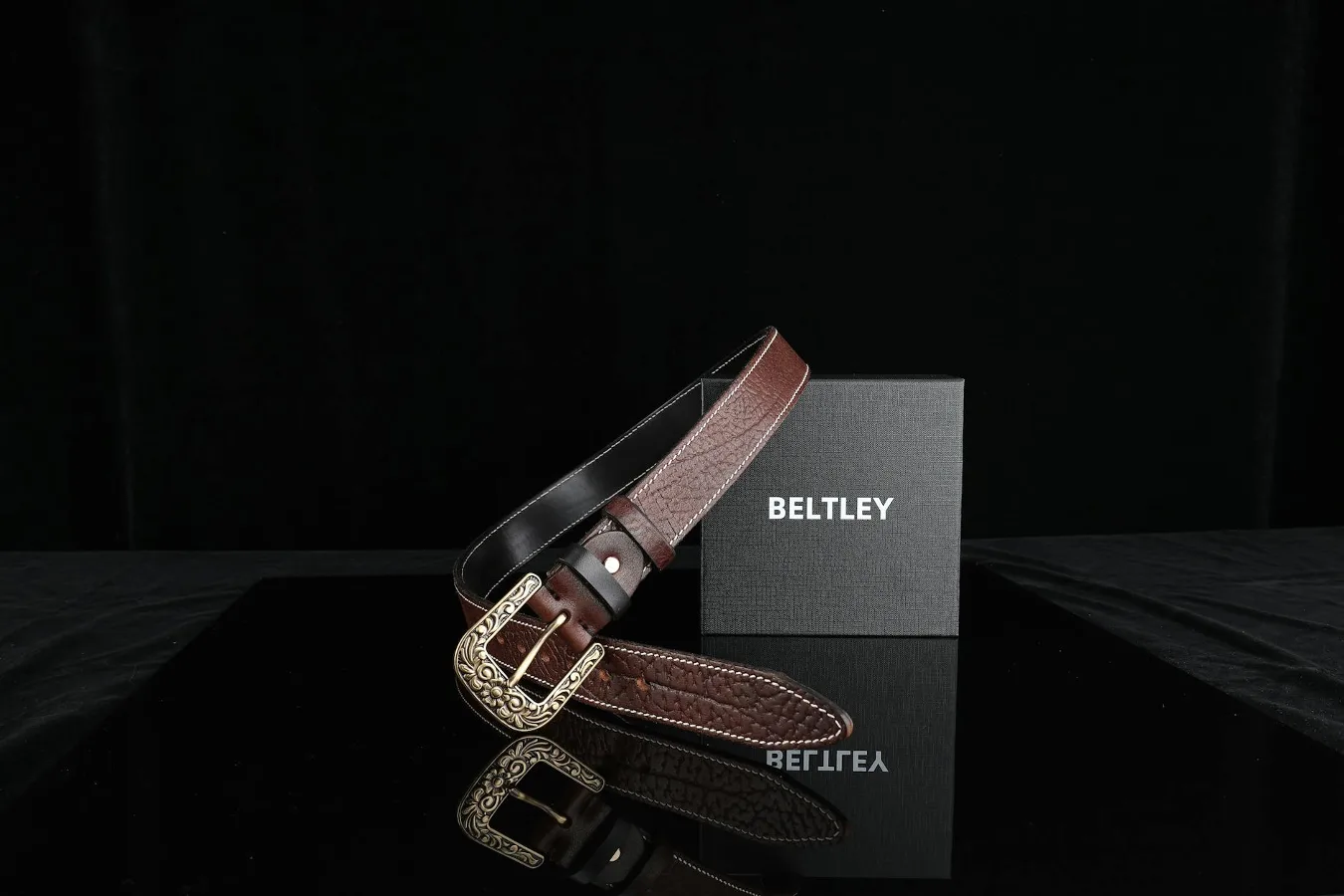
Western leather belts for men are a practical way to add character without giving up everyday usefulness. The best ones do more than look the part: they fit your waist correctly, work with your jeans or work pants, and age in a way that suits the rest of your wardrobe. men’s belt sizing guide offers more detail on this point. best sunglasses for round face offers more detail on this point.
If you are shopping for one, the main question is not just whether it looks western. It is whether the belt matches how you actually dress. Some styles lean rugged and casual. Others are cleaner and closer to a dress belt, with western details kept subtle. Knowing which side you want makes the decision much easier.
When a Western Leather Belt Makes Sense
A western belt makes the most sense when you want something sturdy with visible character. It pairs naturally with denim, boots, relaxed button-downs, workwear, and many casual outfits. For men who wear jeans often, the style can feel more integrated than a plain belt because the proportions and hardware are often designed with heavier fabrics in mind.
It is not always the best choice, though. If your wardrobe is mostly tailored suits, slim formal trousers, or minimalist officewear, a western belt may feel out of place. The style can still work in some business-casual settings, but the more ornate the buckle and tooling, the more it reads as a statement piece.
That distinction matters because many buyers focus on leather alone and ignore context. A good belt can still be the wrong belt if the buckle size, width, or finish clashes with what you wear most.
Step-by-Step Criteria for Choosing One
Start with how you will wear it
Before looking at leather or decoration, decide where the belt will spend most of its time. Daily denim wear, occasional nights out, ranch or work use, and dressier casual outfits all call for different levels of detail.
- For jeans: look for a width and buckle that sit comfortably in standard belt loops.
- For workwear: prioritize durability, a sturdy strap, and easy buckle replacement if needed.
- For dress-casual outfits: choose cleaner leather, restrained tooling, and a less bulky buckle.
This is one of the most overlooked considerations. A belt that looks great in product photos may be too thick, too wide, or too flashy for the clothes you actually own.
Check the leather type, not just the label
The phrase “leather belt” covers a wide range of quality. Full-grain leather is usually the most desirable when you want a belt that can develop character over time, because it uses the strongest outer layer of the hide. Top-grain leather is also common and can offer a smoother finish, though it may be more processed.
Genuine leather can mean many things depending on the maker, so the term alone does not tell you much. It is better to look for clear construction details, edge finishing, and how the leather is described overall than to rely on the word “genuine” as a quality shortcut.
If you prefer a belt with visible grain, natural markings, or a more rugged feel, a less polished finish may suit you better. If you want something cleaner and easier to dress up, a smoother leather can be more versatile.
Match the buckle to the level of western style you want
The buckle often determines whether a belt feels subtle or bold. Western belts may use simple metal buckles, engraved buckles, larger show-style buckles, or interchangeable buckle systems. Each creates a different visual tone.
- Simple buckles are the easiest to wear every day.
- Decorative buckles make more of a statement and can become the focal point of the outfit.
- Interchangeable buckles are useful if you want flexibility across different looks.
A common misconception is that a western belt has to be oversized or heavily ornamented. That is not true. Many of the most useful options are understated enough to work with a wide range of casual outfits.
Pay attention to belt width
Width affects comfort, appearance, and compatibility. A wider belt often feels more in line with denim and boots, while a narrower one can look more restrained and work better in slightly dressier settings. The right width also needs to pass smoothly through your belt loops.
Rather than choosing based on appearance alone, think about the pants you wear most often. If the belt is too wide for your loops, it will frustrate you quickly. If it is too narrow for the look you want, it may seem underpowered next to heavier jeans or work pants.
Choose stitching and tooling based on how much detail you really want
Western belts often feature decorative stitching, embossing, basketweave patterns, floral tooling, or burnished edges. Those details can elevate the look, but they also narrow the situations where the belt fits naturally.
If you want a belt for broad use, consider restrained details rather than heavy ornamentation. If the belt is meant to be a focal point, stronger tooling may be exactly what you want. The trade-off is versatility: the more detailed the belt, the less likely it is to pair cleanly with every outfit.
Examples of Common Western Belt Styles
Rugged everyday belt
This is the most flexible category for many men. It usually has a straightforward strap, visible leather grain, and a buckle that adds character without dominating the outfit. It works well with denim, boots, flannels, and casual overshirts.
Tooled or embossed belt
This style uses patterning or carved-looking detail to create a stronger western identity. It suits men who want the belt to be noticed. The limitation is that it can overpower simpler clothing, so it works best when the rest of the outfit is relatively clean.
Dressier western belt
A dressier western belt often tones down the tooling and uses smoother leather, a slimmer profile, or a more refined buckle. It can work with dark jeans and button-downs, especially in settings where you want a western reference without looking costume-like.
Work-friendly belt
For practical wear, the focus is usually on stiffness, durability, and dependable fit. This style is less about decoration and more about holding up through regular use. It is a better choice if you want something that feels substantial and low-maintenance.
What to Look for Before You Buy
Fit and sizing
Belt size is one of the easiest places to make a mistake. The correct size is usually not the same as your pant size, so it is worth checking the seller’s sizing guidance carefully. A belt should leave enough room to fasten comfortably while still letting you use the middle holes for a balanced fit.
If you already own a belt that fits well, compare its measurements rather than guessing. That is often more reliable than assuming your waist or pants size will translate directly.
Edge finishing and hardware quality
Small construction details tell you a lot about how the belt is likely to wear. Smoothly finished edges tend to feel better and often look more polished. Solid hardware matters too, especially if you plan to wear the belt often or change buckles.
Loose stitching, rough edges, and flimsy hardware do not necessarily ruin a belt on day one, but they can affect comfort and longevity. If the belt is intended for regular use, these details matter more than flashy styling.
Color and versatility
Brown is usually the easiest starting point because it works with many jeans, boots, and casual shirts. Black can look sharper and more restrained, but it does not always feel as naturally western as brown or distressed tan. Medium and dark brown shades tend to offer the widest range of use.
If you want one belt to do most jobs, choose a color that complements the boots and jeans you already own. If you are building a more expressive wardrobe, you can use color contrast more deliberately.
Maintenance expectations
Leather belts require some care if you want them to last. That usually means keeping them dry, avoiding unnecessary heat, and storing them so they do not crease in odd places. Too much conditioning can soften the belt more than you want, while neglect can make it dry or stiff.
Maintenance needs also vary by finish. Heavily decorated or embossed belts may be less forgiving if you treat them like plain smooth leather. If low maintenance is a priority, a simpler strap is often the safer choice.
How to Match a Western Belt with Your Wardrobe
The easiest approach is to let the belt echo something already in the outfit. A western belt can pick up the tone of your boots, the wash of your jeans, or the texture of your shirt. That creates a coordinated look without feeling overly planned.
- With blue jeans: medium-brown leather and a balanced buckle are usually the easiest fit.
- With black jeans: black leather or a dark, understated brown can work well.
- With boots: try to keep the metal tone and overall ruggedness in the same family.
- With simple shirts: let the belt add detail, not compete with other patterns.
One practical nuance: if your jeans already have strong stitching, heavy fading, or noticeable distressing, a very ornate belt can push the outfit into visual overload. In that case, a cleaner western belt is often the better choice.
Common Mistakes to Avoid
- Choosing by look alone: style matters, but fit and width matter more.
- Ignoring buckle size: a large buckle can be uncomfortable or too bold for everyday use.
- Assuming all leather is equal: construction and finish affect long-term wear.
- Buying too much ornamentation: a highly decorative belt can limit outfit pairing.
- Skipping measurement checks: belt sizing varies enough that guessing can backfire.
Another common misconception is that a more expensive-looking belt is automatically more versatile. In practice, the most useful belt is often the one that fits well, works with your clothes, and is detailed at the right level for your life.
Quick Checklist Before You Order
- Confirm the belt size using a real measurement, not only pants size.
- Make sure the width works with your belt loops.
- Decide how bold you want the buckle and tooling to be.
- Choose a leather type that matches your durability and appearance preferences.
- Check whether the belt will work with the boots and jeans you already wear.
- Consider how much maintenance you are willing to do.
If you are comparing several western leather belts for men, this checklist usually narrows the field quickly. The best choice is often the one that balances style with daily practicality rather than the one with the most decoration.
Alternatives Worth Considering
If you like the western look but want something less committed, there are good alternatives. A plain leather belt in a warm brown tone can still complement boots and denim without any tooling. A reversible belt may be useful if you need more versatility, though it usually loses some of the character that makes western belts appealing.
For men who wear western-inspired clothing only occasionally, a subtle leather belt may be the most sensible first purchase. It gives you the texture and weight of the style without locking you into a specific visual direction.
FAQ
What makes a belt look western?
Western belts usually combine heavier leather, visible stitching or tooling, and a distinctive buckle. The overall effect is rugged and rooted in denim-and-boots styling, though some versions are much subtler than others.
Should a western belt match my boots exactly?
Not exactly. Coordinating the general tone helps, but an exact match is not necessary. Similar warmth, depth, or finish usually looks more natural than trying to force a perfect match.
Are western belts good for everyday wear?
Yes, if you choose the right level of decoration and the right width. A simpler western belt can be very wearable every day, while a more ornate one may feel better reserved for specific outfits. how to choose the right belt width offers more detail on this point.
Is full-grain leather always the best choice?
Not automatically. Full-grain leather is often valued for its character and durability potential, but the best choice still depends on the finish, construction, and how you plan to use the belt.
Can I wear a western belt with dress pants?
Sometimes, but it depends on the belt. A very decorative or wide western belt usually looks out of place with dress trousers. A cleaner, slimmer version may work in some smart-casual settings.
For most men, the best western leather belt is the one that fits properly, feels substantial, and suits the rest of the wardrobe without needing special handling. If you choose with that in mind, the belt becomes a reliable part of your rotation rather than a one-off accessory.