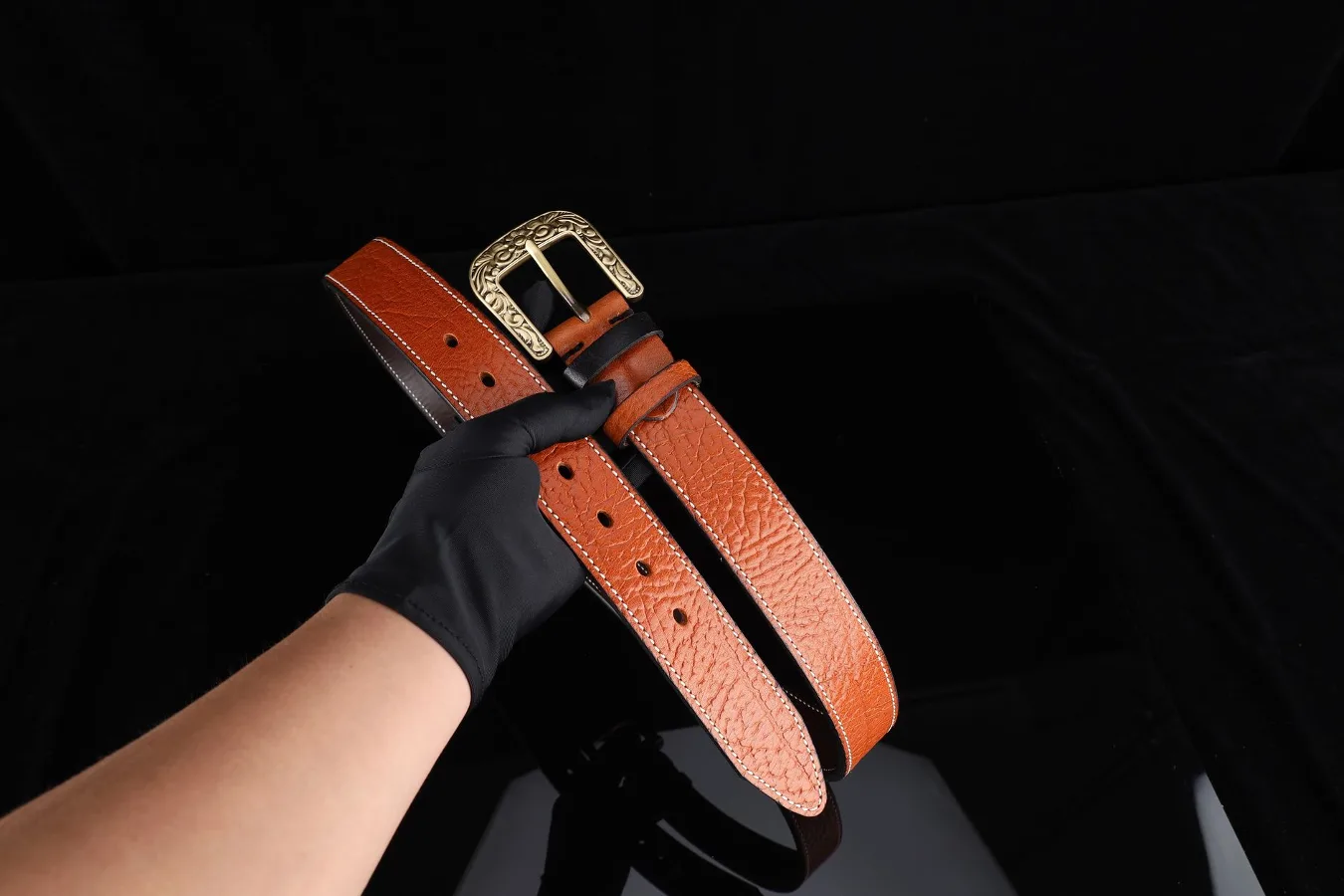
Work belts for men are best chosen for the job you actually do, not just for how they look. If you need a belt for daily wear, trades work, warehouse shifts, or a mix of office and hands-on tasks, the right option should stay secure, feel comfortable through long hours, and hold up to repeated use. how to choose durable accessories for work offers more detail on this point.
The short answer: look for a belt that matches your pants loops, your typical load, and your comfort needs. Leather belts often suit heavier wear and a cleaner appearance, while nylon or webbing belts can be a practical choice for active work, quick adjustments, and lighter weight. The best work belt is the one that fits your routine without constant readjustment. practical add-ons for trade work offers more detail on this point. western leather belts for men offers more detail on this point.
What a good work belt needs to do
A work belt has to do more than keep pants in place. For many men, it also needs to support tool pouches, stand up to bending and lifting, and remain comfortable during long shifts. That means the most important traits are usually:
- Stability: It should stay fastened and not slip during movement.
- Durability: It should resist stretching, fraying, cracking, or hardware failure.
- Comfort: It should feel manageable when sitting, crouching, or carrying gear.
- Compatibility: It should work with your pants loops and any accessory attachments you use.
- Ease of use: It should fasten and adjust without wasting time.
A common mistake is assuming any sturdy-looking belt will work as a work belt. In practice, a rigid belt may seem durable but become uncomfortable fast, while a soft belt may feel easy to wear but fail to keep tools stable. The best choice sits somewhere in the middle for your specific use case.
Materials: leather, nylon, and hybrid options
Material choice is usually the first major decision. Each option has trade-offs, and the right one depends on your work environment.
Leather work belts
Leather is often chosen for its classic look, structure, and long-term wear potential. A well-made leather belt can suit both work and casual use, which makes it appealing if you want one belt that can do more than one job.
Best for: general workwear, heavier pants, people who prefer a structured feel, and jobs where a clean appearance matters.
Trade-offs: leather can be stiffer at first, may require more care, and can wear faster if it is repeatedly exposed to moisture, sweat, or rough conditions.
Nylon and webbing belts
Nylon and webbing belts are usually valued for lightweight comfort and flexibility. They are often easier to adjust and may be better suited to active work or environments where quick movement matters.
Best for: physical work, variable conditions, and users who want a lighter feel.
Trade-offs: some webbing belts may look more utilitarian, and lower-quality versions can feel less refined or lose their shape over time.
Hybrid and reinforced belts
Some belts combine materials or add reinforcement for more structure. These can be useful when you want a balance of comfort and support. They are worth considering if standard dress-style belts feel too soft, but thick work belts feel overly bulky.
Overlooked consideration: the lining and stitching matter almost as much as the outer material. A belt can look durable on the outside but still fail early if the stitching, edge finishing, or buckle attachment is weak.
Fit matters more than most buyers expect
Fit is one of the easiest details to get wrong. A belt that is too short leaves little adjustment room. A belt that is too long can create unnecessary bulk or leave the tail awkwardly hanging. For work use, fit should account for your waist size, pant rise, and any gear you carry.
Pay attention to these points:
- Belt length: Choose a size that leaves enough room for natural adjustment, especially if you wear it over thicker work pants.
- Belt width: Make sure it passes through your belt loops comfortably. A belt that is too wide may not fit standard pants loops.
- Hole spacing or adjustability: More adjustment points can make it easier to get a secure fit throughout the day.
- Thickness: Thick belts can feel supportive but may be harder to thread through loops or sit comfortably under tool attachments.
One practical nuance is that work pants, jeans, and tactical-style pants do not always have the same loop size. If you rotate between different trousers, check compatibility before buying. A belt that works perfectly with one pair may feel awkward with another.
Buckle style affects daily comfort
The buckle is easy to overlook, but it can change how a belt feels throughout the day. Some buckles are simple and reliable, while others offer more adjustability or a lower profile.
Common buckle types
- Prong buckles: Familiar and simple, often used on leather belts.
- Clamp or slide buckles: Useful for micro-adjustment and quick fitting.
- Ratchet-style buckles: Popular for precise adjustment and a cleaner fit.
- Heavy-duty metal buckles: Often chosen for durability and a secure hold.
For workwear, a buckle should be easy to use with one hand if needed, comfortable when you bend or sit, and strong enough not to loosen under movement. Bulky buckles can dig in at the waist, especially if you carry pouches or sit for long periods. A lower-profile buckle can make a surprising difference.
Choose based on how you actually use the belt
Different jobs call for different belt traits. Rather than shopping by appearance alone, think about the conditions you face most often.
If you need a belt for light-duty or mixed use
If your day includes errands, office time, and occasional hands-on tasks, a leather belt or a refined hybrid option is often the most versatile. It looks appropriate in more settings while still offering enough structure for regular wear.
If you work in a trade or on a jobsite
For more physical work, durability and comfort become more important than style. A reinforced leather belt or a sturdy nylon/webbing belt may be a better fit if you need stability, easy adjustment, and better resistance to wear.
If you carry tool pouches or accessories
If the belt supports gear, look for extra strength in both the material and the stitching. Not every belt is designed to handle added load. A belt that is fine for pants support alone may start to sag, twist, or deform once pouches are attached.
Common misconception: a thicker belt is not automatically a better work belt. Thickness helps only if it improves support without making the belt too rigid, too heavy, or too difficult to wear for long stretches.
Comfort details that make a difference
Comfort is not only about softness. For work belts, comfort usually comes from a combination of fit, edge finish, buckle profile, and how the belt moves with your body.
Look for:
- Smooth edges: These reduce rubbing against shirts and skin.
- Balanced stiffness: Enough structure to stay put, but not so much that it feels restrictive.
- Breathability or moisture tolerance: Helpful if you work in heat or sweat heavily.
- Low-profile design: Especially useful if you sit, kneel, or bend often.
A belt that feels fine for a few minutes can still become annoying after an entire shift. If possible, think about comfort in motion rather than at rest. The best work belt should disappear into the background, not demand attention all day.
Durability: what actually wears out first
When work belts fail, it is often not the main strap alone. Buckle hardware, stitching, holes, edge finish, and stress points all matter. Repeated bending, sweat, moisture, and daily tightening can expose weak spots quickly.
Common wear points include:
- stitching around the buckle
- holes that stretch over time
- frayed webbing edges
- cracked or dried-out leather
- hardware that loosens or bends
If you want longer service life, maintenance matters. Leather may benefit from basic care appropriate to the material, while nylon and webbing belts should be checked for fraying, buckle wear, and loss of tension. A belt used hard every day should be inspected the same way you would inspect other essential workwear.
Practical solutions for common buying problems
If you are narrowing down options, these simple decisions can help:
- Need one belt for work and weekends? Choose a clean leather belt in a neutral color with sturdy construction.
- Need maximum adjustability? Consider a ratchet or webbing style.
- Need something for hot or active conditions? Look at lighter belts with secure hardware and easy adjustment.
- Need support for gear? Prioritize reinforced construction, reliable stitching, and a buckle designed for load stability.
- Need low-maintenance wear? Look for materials and finishes that match your environment and care routine.
These choices are less about finding the single best belt and more about avoiding the wrong one. A belt that matches your use pattern will usually feel better, last longer, and require fewer compromises.
Alternatives worth considering
Not every work situation requires a traditional belt. Depending on your clothing and tasks, alternatives may be more practical.
- Suspender systems: Helpful when you want to reduce pressure at the waist or carry weight more evenly.
- Elastic or stretch belts: Better for comfort-focused wear, though not always ideal for heavy-duty support.
- Accessory-specific belts: Some work setups benefit from purpose-built options instead of general-purpose belts.
If you mainly want pants support rather than gear support, a simpler belt may be enough. If you regularly carry tools, a dedicated tool-carry setup may be more appropriate than trying to make a fashion belt do a heavy-duty job.
How to avoid the most common mistakes
Buyers often run into the same avoidable problems:
- Choosing by appearance first: Style matters, but it should not override fit or function.
- Ignoring belt-loop compatibility: A belt that cannot pass through your pants loops is a bad purchase no matter how durable it looks.
- Overbuying stiffness: Too much rigidity can reduce comfort and make the belt harder to wear daily.
- Underestimating buckle bulk: A bulky buckle can interfere with sitting and movement.
- Forgetting maintenance: Any work belt lasts longer when you check wear points and clean it according to the material.
One of the most useful habits is to compare a belt against the pants and tasks you already own. That keeps the decision grounded in real use instead of product photos.
Simple decision guide
If you want a quick way to narrow the field, start here:
- Define the use: office, light-duty, trade work, or mixed use.
- Match the material: leather for a cleaner, structured look; nylon or webbing for lighter, more flexible wear.
- Check fit: confirm length, width, and loop compatibility.
- Review the buckle: make sure it is easy to use and not overly bulky.
- Think about maintenance: choose something you will realistically care for.
- Consider the future: if your work changes, will the belt still be useful?
That process usually leads to a better choice than shopping by brand name alone. A dependable work belt should solve a specific everyday problem, whether that problem is discomfort, slipping, wear, or lack of versatility.
For most men, the best work belt is not the most rugged option on paper. It is the one that fits well, feels manageable through a full day, and matches the way you actually dress and move. If you keep those priorities in mind, it becomes much easier to choose a belt that earns a place in your regular rotation.