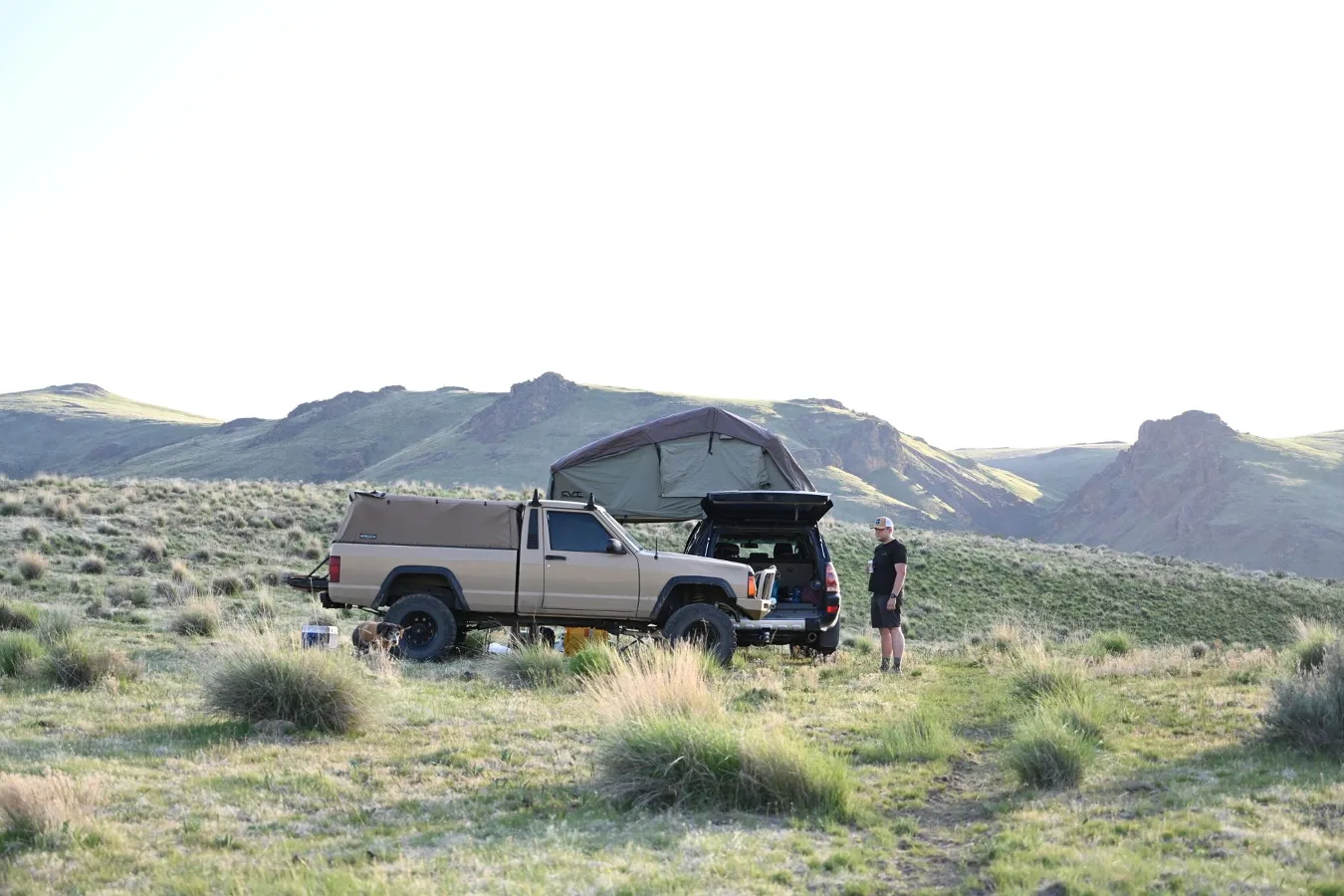
Quick answer: what a Jeep camping tent is
A Jeep camping tent is any tent setup designed to work with a Jeep-based camping trip, whether that means a freestanding ground tent, a tailgate or hatch tent, or a roof top tent mounted to a compatible rack system. The right choice depends less on the Jeep badge itself and more on how you camp: solo or with family, off-grid or at established sites, quick overnight stops or longer stays. how to choose the right tent size offers more detail on this point. how to plan a Jeep camping setup offers more detail on this point.
If you want the shortest possible answer, start with these questions: Do you want to sleep inside the Jeep, beside it, or on top of it? Do you need fast setup? Will you camp on uneven ground? Do you want maximum space or maximum convenience? Those answers usually narrow the options more effectively than brand names or marketing claims.
For most buyers, the best Jeep camping tent is the one that fits the vehicle layout, matches the number of sleepers, and holds up in the weather you actually expect to face. A tent that looks ideal in photos can become awkward if it blocks rear access, requires a rack you do not have, or takes too long to pitch after a long drive. best camping tent types for vehicles offers more detail on this point.
Compare the main Jeep camping tent options
There are three common directions to consider, and each one solves a different problem. Understanding the trade-offs helps you avoid buying a setup that sounds adventurous but does not fit your routine.
| Option | Best for | Main advantages | Main limitations |
|---|---|---|---|
| Ground tent | Campers who want flexibility and lower cost | Easy to move between vehicles, more style and size choices, works without roof modifications | Requires ground space, depends on site conditions, less convenient in mud or rain |
| Tailgate or hatch tent | Jeep owners who want a sheltered rear sleeping or gear area | Uses the vehicle as part of the shelter, convenient for changing clothes or storing gear | Fit varies by model, access can be awkward, can feel cramped in bad weather |
| Roof top tent | Travelers who value quick setup and sleeping off the ground | Fast deployment, elevated sleeping platform, often appealing for overlanding-style trips | Needs a suitable rack, adds weight and height, can be less convenient for daily driving |
A common misconception is that a roof top tent is automatically the “best” Jeep camping tent. In practice, it is only the best option for certain travel styles. If you mostly camp at established sites and value comfort and simplicity, a ground tent may be more practical. If you frequently move between locations, sleep in mixed weather, or want a cleaner separation from mud and uneven terrain, the roof top route can make sense.
What matters most before you buy
Jeep camping setups succeed or fail on compatibility. The tent itself matters, but the larger system matters more. A tent that fits your sleeping plan but conflicts with your Jeep’s accessories can be frustrating from day one.
Vehicle fit and mounting realities
If you are considering a tailgate tent or a roof top tent, confirm how it attaches and whether your Jeep configuration supports it. Hardtops, soft tops, spare tire carriers, roof racks, and lift kits can all affect fit. A setup that works on one Jeep model or trim may not translate cleanly to another.
This is one of the most overlooked considerations: ground clearance and vehicle shape do not automatically improve tent compatibility. In fact, lifted Jeeps and aftermarket accessories can create new clearance issues, door access problems, or uneven sleeping surfaces if the tent system is not designed thoughtfully.
Number of sleepers and usable space
Manufacturers often describe tent capacity in broad terms, but camping comfort depends on how much room you actually want for bags, shoes, and weather layers. A tent rated for just enough people on paper may feel tight once sleeping pads and gear are inside.
For Jeep camping, think about whether the tent needs to hold only sleepers or also support a changing area, gear storage, or a dog bed. If you travel with bulky items, prioritize floor space and vestibule layout rather than only sleeping capacity.
Weather and campsite conditions
Rain, wind, heat, dust, and cold all change what a good Jeep camping tent looks like. A light summer shelter may be fine for a fair-weather weekend, but a more protected design makes more sense for shoulder-season trips or mountain camping.
Pay attention to ventilation, rain protection, and the way the tent handles site setup on uneven ground. In Jeep camping, the vehicle often lets people reach more remote places, which also means less predictable conditions.
Setup speed and daily convenience
If you use your Jeep for road trips or overlanding-style travel, setup time is a real quality-of-life issue. A tent that takes too much effort can discourage you from stopping early, moving camps, or dealing with sudden weather changes.
Tailgate tents and roof top tents often win on speed, but they trade off flexibility. Ground tents may take longer to pitch, yet they are easier to reposition, easier to replace, and often more forgiving if your campsite is not ideal.
Storage, packing, and on-road behavior
Another practical point is where the tent lives when you are driving. Roof mounted setups affect center of gravity, fuel efficiency, wind noise, and garage clearance. Large ground tents take up cargo space, especially if they are packed with poles, stakes, and a footprint.
For some Jeep owners, that matters more than expected. If the tent is bulky or awkward to load, it becomes a trip-specific hassle instead of a useful piece of gear. A compact and easy-to-stow design often gets used more often than a larger setup with appealing specs on paper.
How to choose the right style for your trip
The best Jeep camping tent depends on the type of camping you do most often. A useful way to decide is to work backward from the campsite, not from the tent category.
Choose a ground tent if you want flexibility
A ground tent is often the smartest option if you are new to Jeep camping, if you borrow or swap vehicles, or if you want something that works in many situations. It is also the easiest way to keep costs and complexity under control.
Ground tents tend to make sense for:
- weekend campers who visit established campgrounds
- travelers who want a separate sleeping area from the vehicle
- budget-conscious buyers who do not want rack-based systems
- people who value easier replacement and wider model selection
Choose a tailgate tent if you want rear access and shelter
Tailgate or hatch tents can be appealing because they turn the back of the Jeep into part of the camping system. That can be useful for changing clothes, cooking prep in poor weather, or keeping gear under cover.
They are best for people who want quick access to the vehicle and do not mind a tighter, more integrated setup. The trade-off is that fit can be more model-specific, and rear access can become inconvenient if you are constantly opening and closing the cargo area.
Choose a roof top tent if speed and elevation matter
Roof top tents suit campers who want to get off the ground quickly and are comfortable with added weight, height, and rack requirements. They are especially appealing for people who move often between campsites or travel where ground conditions are rough, wet, or uneven.
That said, a roof top tent is not automatically easier in every sense. It may be faster to deploy, but it can be slower to pack away carefully, and it may create ownership constraints you do not want if your Jeep is also a daily driver.
Mistakes to avoid when buying a Jeep camping tent
A lot of disappointment comes from assumptions rather than bad products. Avoiding a few common errors usually matters more than chasing a long list of features.
- Buying for the vehicle instead of the trip. A tent should match your camping style first, your Jeep second.
- Ignoring accessory fit. Roof racks, spare tires, lift kits, awnings, and awning mounts can affect usability.
- Overlooking weather protection. Some setups feel spacious but offer weak protection against wind-driven rain or temperature swings.
- Assuming capacity equals comfort. Sleep space, gear space, and elbow room are not the same thing.
- Forgetting about setup conditions. A tent that is easy in a driveway may be annoying on uneven, rocky, or muddy ground.
- Choosing a complex system too early. If you are just getting started, a simpler option may teach you more about your needs.
A practical nuance many shoppers miss is the difference between campsite convenience and travel convenience. A setup can be excellent once fully deployed but still be inconvenient if it slows every fuel stop, blocks cargo access, or creates packing friction at the end of the trip.
What to look for in a solid camping shelter for a Jeep trip
Instead of focusing on flashy features, evaluate the tent using a few useful criteria. These are the factors that usually determine whether a Jeep camping setup feels dependable.
- Compatibility: Can it work with your Jeep’s roof, rear hatch, or cargo layout?
- Weather protection: Does it suit the rain, wind, heat, or cold you are likely to face?
- Space planning: Is there room for sleeping and the gear you bring?
- Setup effort: Can one person manage it if needed?
- Ventilation: Will condensation and heat buildup be manageable?
- Storage footprint: Does it fit your garage, cargo area, or travel setup?
- Maintenance: Is it easy to dry, clean, and store after a trip?
Maintenance is easy to overlook, but it affects longevity. Tents that must be packed away damp or dirty are harder to keep in good condition, especially if your Jeep trips involve frequent short stops or weather changes. A setup that dries quickly and stores cleanly tends to be less annoying over time.
Useful alternatives if a Jeep-specific tent is not the best fit
Sometimes the best answer is not a Jeep-specific solution at all. If your camping style is still evolving, a few alternatives may be more practical.
- Standard freestanding tent: A strong choice for first-time campers and anyone who wants maximum flexibility.
- Awnings and canopy shelters: Useful if you already sleep inside the Jeep or want a dry outdoor living area.
- Sleep platform inside the vehicle: Works for some Jeep owners who prioritize simplicity and weather protection over standing room.
- Hybrid setup: A ground tent paired with a vehicle awning or cargo shelter can balance comfort and versatility.
These alternatives are worth considering if your Jeep is a daily driver, if your parking or garage space is limited, or if you do not want to commit to a rack-mounted system before you know how often you will camp.
FAQ
What size Jeep camping tent do I need?
Start with the number of people sleeping in it, then add space for gear and changing room. If you camp with bulky bags, pets, or wet clothing, size up rather than aiming for the minimum capacity.
Can any Jeep use a roof top tent?
No. A roof top tent depends on compatible roof load limits, a suitable rack system, and enough clearance for driving and storage. Always check your Jeep and rack setup together, not separately.
Is a tailgate tent better than a ground tent?
Not always. A tailgate tent is convenient if you want the vehicle integrated into the shelter, but a ground tent usually offers more flexibility, easier site selection, and fewer fit issues.
Do I need a special tent for a Jeep Wrangler?
Not necessarily. Many Jeep owners use standard camping tents, while others prefer vehicle-specific rear tents or roof mounted systems. The best choice depends on your camping habits, not only the model.
What is the easiest Jeep camping setup for beginners?
For most beginners, a simple ground tent is the easiest place to start. It avoids mounting complications and helps you learn what features you actually value before investing in a more specialized system.
Choose the tent that fits your real camping habits
The best Jeep camping tent is the one that matches your route, your campsite, and the amount of effort you want to spend on setup and storage. That usually means choosing between flexibility, speed, and vehicle integration rather than trying to find one perfect option for every trip.
If you camp casually, a ground tent may be the most sensible answer. If you want faster deployment and do not mind rack requirements, a roof top tent can be worth exploring. If you want the Jeep itself to function as part of your shelter, a tailgate tent may be the better fit. The right decision comes from the way you travel, not from a generic checklist.