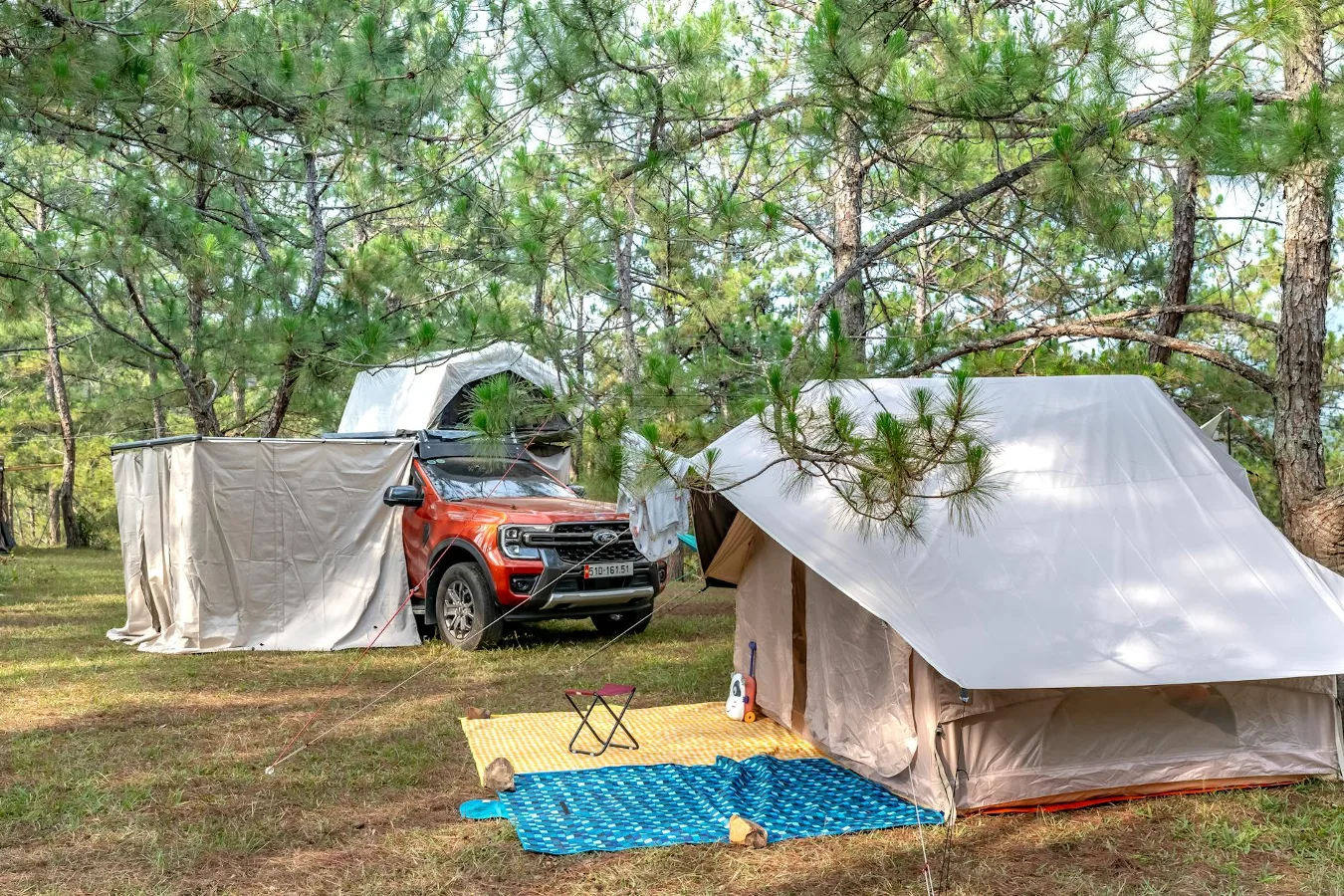
An SUV camping tent is a vehicle-adjacent shelter that lets you sleep, store gear, or hang out with more room than a standard ground tent. The right one depends less on the label and more on whether it actually fits your SUV, seals well enough for your camping conditions, and still leaves you able to use the vehicle without frustration. how to choose camping gear for your vehicle offers more detail on this point.
For most buyers, the decision comes down to three questions: Will it fit my SUV? How do I want to use the hatch or tailgate? Do I need a quick weekend setup or a more weather-conscious camp? If you keep those in mind, the options become much easier to sort.
What an SUV camping tent is really for
Despite the name, not every SUV camping tent works the same way. Some attach to the rear hatch and create a covered extension behind the vehicle. Others wrap around the back of the SUV and open up a larger sleeping or lounging area. A few are closer to portable shelters that simply complement the vehicle rather than connect tightly to it.
The practical appeal is simple: an SUV gives you a higher sleeping platform, locked storage, and an easier way to move between your vehicle and shelter. That can be useful for road trips, family camping, wet-weather trips, and overnight stops where you want faster access to gear than a standard tent setup usually allows.
The trade-off is that vehicle tents are more dependent on fit and parking conditions. A camp spot that looks level in a photoshoot may not work as well in a sloped, rocky, or tightly spaced campsite. Access also matters: if your hatch opens awkwardly in the site, the tent may be less convenient than expected.
Key factors that matter before you buy
Fit and vehicle compatibility
This is the first filter, and it should be treated as non-negotiable. SUV camping tents are often designed for specific body styles, hatch heights, or rear-end shapes. A model that works well on one SUV may be awkward or unusable on another.
Check whether the tent is designed for:
- compact SUVs, midsize SUVs, or full-size SUVs
- liftgates versus swing-out rear doors
- roof-mounted attachment points, if relevant
- rear hatches with spoilers, rear wipers, or unusual contours
One overlooked detail is how the tent connects. Some rely on a snug seal around the hatch opening, while others use sleeves, straps, poles, or a freestanding frame. A secure-looking product can still be a poor fit if the connection point does not match your vehicle shape.
How you plan to sleep
There are two common use cases. In the first, the SUV itself is part of the sleeping area, and the tent acts as an enclosed extension. In the second, the tent simply creates a sheltered zone for changing, cooking, storing muddy gear, or keeping the hatch area protected.
If you plan to sleep inside the vehicle, make sure the setup still allows you to close or manage the hatch safely and that ventilation is addressed. If you only want extra covered space, the best tent may be the one that is easiest to attach and remove, even if it looks less elaborate.
Setup time and campsite convenience
Many buyers focus on packed size, but setup complexity often matters more in real use. Some SUV camping tents are simple and intuitive; others require more parts, more tensioning, or a more careful sequence to make them stable.
Ask yourself how often you will be moving camps. If you are changing sites frequently, a quicker setup can be worth more than extra living space. If you stay at one site for several nights, a more involved shelter might be fine, especially if it gives you better headroom or weather coverage.
Weather protection
An SUV camping tent is not automatically a four-season shelter just because it attaches to a vehicle. Wind management, rain shedding, and mesh placement matter more than labels alone. The best choice for shoulder-season use should have sensible drainage, a stable frame, and a design that helps prevent water from pooling near the hatch area.
For hot-weather camping, ventilation can matter just as much as rain protection. A tent with too little airflow can feel stuffy quickly, especially if you are using the vehicle as part of the enclosed space. On the other hand, a very airy design may be less comfortable in cold wind or heavy rain.
Space and layout
Living space is not just about square footage. Headroom, door placement, and whether you can move around without stepping over gear all affect how usable the tent feels. A family may need a changing area and gear storage more than a tall sleeping space. A solo camper may prefer a tighter, simpler layout that stays organized.
Think about your actual camp routine:
- Do you need a place to sit during rain?
- Will wet boots and bags stay outside the sleeping area?
- Do you want access from the hatch without walking outside?
- Will pets be in the setup with you?
Portability and storage
Vehicle tents can become bulky fast. A model that sounds convenient online may still be awkward to store in the garage or cargo area. Before buying, consider whether you can pack it back into the vehicle after a trip without rearranging everything else.
This matters especially for weekend travelers who also carry coolers, sleeping bags, camp chairs, or recovery gear. If the tent consumes too much cargo room, it can defeat the whole point of vehicle-based camping. military sleeping bag offers more detail on this point. 20 Degree Sleeping Bag Buying Guide offers more detail on this point.
Practical solutions for common SUV camping setups
For weekend campers who want simplicity
If your trips are short and your priority is convenience, look for a design that is forgiving. A straightforward rear hatch tent, quick-connect shelter, or compact drive-away style setup can be easier to live with than a larger modular shelter.
For this type of camping, a clean setup usually beats maximum coverage. The main goal is to create a protected zone for changing, storing gear, and getting in and out of the vehicle without wrestling with extra fabric or poles.
For families
Families often need more than sleeping space. A good SUV camping tent for family use should make room for gear organization, allow easy entry and exit, and reduce the chaos of morning and bedtime routines.
Useful priorities include:
- enough room for bags, shoes, and extra layers
- clear access to the vehicle without dismantling everything
- good ventilation to help the space feel less cramped
- a layout that works when someone needs to nap while others move around
Families should also pay attention to the learning curve. A shelter that is technically spacious but cumbersome to pitch can become a hassle when kids are tired or the weather turns.
For wet or shoulder-season camping
If you often camp in rain, wind, or colder temperatures, stability becomes more important than novelty. Pay attention to how the tent handles runoff and whether the vehicle connection is likely to stay secure in bad weather. A sheltered vestibule-like space can be valuable, but only if it stays dry enough to be useful.
Also consider condensation management. Vehicle-adjacent shelters can trap moisture if airflow is poor, especially when occupants are breathing inside the enclosed space or storing damp equipment nearby.
For minimalists and frequent movers
If you move often or camp lightly, you may not need a large attachment tent at all. A compact ground tent or a freestanding canopy may serve you better. The advantage is flexibility: you are not tied to the vehicle’s shape, and you can position the shelter where the site works best.
This is a useful reminder that the most convenient-looking SUV camping setup is not always the most practical one for every camper.
Common mistakes to avoid
Buying before checking vehicle fit is the biggest one. Rear hatch geometry, roof height, and attachment method can make or break the setup.
Choosing maximum size without considering storage is another. Bulky shelter systems are easy to admire online and annoying to pack in real life.
Ignoring ventilation can make a shelter uncomfortable even when the weather is mild.
Assuming all SUV camping tents are equally weather-ready is also a mistake. A vehicle attachment does not guarantee a dry or stable experience in heavy rain, gusty wind, or uneven ground.
Overlooking campsite restrictions can create problems too. Some campgrounds have space constraints or setup rules that make large vehicle attachments less appealing than compact alternatives.
How to decide what type makes sense
The best SUV camping tent is the one that matches your actual camping style, not the one with the most features. Start with your main use case.
If you want a fast, sheltered add-on for road trips and short stays, prioritize easy attachment, manageable storage, and a fit that works cleanly with your hatch. If you want a more comfortable basecamp for longer trips, put more weight on interior room, weather handling, and layout. If you are unsure, a simpler shelter is often the safer choice because it is easier to use across different trips and campsites.
It also helps to think in terms of compromises. More coverage usually means more setup. More interior space usually means more packed bulk. Better vehicle integration often means tighter compatibility requirements. That is normal. The goal is not to avoid trade-offs, but to choose the ones that fit your camping habits.
Alternatives worth considering
A vehicle-specific tent is not the only way to camp with an SUV. Depending on your goals, one of these may work better:
- Freestanding car camping tent: good if you want flexibility and simpler site placement
- Tailgate awning or canopy: useful for shade and quick weather cover without a full enclosure
- Ground tent plus SUV storage: a practical choice if sleeping inside the vehicle is not necessary
- Roof tent: better for some campers who want elevated sleeping space, though it comes with its own storage and access considerations
The right alternative often depends on whether you value enclosed living space, quick deployment, or campsite flexibility most highly.
FAQ
Do SUV camping tents fit every SUV?
No. Fit depends on hatch shape, vehicle height, door style, and how the tent connects. Compatibility should be checked carefully before buying.
Can I sleep inside the SUV with this kind of tent?
Sometimes, but not always. Some designs are mainly for sheltered rear access or storage, while others are meant to extend the sleeping area. The layout matters more than the name.
Are SUV camping tents good in rain?
They can be, but rain performance depends on the tent’s design, pitch quality, ventilation, and how well it seals to the vehicle. A poor fit can cause more trouble than the fabric itself.
Is a bigger SUV camping tent always better?
Not necessarily. Bigger shelters can be harder to store, slower to set up, and less convenient on tight campsites. The best size is the one you will actually use comfortably.
What should first-time buyers prioritize?
Start with vehicle compatibility, setup simplicity, and storage size. Those three factors usually matter more than extra features for most campers.
A practical way to narrow the choice
If you are comparing SUV camping tents, use this order: fit first, then how you camp, then weather and space, and finally storage and convenience. That sequence helps prevent the most common regret, which is buying a shelter that looks versatile but does not match your vehicle or routine.
For most U.S. campers, the best option is the one that makes setup easier without creating new problems at the campsite. If it is simple to attach, practical to pack, and suited to the weather you actually face, it will usually be the better long-term choice than a larger or more elaborate setup that is harder to live with.