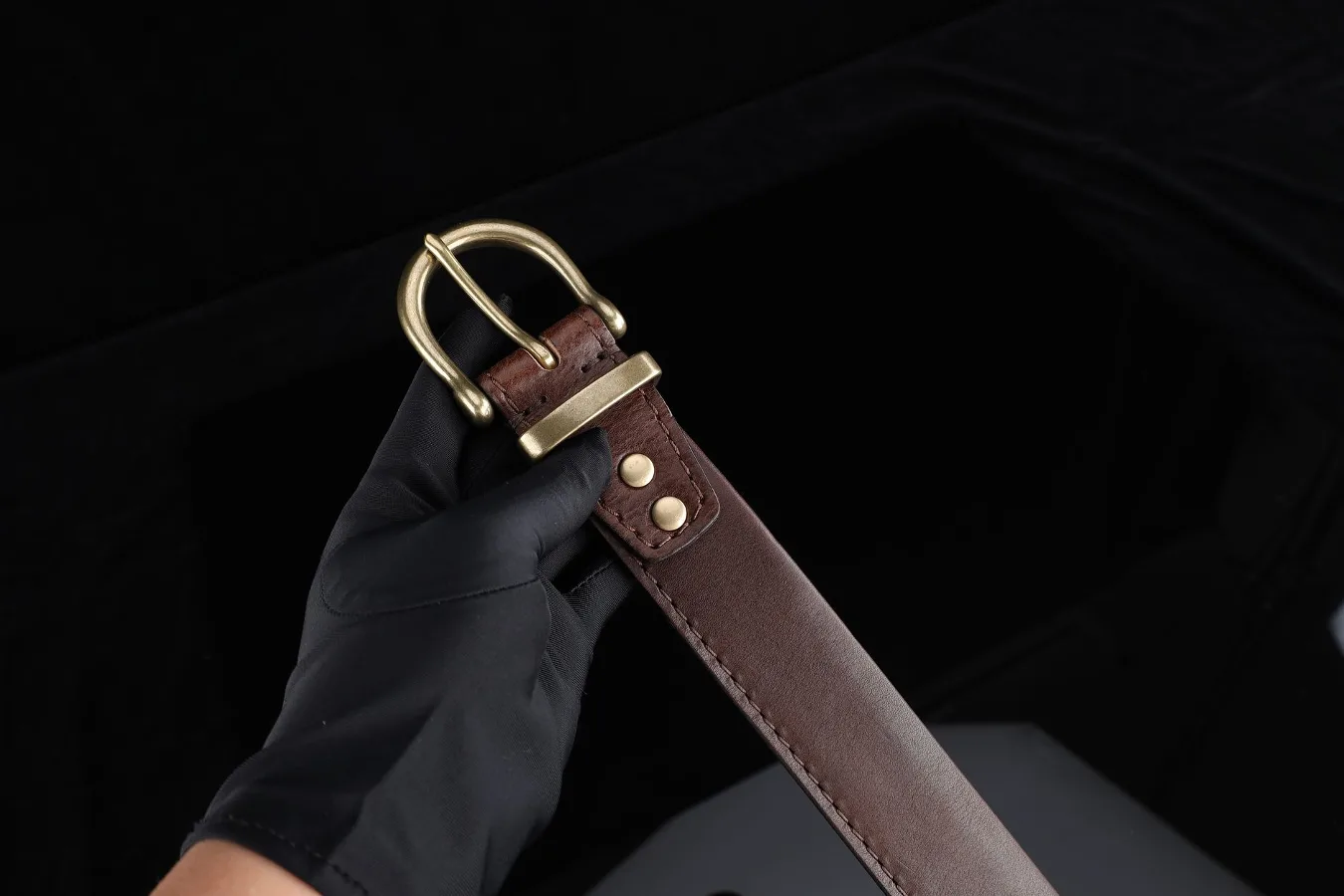
Buckleless belts for men are a practical choice if you want a cleaner waistband, easier adjustments, or a less bulky feel under shirts and layers. They are not one single product type, though. The category can include hidden-closure belts, ratchet-style belts with no traditional buckle tongue, elastic or stretch belts, and other low-profile designs that replace the standard buckle setup. men’s belt buying guide offers more detail on this point. Wide Belts for Men: How to Choose offers more detail on this point.
If you are shopping for one, the most important question is not just whether it looks better. It is whether the closure, material, and fit style match how you actually dress. A buckleless belt can be great for office wear, travel, or everyday comfort, but the wrong version can feel fussy, limit wardrobe flexibility, or work poorly with certain belt loops and waistbands.
Who buckleless belts make the most sense for
The best buyer is usually someone who wants a more streamlined look without giving up waist support. That might include men who wear fitted shirts, prefer a cleaner front for business-casual outfits, or dislike the pressure point a standard buckle creates at the center of the waist.
They also make sense for people who want easier fine-tuning throughout the day. A traditional belt gives you fixed holes, so the fit can land between too loose and too tight. Many buckleless designs solve that by offering smaller incremental adjustments, which can be helpful after meals, during long commutes, or when your waistband fit changes slightly across the day.
Another common fit scenario is layering. If you often wear tucked-in shirts, lightweight sweaters, or slimmer outerwear, a low-profile belt can reduce bulk at the front. That said, not every buckleless style disappears under clothing in the same way. Some still have a noticeable clasp, rail, or join point, especially if they are designed for durability rather than minimalism.
The trade-offs worth thinking about first
Buckleless belts are appealing because they remove a familiar pain point, but they introduce their own compromises. Understanding those trade-offs helps you avoid buying a belt that looks good in photos and disappoints in real use.
Cleaner appearance versus familiar structure
The biggest advantage is visual simplicity. Without a traditional prong buckle, the front of the belt can look cleaner and less prominent. That can be especially useful with dress trousers, slim chinos, or outfits where the belt should support the look rather than become the focal point.
The downside is that some buckleless systems are less intuitive at first. If you are used to standard belt holes and a metal buckle, a new closure style may require a learning curve. That is not a dealbreaker, but it matters if you want a belt that feels automatic every morning.
Easy adjustment versus fewer familiar repair options
One reason people switch is the ability to fine-tune fit. Ratchet systems and similar designs can provide a more precise waist setting than hole spacing allows. That is a real comfort benefit.
However, the more specialized the closure, the more important it becomes to check how easy it is to replace parts, shorten the strap, or repair the mechanism. A simple leather belt with a standard buckle can often be serviced more easily than a proprietary system.
Comfort versus material rigidity
Some buckleless belts feel softer against the body because they avoid a rigid front buckle. Others still use stiff strap materials or structured closures that can feel just as firm as a traditional belt. Comfort depends as much on strap construction and backing as on whether the belt has a buckle.
If you are sensitive to pressure at the front waist, pay attention to the shape of the closure and where the tension lands. A belt can be buckleless and still create a concentrated feel if the fastening point sits in the same place as a buckle would.
Material and construction factors that matter
Material choice affects not only style, but also how the belt ages, how it flexes, and whether it works for your wardrobe. For buckleless belts, the strap and closure should be evaluated together rather than separately.
Leather, synthetic materials, and stretch blends
Leather buckleless belts often aim for a dressier look and can pair well with office outfits, loafers, oxfords, and tailored pants. The main questions are finish, thickness, and edge quality. A polished leather surface may read as formal, while a textured or matte finish can feel more casual. best belts for dress pants offers more detail on this point.
Synthetic materials can be a practical option if you want lower maintenance or a more modern look. They may be easier to wipe clean and can perform well in travel or everyday use. The trade-off is that appearance and long-term aging vary widely, so details matter more than the label alone.
Stretch or elastic blends can improve comfort and movement. These are useful if your day involves sitting for long periods or if you want a forgiving fit. The limitation is that stretch can look too casual for some dress codes and may not hold the same crisp shape as a structured leather belt.
Closure design and how it affects use
Not all no-buckle systems function the same way. Ratchet belts use a track or micro-adjustment mechanism. Others use hidden clasps, magnetic-style closures, or wrap-style systems. Each design changes the balance of convenience, security, and profile.
For most men, the better question is whether the closure feels secure during normal movement. A belt that looks minimal but shifts, loosens, or requires repeated readjustment will not feel like a good buy. Check whether the closure is designed for your typical day: office sitting, walking, driving, travel, or more active use.
Width and belt-loop compatibility
Belt width affects both appearance and usability. A belt that is too wide may not fit through trouser loops cleanly, while a very narrow belt can look underdressed or may not provide enough support with heavier pants.
This is a small detail that gets overlooked often. Many shoppers focus on the closure and ignore loop compatibility, but a belt that snags, bunches, or rotates inside the loops will frustrate you quickly. Match the width to the pants you wear most often, not just the outfit in the product photo.
Edge finish and stiffness
Some buckleless belts feel more refined because the strap edges are finished cleanly and the body of the belt bends naturally at the waist. Others are too stiff or too flimsy. Stiffness matters because a belt must both support the waistband and move comfortably as you sit and stand.
A good rule is to look for a balance: enough structure to keep the belt flat, but enough flexibility to avoid digging in. This is especially important for men who wear their belts for long workdays.
How to choose the right type for your wardrobe
The right buckleless belt depends on where you plan to wear it. A single design rarely covers every use case well, so it helps to think in outfits rather than abstract features.
If you need it for office or dress wear
Choose a clean, understated design with a refined finish. Leather-like materials, thin or medium width, and a discreet closure usually work best. The goal is for the belt to blend with dress pants or chinos rather than introduce visible bulk.
Pay attention to the finish of the belt tip, the color depth, and how much hardware shows from the front. In formal or business-casual settings, subtlety usually matters more than novelty.
If you want something for daily comfort
Prioritize adjustability and softness against the body. A stretch or micro-adjustable system can be more useful than a rigid dress version if you are commuting, sitting at a desk, or moving through a long day with frequent posture changes.
Daily comfort also depends on waistband pairing. Some buckleless belts work better with mid-rise pants and slightly roomier belt loops. Slim, very rigid trousers can make any belt feel more noticeable.
If you travel often
Travelers often value belts that are easy to adjust quickly, comfortable when seated, and simple to pack. A low-profile design can also be useful at security checkpoints because it avoids the bulk of a heavy buckle.
Still, travel is where reliability matters most. You do not want a system that is clever but awkward under pressure. Look for a closure that opens and closes predictably and does not require careful alignment every time.
Common misconceptions about buckleless belts
One common assumption is that buckleless automatically means more comfortable. That is not always true. Comfort depends on how the belt distributes tension, how the material flexes, and whether the closure sits cleanly at the waist.
Another misconception is that buckleless belts are only for casual outfits. Some designs are made precisely for tailored clothing and can look more polished than a standard buckle. The deciding factor is execution, not the absence of a buckle by itself.
People also assume these belts are always easier to use. In reality, some systems are simpler than a regular buckle, while others are only easier after you learn the mechanism. If you prefer a grab-and-go accessory, the learning curve matters.
Maintenance and long-term use
Maintenance depends on the materials and the closure, but buckleless belts generally reward simple care. Leather versions usually need the same basic attention as other leather accessories: keeping them dry, avoiding unnecessary creasing, and storing them so they do not deform at the fold points.
For synthetic or elastic belts, the main concern is preserving shape and keeping the closure free of debris. Small particles, lint, or wear at the fastening point can affect how smoothly the belt operates. That is especially relevant for ratchet-style mechanisms and hidden clips.
Long-term value comes down to whether the strap and closure are both replaceable or serviceable. A belt with a durable strap but a weak fastening system is not a good investment, even if it looks premium at first glance.
A practical buying checklist
If you are comparing options, use the following checklist to narrow the field without overcomplicating the decision:
- Match the belt to the outfits you wear most often. Dress, casual, and travel use call for different designs.
- Check closure type first. Decide whether you want micro-adjustment, hidden clasp styling, or a stretch-based fit.
- Confirm width and loop compatibility. The belt should pass easily through your usual pants.
- Look at material and finish together. A formal-looking surface with a casual closure may feel mismatched.
- Think about comfort over a full day. Sitting, walking, and bending reveal more than a quick try-on.
- Consider maintenance and replacement. A convenient belt should stay convenient over time.
Common mistakes to avoid
One frequent mistake is buying based on the front view alone. Many buckleless belts look sleek from the front but reveal bulky hardware, awkward joins, or flimsy strap ends once worn. Check how the belt functions as a whole.
Another mistake is choosing the most minimal design without considering security. A belt that looks almost invisible can still be wrong if it does not stay in place. For daily wear, reliability should come before aesthetics.
A third mistake is assuming one belt can cover every dress code. If your wardrobe spans office wear, denim, and athletic-inspired casual outfits, you may need more than one style. That is not overbuying; it is matching the accessory to the setting.
Where buckleless belts fit among other alternatives
If you are unsure whether to switch, compare buckleless belts with a few close alternatives. Ratchet belts are ideal for precise adjustment and a streamlined look. Stretch belts are better for comfort and movement. Traditional leather belts remain the simplest choice for broad compatibility and easy familiarity.
There are also suspenders for certain dress situations, especially if you want to reduce pressure at the waist altogether. They are not a direct substitute for every outfit, but they solve a similar comfort problem in a different way.
The best choice depends on whether your priority is appearance, ease of adjustment, comfort, or compatibility with your existing wardrobe.
FAQs about buckleless belts for men
Are buckleless belts good for everyday wear?
Yes, if the closure is secure and the material suits your routine. Everyday use is often where easy adjustment matters most, but the belt still needs to hold up through sitting, walking, and repeated wear.
Do buckleless belts work with dress pants?
Many do, especially low-profile leather styles designed for cleaner lines. The key is matching width, finish, and closure style to the formality of the pants.
Are they more comfortable than regular belts?
Sometimes, but not automatically. Comfort depends on how the belt distributes tension, how stiff the strap is, and whether the closure sits flat against your body.
What should I check before buying one online?
Look at the closure type, belt width, material, sizing method, and whether the design works with the pants you wear most. Product photos can hide details that matter in real use.
Are buckleless belts hard to maintain?
Usually not, but the care depends on the materials. Leather needs routine care, while mechanical closures may need occasional cleaning or inspection to stay smooth.
What to do next
If you want a buckleless belt that actually improves your wardrobe, start with one use case: office wear, travel, or daily casual use. That makes it easier to choose the right closure and material without getting distracted by features you will not use.
From there, compare width, finish, and adjustment range against the pants you already own. A belt that fits your actual clothing rotation will be far more useful than a stylish option that only works in theory.
For most men, the best buckleless belt is the one that disappears into the outfit, stays comfortable through the day, and feels straightforward every time you put it on.