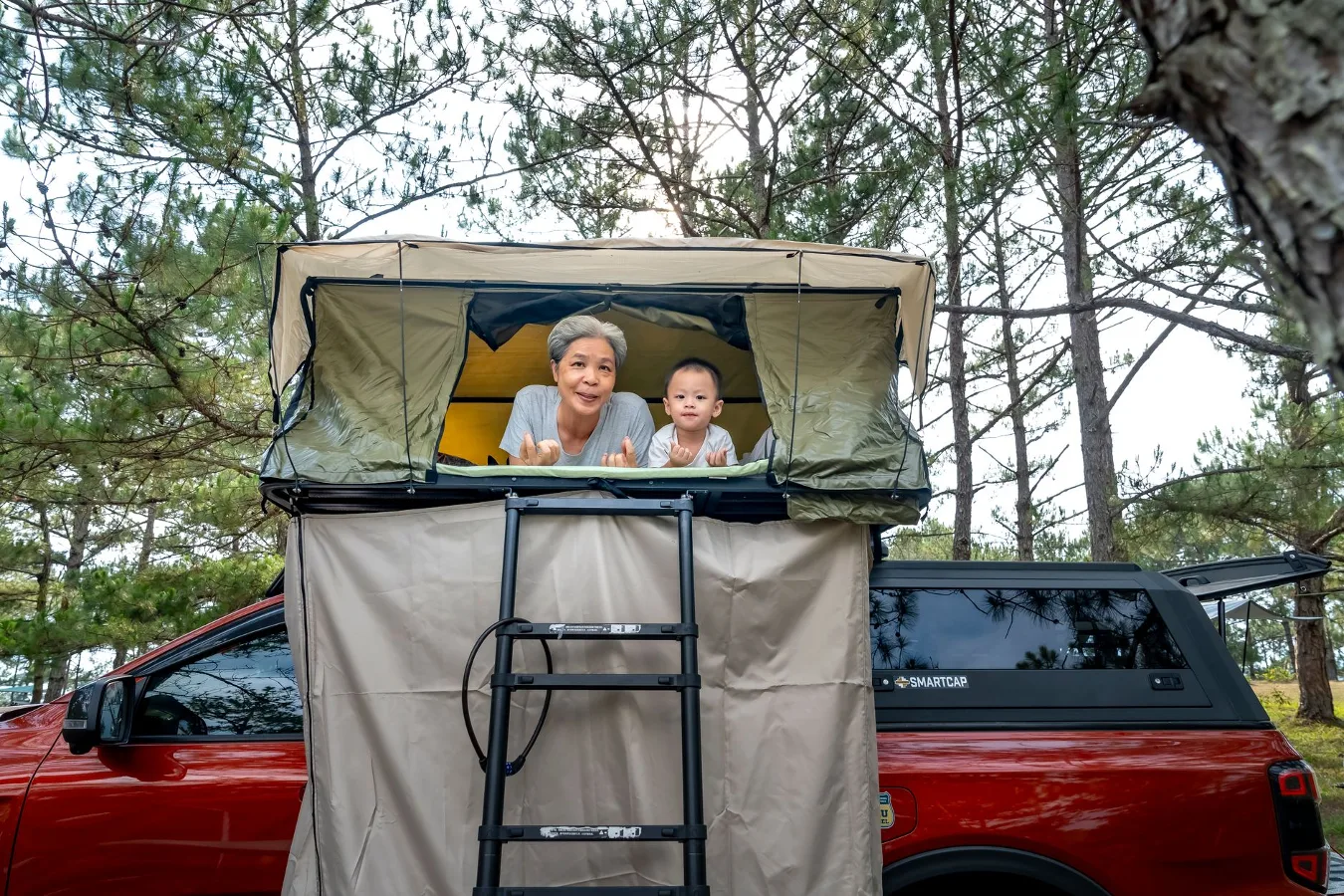
What a camping tent for truck usually means
If you search for a camping tent for truck, you are usually looking at one of three setups: a truck bed tent that fits inside the pickup bed, a rooftop tent that mounts to crossbars or a rack, or a ground tent designed to work next to the truck as a base camp. The right choice depends on how you camp, how much gear you carry, and how much time you want to spend setting up and breaking down camp. how to choose a tent for a pickup offers more detail on this point. truck bed camping basics offers more detail on this point.
For many buyers, the question is not simply which tent is best. It is which kind of truck camping shelter fits the way they actually travel. A weekend camper who stays in one place may value comfort and weather protection. Someone who moves often may care more about quick setup and compact packing. A driver with a covered bed, topper, or rack system has different options than someone with an open bed and no aftermarket gear. Camping Tent with Stove: Buyer’s Guide offers more detail on this point.
Start with your buyer scenario
The best camping tent for truck is the one that matches your camping style first and your truck second. That may sound backward, but it prevents one of the most common mistakes: buying a tent that fits the truck physically but not the way you camp.
If you want fast overnight stops
A truck bed tent can make sense if you want a simple sleeping space without a separate ground footprint. It keeps your sleeping area elevated off the ground and can be useful in crowded campsites or muddy conditions. The trade-off is that you must fit the tent to the bed dimensions and work around any cargo, wheel wells, or bed accessories.
If you camp in rough or wet conditions
A rooftop tent or an elevated truck camping setup may appeal to you if ground moisture, uneven terrain, or insects are common concerns. Elevated sleeping can improve comfort in some situations, but it also adds weight, height, and vehicle handling considerations. A roof-mounted system can be harder to install and may limit garage clearance.
If you use your truck as a base camp
If your goal is to park once and stay put, a larger ground tent that attaches near the truck or uses the truck for storage may offer more living space than a bed tent. This is often the better route for families, longer stays, or campers who want room for chairs, a cooler, and changing space. The downside is that it takes up more campsite area and usually involves more setup.
The main trade-offs to think through
There is no universal best tent for pickup camping. Each style creates a different balance of convenience, comfort, and flexibility.
- Truck bed tents are compact and use the bed itself, but they depend heavily on bed size and bed shape.
- Rooftop tents can keep you off the ground, but they typically require a rack or platform and may reduce driving convenience.
- Tailgate tents and annex-style shelters can expand usable space, but they are usually more situational and less self-contained.
- Ground tents are often the most flexible and roomy, but they do not integrate with the truck as tightly.
A common misconception is that the most expensive or most rugged-looking option is automatically the best. In reality, the right setup depends on how often you move camp, how much gear you carry, and whether you need sleeping space, living space, or both.
Material and spec factors that matter most
For a camping tent for truck, the important details are less about hype and more about fit, weather handling, and day-to-day usability.
Truck bed compatibility
Bed length matters, but so do wheel well placement, tailgate style, bed liners, and any cargo management system already in the truck. Some truck bed tents are made for specific bed lengths, while others are adjustable. Before buying, check whether the tent is designed for a full-size bed, midsize bed, short bed, or a more general fit. A tent that claims to fit multiple trucks may still fit best only within a narrow range.
Structure and support
Look at how the tent is supported. Some models rely on the truck bed itself, while others use poles, an external frame, or an attached ladder. The support system affects setup ease, interior stability, and how the tent behaves in wind. More parts can mean more complexity, but they can also improve usability.
Weather resistance
For truck camping, weather protection is usually one of the biggest deciding factors. Think about rainfly coverage, seam construction, zipper quality, and how well the tent manages ventilation. A tent that blocks rain but traps condensation can still feel uncomfortable, especially in humid conditions. Proper airflow matters as much as waterproof fabric.
Fabric and durability
Fabric weight, coating, and stitching all influence long-term value. Heavier materials may feel sturdier, but they can also add bulk and make packing less convenient. Lighter materials can be easier to handle but may require more care. If your truck camping involves frequent use, durability and repairability often matter more than headline features.
Packing size and storage
Unlike a standard backpacking tent, a truck camping tent may be carried in the vehicle rather than on your back, but storage still matters. A bulky tent can crowd out recovery gear, coolers, sleeping bags, or tools. This is especially relevant for smaller truck beds or setups that need to carry other camping supplies.
Choosing by truck setup, not just by tent type
The vehicle itself changes the decision.
- Open bed with no topper: A truck bed tent can be appealing because it uses the existing space well, but you must manage weather exposure when the tent is not fully set up.
- Truck with a topper or canopy: Some campers prefer to sleep inside the covered bed area rather than use a standalone tent, depending on ventilation and space.
- Truck with roof rack or bed rack: This opens the door to rooftop tents and hybrid overlanding builds, but it adds weight and hardware considerations.
- Small or midsize pickup: Fit becomes especially important, and you may need to prioritize compact gear over a larger shelter.
An overlooked consideration is how often you use the truck for non-camping tasks. If the bed needs to stay open for hauling, a permanent or semi-permanent camping setup may become annoying fast. If the truck is your daily driver, convenience between trips matters just as much as campsite comfort.
Comfort and usability details that are easy to miss
Small features often determine whether a tent feels practical or frustrating after the first trip.
- Door placement: Check whether access works with the tailgate and your loading routine.
- Ventilation panels: Useful for warm-weather trips and condensation control.
- Interior height: Affects changing clothes and moving around inside the shelter.
- Attachment points: Helpful for securing the tent to the truck bed or rack.
- Compatibility with bedding: Some sleeping pads and mattresses fit better than others in a truck bed environment.
- Night access: Think about how you will get in and out without disturbing your setup or gear.
If you camp with a partner, a pet, or extra equipment, the usable layout matters more than the advertised capacity. A tent can be technically large enough yet still feel cramped once bags, shoes, and bedding are inside.
How to compare options before buying
Instead of comparing only brands, compare the actual use case.
- Measure your truck bed carefully. Confirm length, width, and any obstructions such as wheel wells or storage systems.
- Decide where you want to sleep. Bed, roof, or ground each creates a different camping experience.
- Think about setup time. Frequent travelers usually prefer less assembly and fewer loose parts.
- Match the tent to your weather. Rain, wind, humidity, and temperature all affect comfort.
- Check storage impact. Make sure the tent and accessories will not crowd out the rest of your gear.
- Consider how often you will remove it. A semi-permanent setup works best for regular camping, not occasional use by someone who needs the truck bed free.
Common mistakes buyers make
Many first-time shoppers focus too much on whether a tent is “made for trucks” and not enough on the details that determine whether it works well on their specific vehicle.
- Ignoring bed size variations: A short bed and long bed are not interchangeable.
- Overlooking bed accessories: Liners, caps, racks, and tie-down points can affect fit.
- Choosing by capacity alone: Sleeping capacity does not guarantee comfort or usable storage.
- Assuming all-weather means all-condition comfort: Wind, condensation, and heat can still be issues.
- Forgetting daily practicality: A great campsite setup may be inconvenient during the rest of the week.
Practical alternatives worth considering
If a dedicated camping tent for truck does not suit your setup, there are sensible alternatives.
- Truck bed sleep system: A mattress or sleeping platform inside the bed can be simpler than a full tent.
- Ground tent plus truck storage: Offers more space and flexibility for longer stays.
- Tailgate awning or canopy extension: Helps create shade and rain cover for cooking or lounging.
- Roof tent with annex accessories: Can work well for overlanding-style camping if the rack system supports it.
These options are especially useful if your priorities lean toward storage, flexibility, or campsite living space rather than a single enclosed sleeping area.
What to do before you buy
If you want the best camping tent for truck use, start with three decisions: how you sleep, where you store gear, and how much setup effort you are willing to accept. From there, compare fit, support structure, weather protection, and storage needs. That process usually leads to a better choice than sorting by price or brand alone.
If you are still undecided, a truck bed tent is often the most direct answer for a pickup owner who wants an integrated sleeping solution without building out a full overlanding rig. A rooftop tent makes more sense for those who value elevation and are comfortable with added hardware. A ground tent remains the most adaptable option when living space matters more than vehicle integration.
FAQ
What is the best type of camping tent for a truck?
The best type depends on your setup. Truck bed tents suit campers who want a simple sleeping space in the bed, rooftop tents suit elevated sleeping setups, and ground tents work best when you want more living space.
Will any truck bed tent fit my pickup?
No. Fit depends on bed length, wheel wells, tailgate design, and any accessories already in the bed. Always check compatibility carefully before buying.
Is a rooftop tent better than a truck bed tent?
Neither is automatically better. A rooftop tent can keep you off the ground, but it usually adds cost, weight, and installation complexity. A truck bed tent is often simpler and more compact.
Can I use a regular tent with my truck?
Yes. Many campers use a regular ground tent with the truck as storage or support for a base-camp setup. This can be a smart choice if you want more room or flexibility.
What should I check first before buying?
Check truck bed compatibility, setup style, weather protection, and how much storage space the tent will leave for the rest of your gear.